Gustatory and olfactory dysfunction in older adults: a national probability study
- PMID: 21858264
- PMCID: PMC3775551
- DOI: 10.4193/Rhino10.155
Gustatory and olfactory dysfunction in older adults: a national probability study
Erratum in
- Rhinology. 2011 Oct;49(4):457. Lindstrom, J N [corrected to Lundstrom, J N]
Abstract
Background: Olfactory and gustatory functions have not been well characterized in older adults in the US. Consequently, their relationships to sociodemographic characteristics, as well as physical and mental health, were studied in a large national probability sample using brief validated tests of chemosensory function.
Methods: A five-odour identification test and taste-impregnated strips of filter paper (sweet, sour, bitter, and salty) assessed the ability to identify chemosensory stimuli.
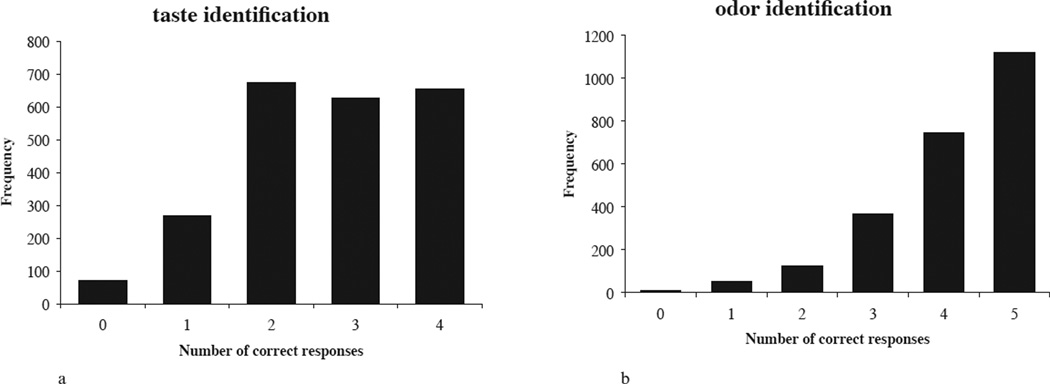
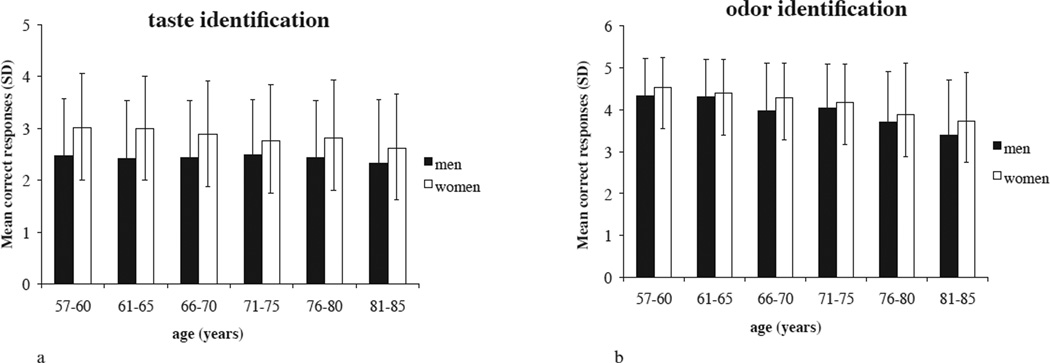
Results: Severe gustatory dysfunction was more prevalent than severe olfactory dysfunction. Age, education and sex were independently associated with performance on both the olfactory and gustatory identification tasks. Higher scores were associated with female sex, higher level of education, and lower age. Odour identification scores exhibited a positive, albeit weak, correlation with BMI, and food-related odours were better identified than non-food odours. In addition, odour identification performance was also negatively associated with depressive symptoms.
Conclusions: These data demonstrate a high prevalence of severe gustatory and, to a somewhat lesser extent, olfactory dysfunction in a population-based sample and demonstrate that even brief tests are capable of detecting correlations between both chemical senses and relevant health measures outside a clinical setting.
Conflict of interest statement
Conflict of interest
None of the authors have any conflict of interest.
Figures
References
-
- Doty RL, Shaman P, Applebaum SL, Giberson R, Siksorski L, Rosenberg L. Smell identification ability: Changes with age. Science. 1984;226:1441–1443. - PubMed
-
- Congdon N, O’Colmain B, Klaver CC, et al. Causes and prevalence of visual impairment among adults in the United States. Arch Ophthalmol. 2004;122:477–485. - PubMed
-
- Cruickshanks KJ, Wiley TL, Tweed TS, et al. Prevalence of hearing loss in older adults in Beaver Dam, Wisconsin. The Epidemiology of Hearing Loss Study. Am J Epidemiol. 1998;148:879–886. - PubMed
-
- Schiffman SS. Taste and smell losses in normal aging and disease. JAMA. 1997;278:1357–1362. - PubMed
-
- Hays NP, Roberts SB. The anorexia of aging in humans. Physiol Behav. 2006;88:257–266. - PubMed
Publication types
MeSH terms
Grants and funding
LinkOut - more resources
Full Text Sources
Medical