Positive mood + action = negative mood + inaction: effects of general action and inaction concepts on decisions and performance as a function of affect
- PMID: 21859209
- PMCID: PMC3626447
- DOI: 10.1037/a0024130
Positive mood + action = negative mood + inaction: effects of general action and inaction concepts on decisions and performance as a function of affect
Abstract
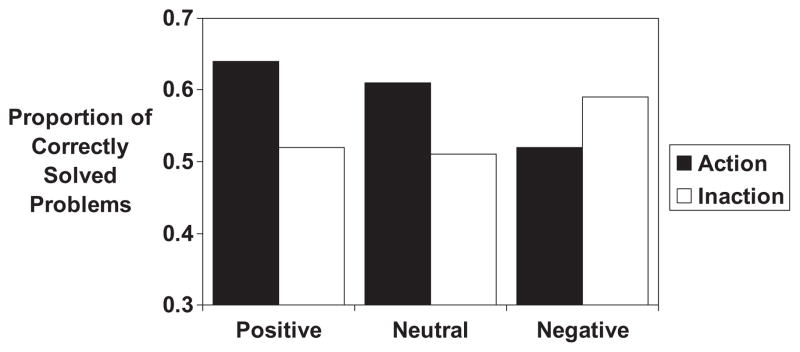
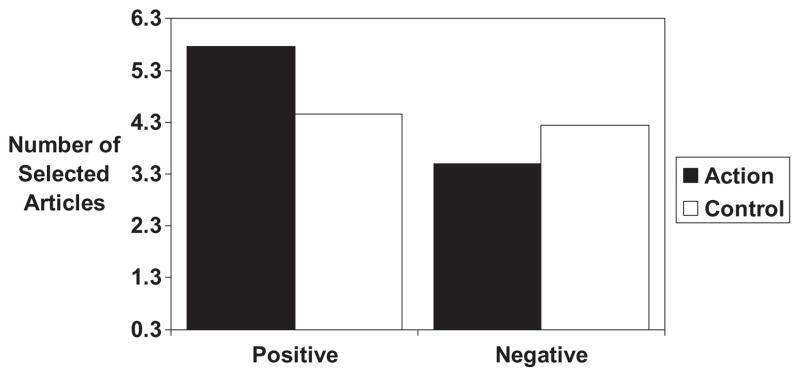
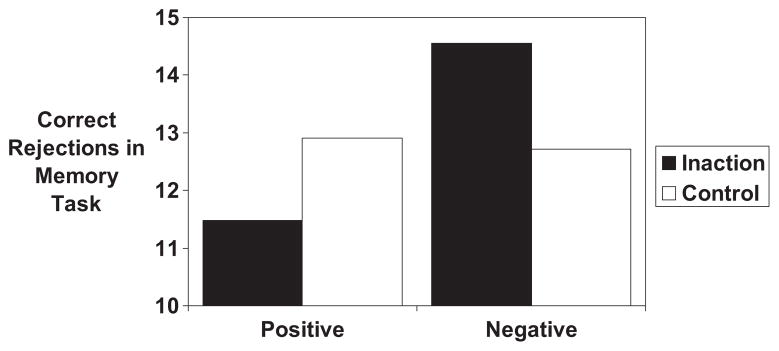
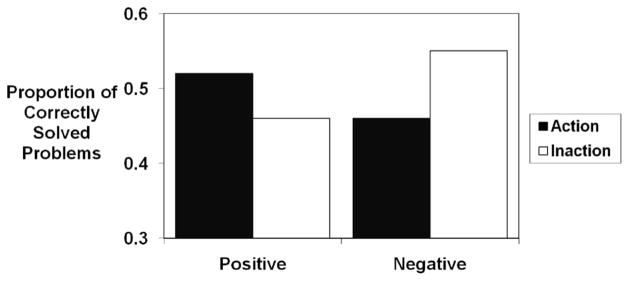
General action and inaction concepts have been shown to produce broad, goal-mediated effects on cognitive and motor activity irrespective of the type of activity. The current research tested a model in which action and inaction goals interact with the valence of incidental moods to guide behavior. Over four experiments, participants' moods were manipulated to be positive (happy), neutral, or negative (angry or sad), and then general action, inaction, and neutral concepts were primed. In Experiment 1, action primes increased intellectual performance when participants experienced a positive (happy) or neutral mood, whereas inaction primes increased performance when participants experienced a negative (angry) mood. Including a control-prime condition, Experiments 2 and 3 replicated these results measuring the number of general interest articles participants were willing to read and participants' memory for pictures of celebrities. Experiment 4 replicated the results comparing happiness with sadness and suggested that the effect of the prime's adoption was automatic. Overall, the findings supported an interactive model by which action concepts and positive affect produce the same increases in active behavior as inaction concepts and negative affect.
2011 APA, all rights reserved
Figures
References
-
- Aarts H, Custers R, Holland RW. The nonconscious cessation of goal pursuit: When goals and negative affect are coactivated. Journal of Personality and Social Psychology. 2007;92:165–178. - PubMed
-
- Aarts H, Custers R, Marien H. Preparing and motivating behavior outside of awareness. Science. 2008;319:1639. - PubMed
-
- Aarts H, Ruys K, Veling H, Renes RA, de Groot JHB, van Nunen AM, Geertjes S. The art of anger: Reward context turns avoidance responses to anger-related objects into approach. Psychological Science. 2010;21:1406–1410. - PubMed