


Altered desmosomal proteins in granulomatous myocarditis and potential pathogenic links to arrhythmogenic right ventricular cardiomyopathy
- PMID: 21859801
- PMCID: PMC3203520
- DOI: 10.1161/CIRCEP.111.964890
Altered desmosomal proteins in granulomatous myocarditis and potential pathogenic links to arrhythmogenic right ventricular cardiomyopathy
Abstract
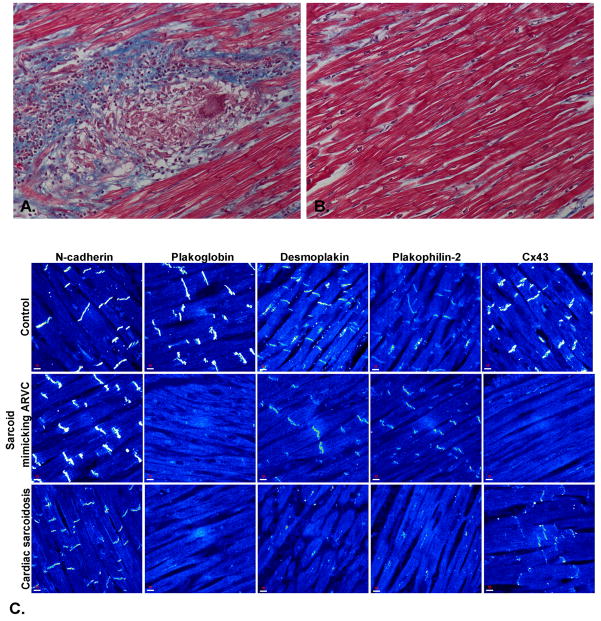
Background: Immunoreactive signal for the desmosomal protein plakoglobin (γ-catenin) is reduced at cardiac intercalated disks in patients with arrhythmogenic right ventricular cardiomyopathy (ARVC), a highly arrhythmogenic condition caused by mutations in genes encoding desmosomal proteins. Previously, we observed a false-positive case in which plakoglobin signal was reduced in a patient initially believed to have ARVC but who actually had cardiac sarcoidosis. Sarcoidosis can masquerade clinically as ARVC but has not been previously associated with altered desmosomal proteins.
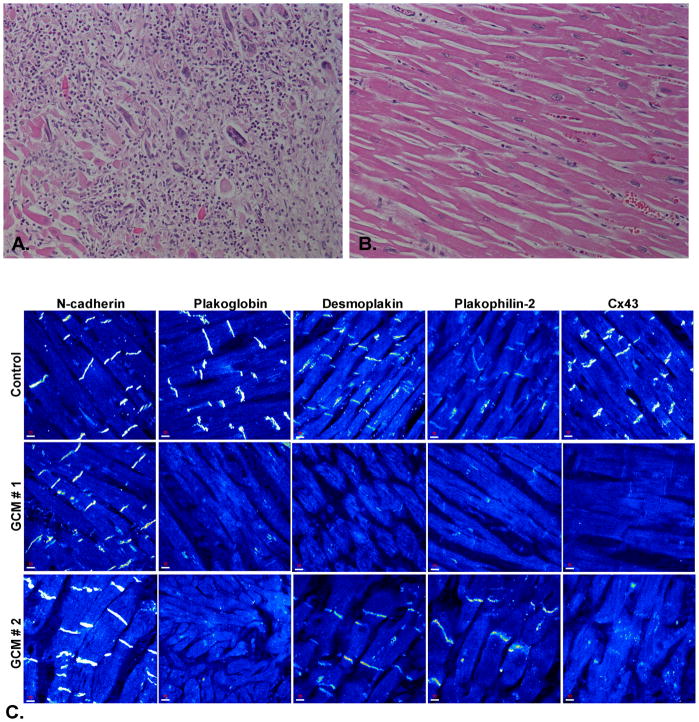
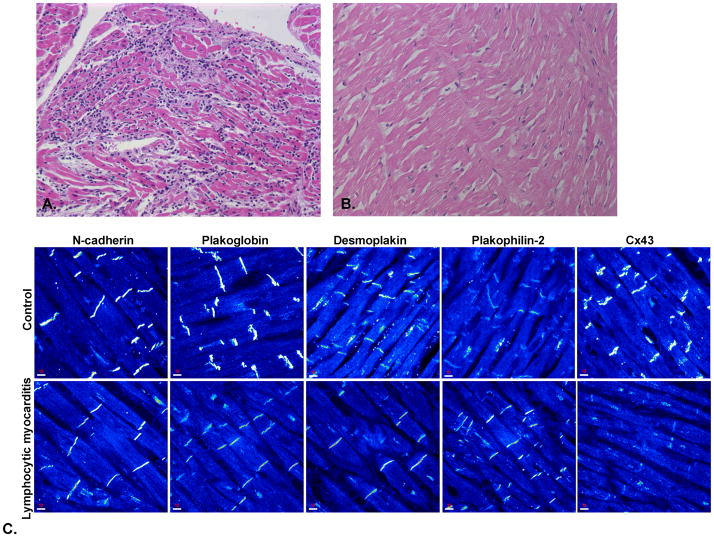
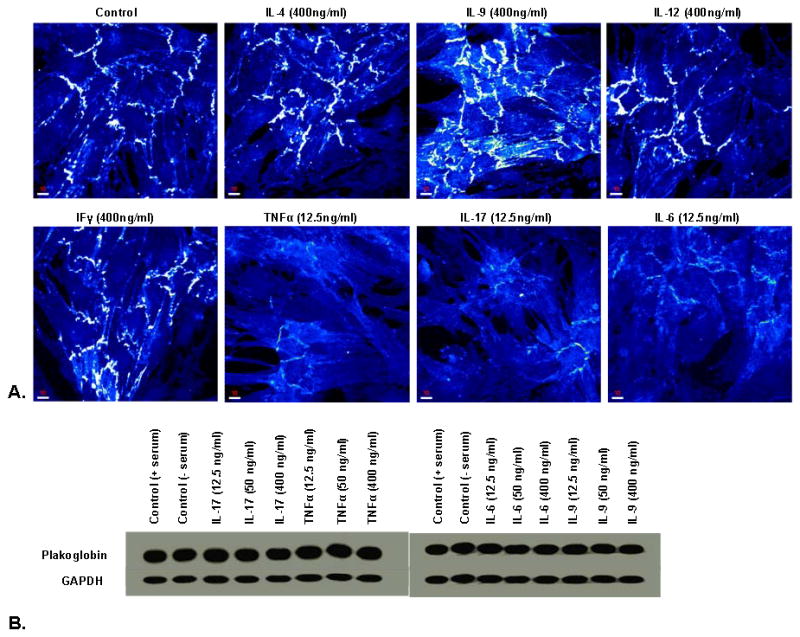
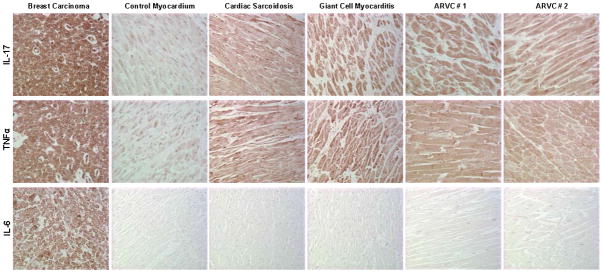
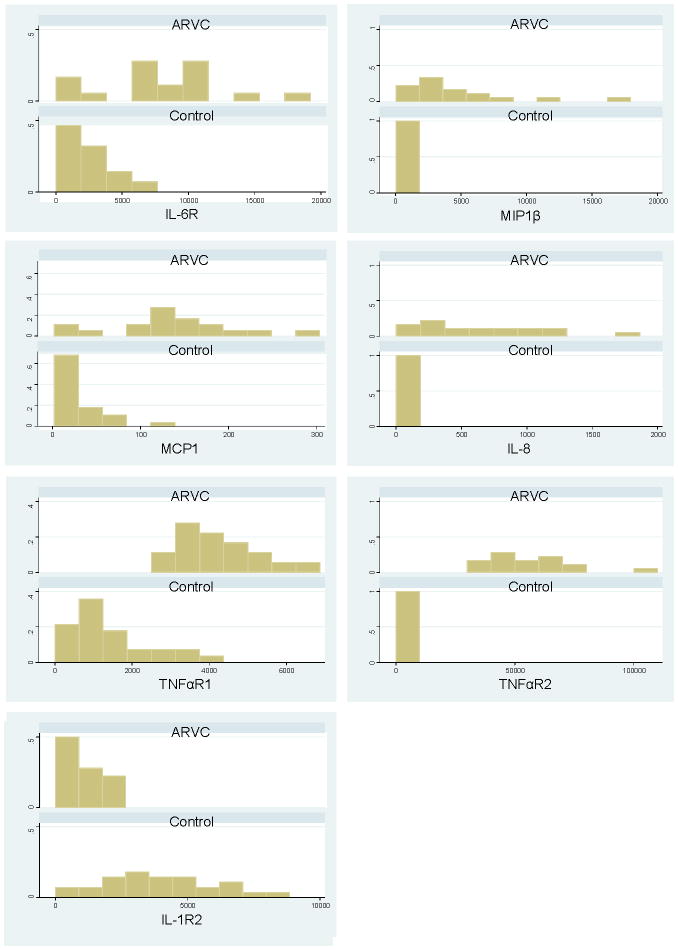
Methods and results: We observed marked reduction in immunoreactive signal for plakoglobin at cardiac myocyte junctions in patients with sarcoidosis and giant cell myocarditis, both highly arrhythmogenic forms of myocarditis associated with granulomatous inflammation. In contrast, plakoglobin signal was not depressed in lymphocytic (nongranulomatous) myocarditis. To determine whether cytokines might promote dislocation of plakoglobin from desmosomes, we incubated cultures of neonatal rat ventricular myocytes with selected inflammatory mediators. Brief exposure to low concentrations of interleukin (IL)-17, tumor necrosis factor-α (TNF-α), and IL-6 (cytokines implicated in granulomatous myocarditis) caused translocation of plakoglobin from cell-cell junctions to intracellular sites, whereas other potent cytokines implicated in nongranulomatous myocarditis had no effect, even at much higher concentrations. We also observed myocardial expression of IL-17 and TNF-α and elevated levels of serum inflammatory mediators, including IL-6R, IL-8, monocyte chemoattractant protein 1, and macrophage inflammatory protein 1β, in patients with ARVC (all P<0.0001 compared with controls).
Conclusions: The results suggest novel disease mechanisms involving desmosomal proteins in granulomatous myocarditis and implicate cytokines, perhaps derived in part from the myocardium, in disruption of desmosomal proteins and arrhythmogenesis in ARVC.
Conflict of interest statement
Figures
References
-
- Basso C, Corrado D, Marcus FI, Nava A, Thiene G. Arrhythmogenic right ventricular cardiomyopathy. Lancet. 2009;373:1289–1300. - PubMed
-
- Asimaki A, Tandri H, Huang H, Halushka MK, Gautam S, Basso C, Thiene G, Tsatsopoulou A, Protonotarios N, McKenna WJ, Calkins H, Saffitz JE. A new diagnostic test for arrhythmogenic right ventricular cardiomyopathy. N Engl J Med. 2009;360:1075–1084. - PubMed
-
- Soejima K, Yada H. The work-up and management of patients with apparent or subclinical cardiac sarcoidosis: with emphasis on the associated heart rhythm abnormalities. J Cardiovasc Electrophysiol. 2009;20:578–583. - PubMed
-
- Vasaiwala SC, Finn C, Delpriore J, Leya F, Gagermeier J, Akar JG, Santucci P, Dajani K, Bova D, Picken MM, Basso C, Marcus F, Wilber DJ. Prospective study of cardiac sarcoid mimicking arrhythmogenic right ventricular dysplasia. J Cardiovasc Electrophysiol. 2009;20:473–476. - PubMed
-
- Ladyjanskaia GA, Basso C, Hobbelink MG, Kirkels JH, Lahpor JR, Cramer MJ, Thiene G, Hauer RN, Oosterhout MFV. Sarcoid myocarditis with ventricular tachycardia mimicking ARVD/C. J Cardiovasc Electrophysiol. 2010;21:94–98. - PubMed
Publication types
MeSH terms
Substances
Grants and funding
LinkOut - more resources
Full Text Sources
Medical
Research Materials
