


Mass spectrometry-based proteomics of human cannabinoid receptor 2: covalent cysteine 6.47(257)-ligand interaction affording megagonist receptor activation
- PMID: 21861534
- PMCID: PMC3189276
- DOI: 10.1021/pr2005583
Mass spectrometry-based proteomics of human cannabinoid receptor 2: covalent cysteine 6.47(257)-ligand interaction affording megagonist receptor activation
Abstract
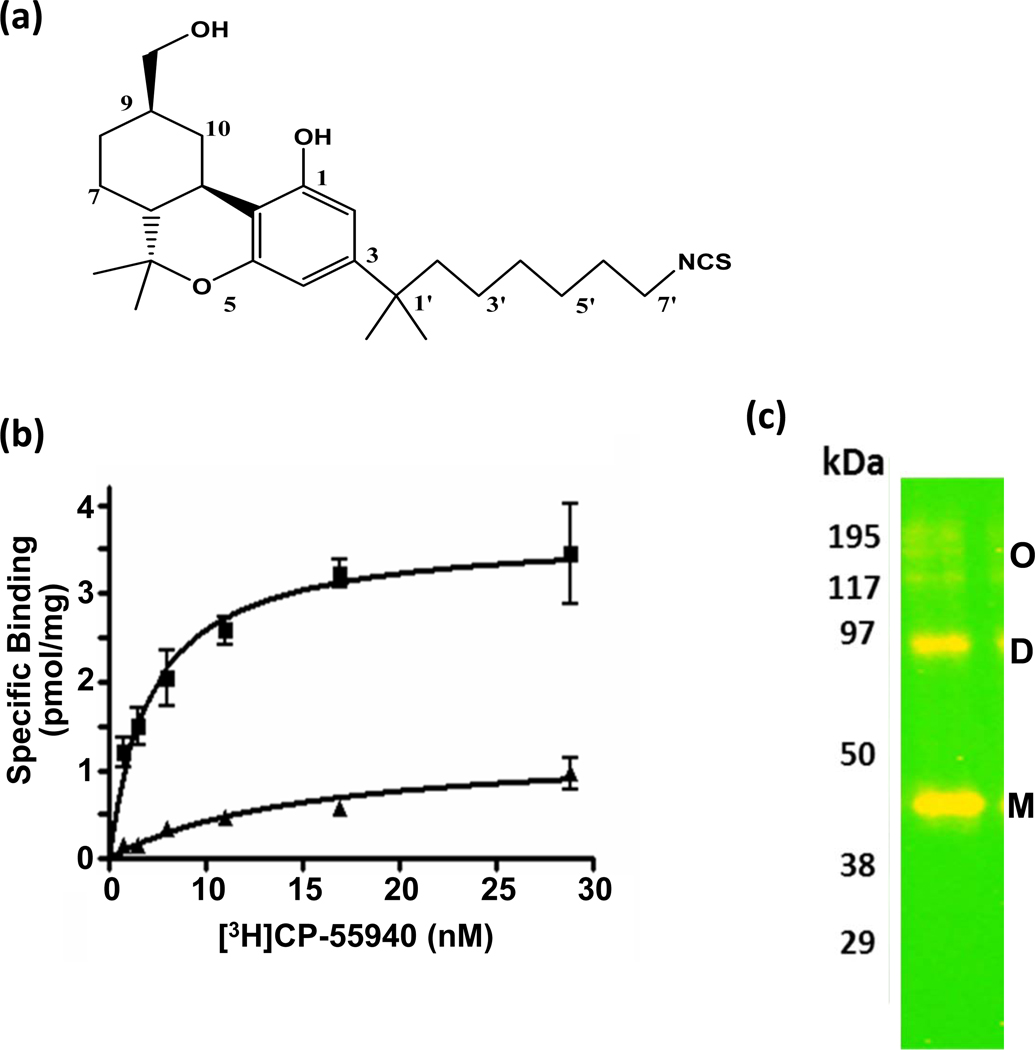
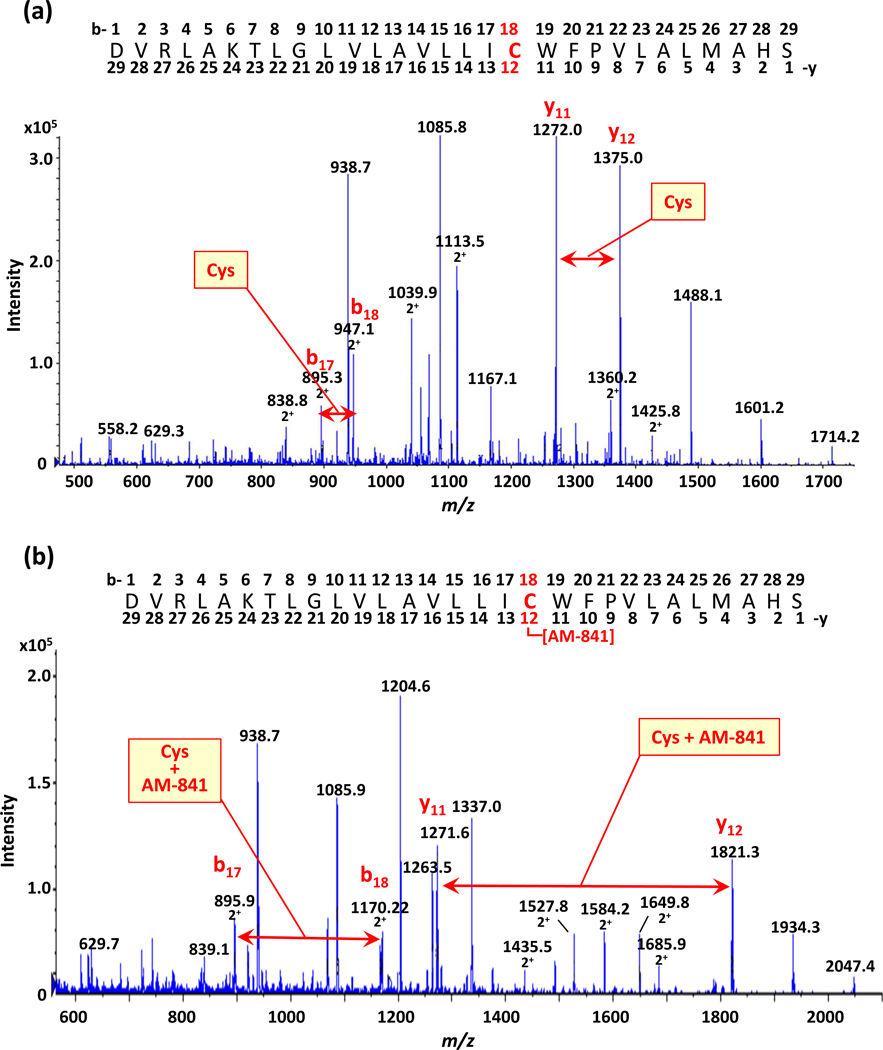
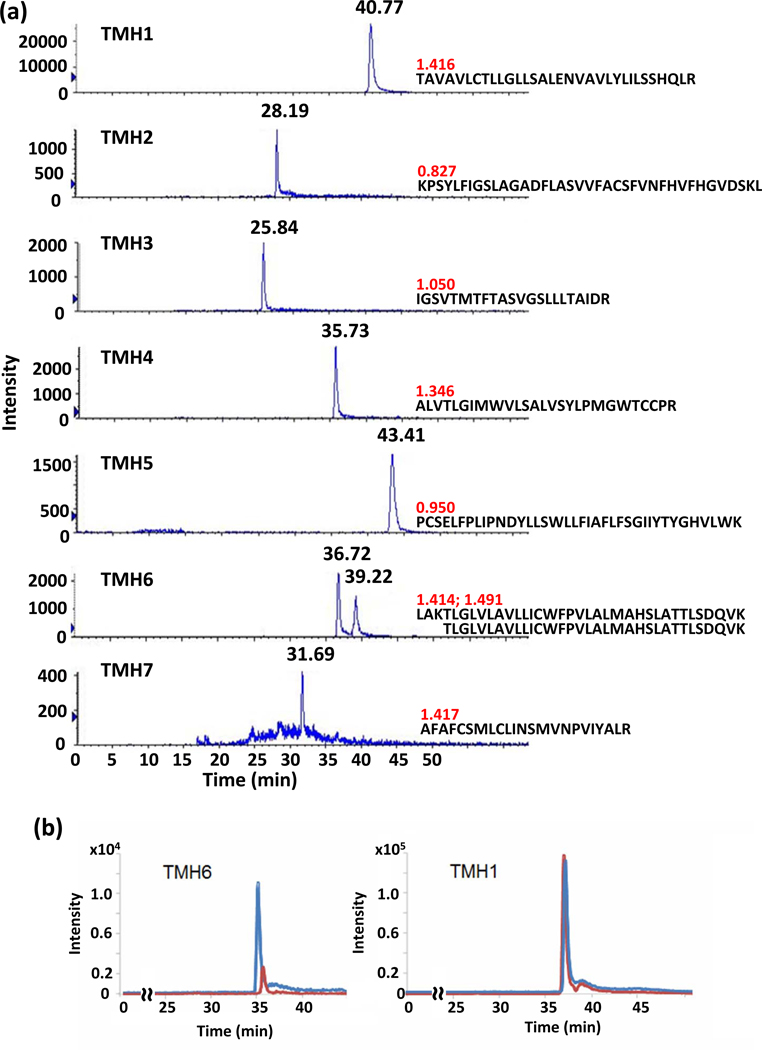
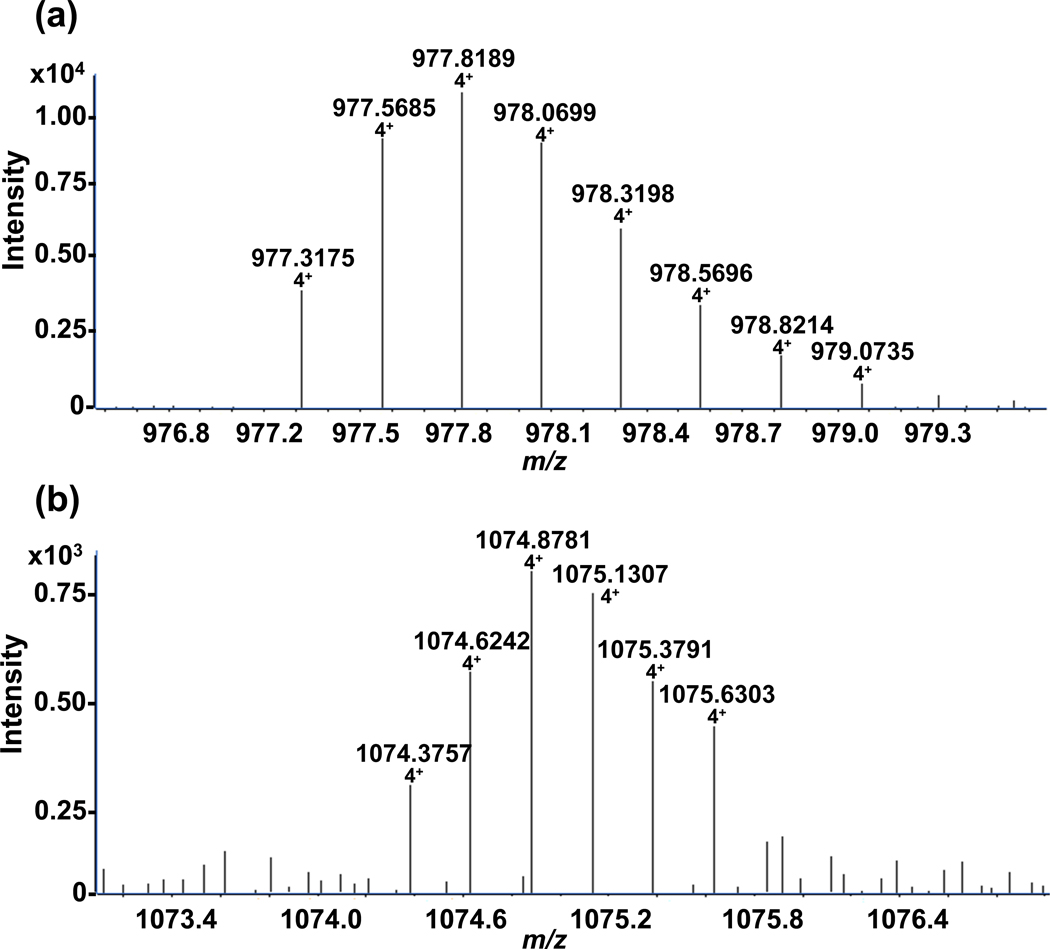
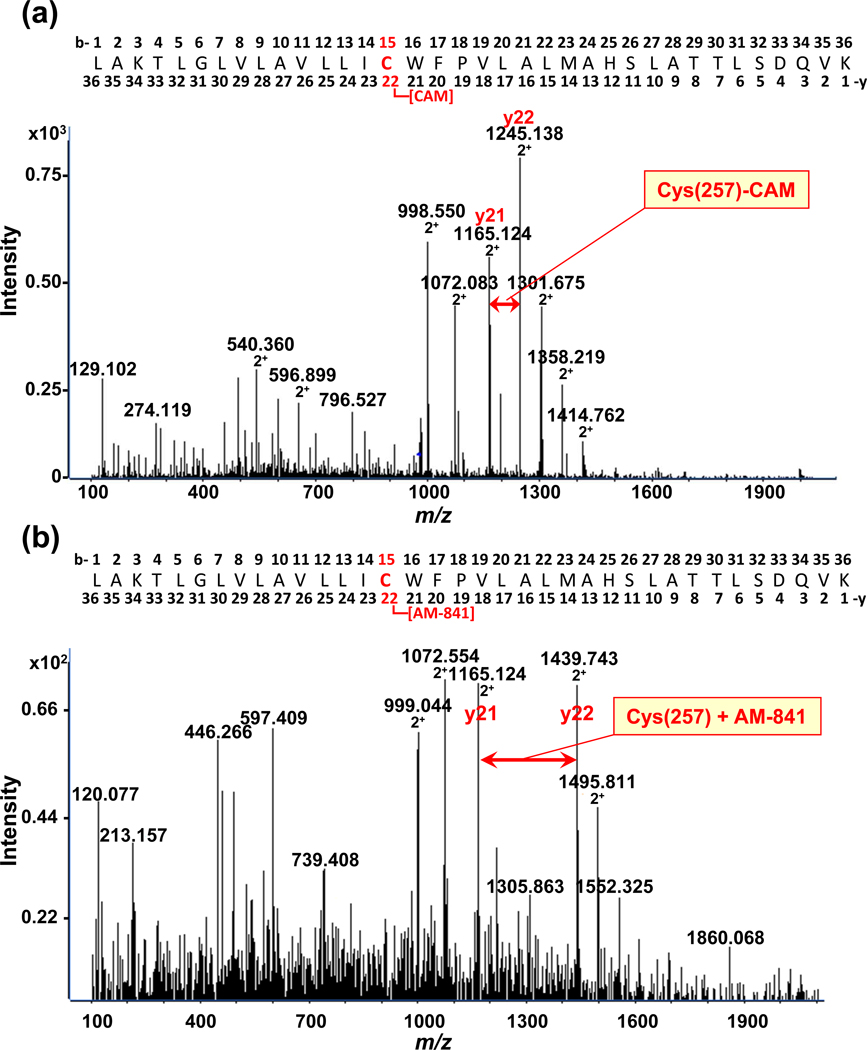
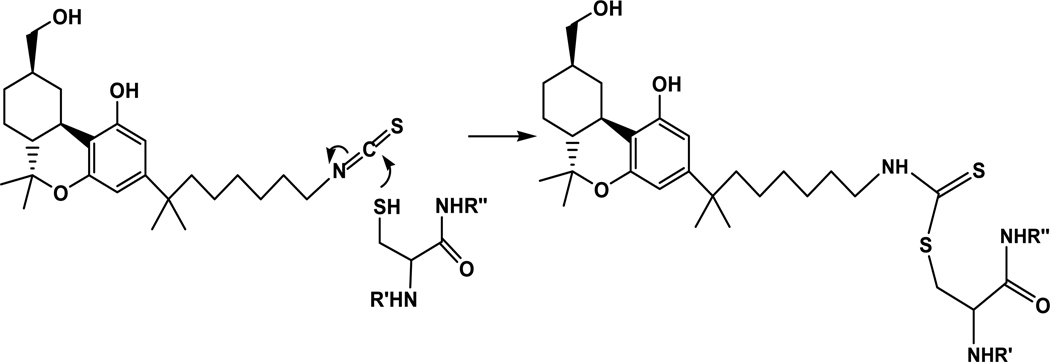
The lack of experimental characterization of the structures and ligand-binding motifs of therapeutic G-protein coupled receptors (GPCRs) hampers rational drug discovery. The human cannabinoid receptor 2 (hCB2R) is a class-A GPCR and promising therapeutic target for small-molecule cannabinergic agonists as medicines. Prior mutational and modeling data constitute provisional evidence that AM-841, a high-affinity classical cannabinoid, interacts with cysteine C6.47(257) in hCB2R transmembrane helix 6 (TMH6) to afford improved hCB2R selectivity and unprecedented agonist potency. We now apply bottom-up mass spectrometry (MS)-based proteomics to define directly the hCB2R-AM-841 interaction at the amino-acid level. Recombinant hCB2R, overexpressed as an N-terminal FLAG-tagged/C-terminal 6His-tagged protein (FLAG-hCB2R-6His) with a baculovirus system, was solubilized and purified by immunochromatography as functional receptor. A multiplex multiple reaction monitoring (MRM)-MS method was developed that allowed us to observe unambiguously all seven discrete TMH peptides in the tryptic digest of purified FLAG-hCB2R-6His and demonstrate that AM-841 modifies hCB2R TMH6 exclusively. High-resolution mass spectra of the TMH6 tryptic peptide obtained by Q-TOF MS/MS analysis demonstrated that AM-841 covalently and selectively modifies hCB2R at TMH6 cysteine C6.47(257). These data demonstrate how integration of MS-based proteomics into a ligand-assisted protein structure (LAPS) experimental paradigm can offer guidance to structure-enabled GPCR agonist design.
Figures
References
-
- Mouslech Z, Valla V. Endocannabinoid system: an overview of its potential in current medical practice. Neuro. Endocrinol. Lett. 2009;30:153–179. - PubMed
-
- Di Marzo V. The endocannabinoid system: its general strategy of action, tools for its pharmacological manipulation and potential therapeutic application. Pharmacol. Res. 2009;60:77–84. - PubMed
-
- Demuth DG, Molleman A. Cannabinoid signaling. Life Sci. 2006;78:549–563. - PubMed
-
- Janero DR, Makriyannis A. Cannabinoid receptor antagonists: pharmacological opportunities, clinical experience, and translational prognosis. Expert Opin. Emerg. Drugs. 2009;14:43–65. - PubMed
Publication types
MeSH terms
Substances
Grants and funding
LinkOut - more resources
Full Text Sources
