


Tyrosine kinases in rheumatoid arthritis
- PMID: 21861931
- PMCID: PMC3170568
- DOI: 10.1186/1476-9255-8-21
Tyrosine kinases in rheumatoid arthritis
Abstract
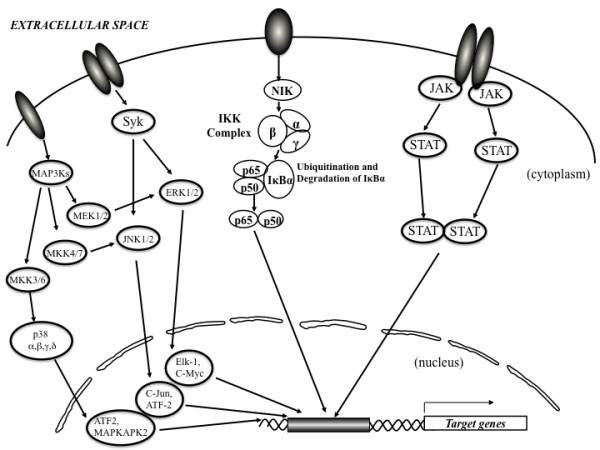
Rheumatoid arthritis (RA) is an inflammatory, polyarticular joint disease. A number of cellular responses are involved in the pathogenesis of rheumatoid arthritis, including activation of inflammatory cells and cytokine expression. The cellular responses involved in each of these processes depends on the specific signaling pathways that are activated; many of which include protein tyrosine kinases. These pathways include the mitogen-activated protein kinase pathway, Janus kinases/signal transducers and activators transcription pathway, spleen tyrosine kinase signaling, and the nuclear factor κ-light-chain-enhancer of activated B cells pathway. Many drugs are in development to target tyrosine kinases for the treatment of RA. Based on the number of recently published studies, this manuscript reviews the role of tyrosine kinases in the pathogenesis of RA and the potential role of kinase inhibitors as new therapeutic strategies of RA.
Figures
References
-
- Koch AE, Harlow LA, Haines GK, Amento EP, Unemori EN, Wong WL, Pope RM, Ferrara N. Vascular endothelial growth factor. A cytokine modulating endothelial function in rheumatoid arthritis. J Immunol. 1994;152:4149–56. - PubMed
LinkOut - more resources
Full Text Sources
Other Literature Sources
