


Balancing eukaryotic replication asymmetry with replication fidelity
- PMID: 21862387
- PMCID: PMC3189284
- DOI: 10.1016/j.cbpa.2011.07.025
Balancing eukaryotic replication asymmetry with replication fidelity
Abstract
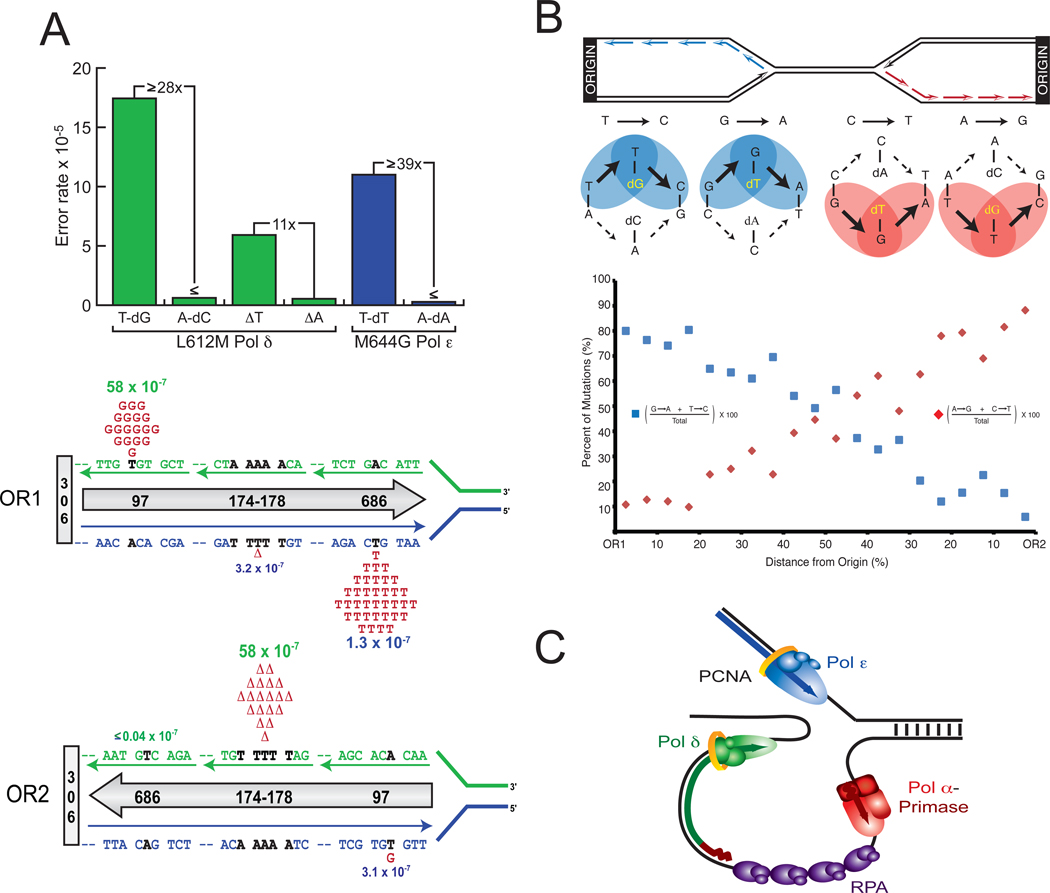
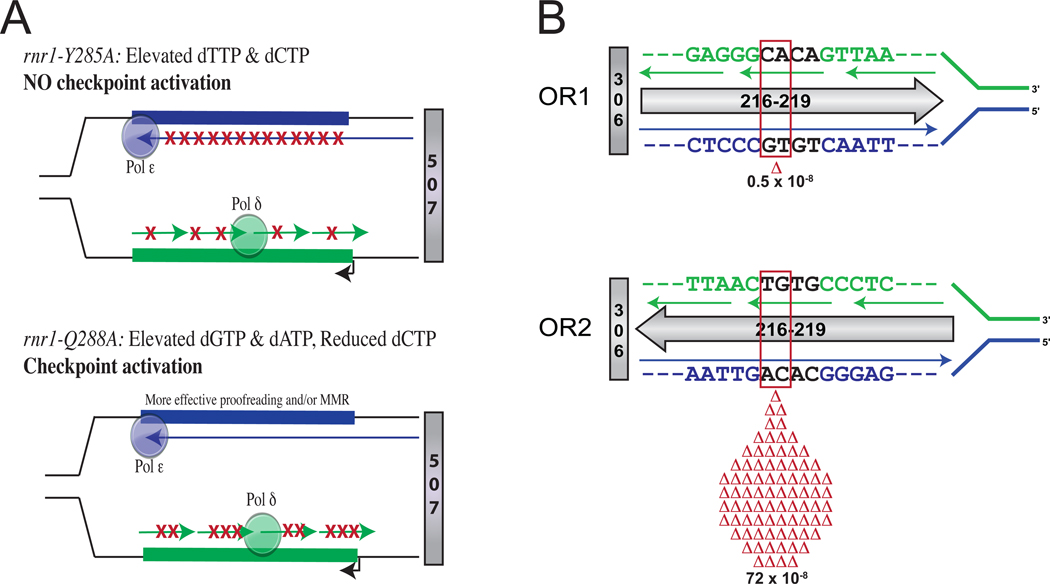
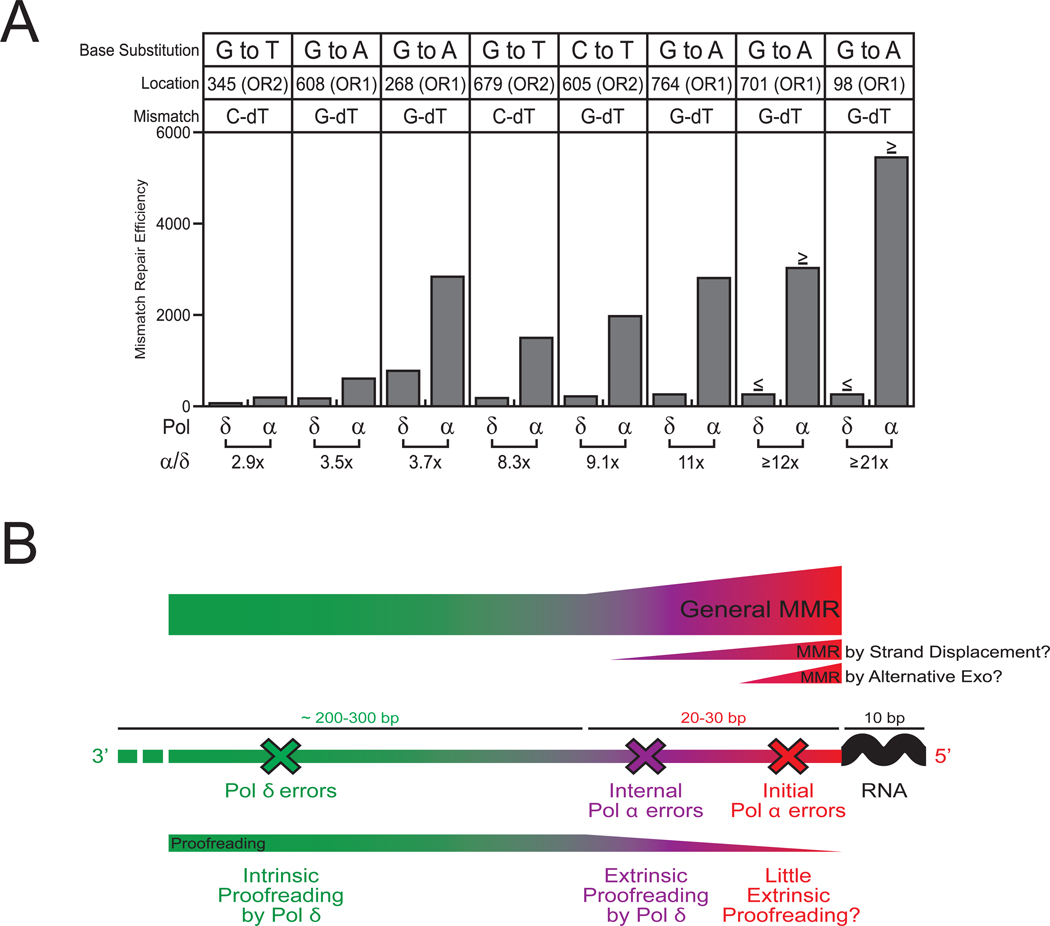
Coordinated replication of eukaryotic nuclear genomes is asymmetric, with copying of a leading strand template preceding discontinuous copying of the lagging strand template. Replication is catalyzed by DNA polymerases α, δ and ɛ, enzymes that are related yet differ in physical and biochemical properties, including fidelity. Recent studies suggest that Pol ɛ is normally the primary leading strand replicase, whereas most synthesis by Pol δ occurs during lagging strand replication. New studies show that replication asymmetry can generate strand-specific genome instability resulting from biased deoxynucleotide pools and unrepaired ribonucleotides incorporated into DNA during replication, and that the eukaryotic replication machinery has evolved to most efficiently correct those replication errors that are made at the highest rates.
Published by Elsevier Ltd.
Figures
References
Publication types
MeSH terms
Substances
Grants and funding
LinkOut - more resources
Full Text Sources
Molecular Biology Databases
