


Accelerated and progressive and lethal liver fibrosis in mice that lack interleukin (IL)-10, IL-12p40, and IL-13Rα2
- PMID: 21864478
- PMCID: PMC3221932
- DOI: 10.1053/j.gastro.2011.08.008
Accelerated and progressive and lethal liver fibrosis in mice that lack interleukin (IL)-10, IL-12p40, and IL-13Rα2
Abstract
Background & aims: Progressive fibrosis contributes to the morbidity of several chronic diseases; it typically develops slowly, so the mechanisms that control its progression and resolution have been difficult to model. The proteins interleukin (IL)-10, IL-12p40, and IL-13Rα2 regulate hepatic fibrosis following infection with the helminth parasite Schistosoma mansoni. We examined whether these mediators interact to slow the progression of hepatic fibrosis in mice with schistosomiasis.
Methods: IL-10(-/-), IL-12/23(p40)(-/-), and IL-13Rα2(-/-) mice were crossed to generate triple knockout (TKO) mice. We studied these mice to determine whether the simultaneous deletion of these 3 negative regulators of the immune response accelerated mortality from liver fibrosis following infection with S mansoni.
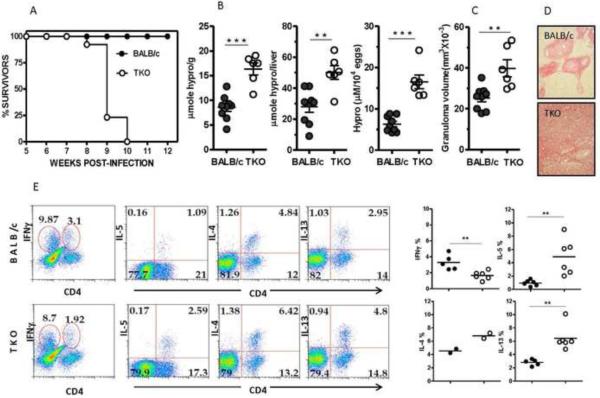
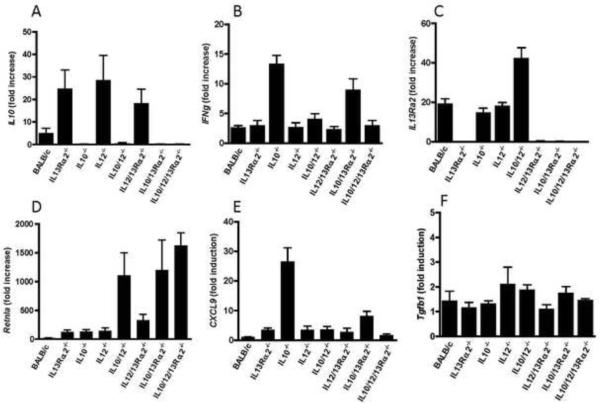
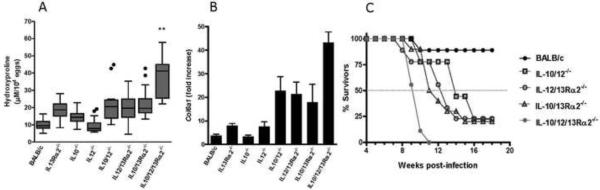
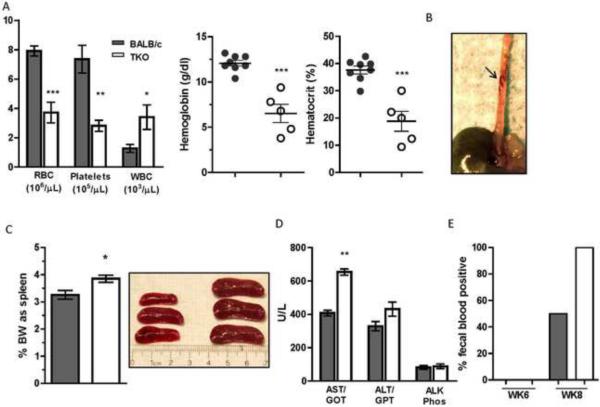
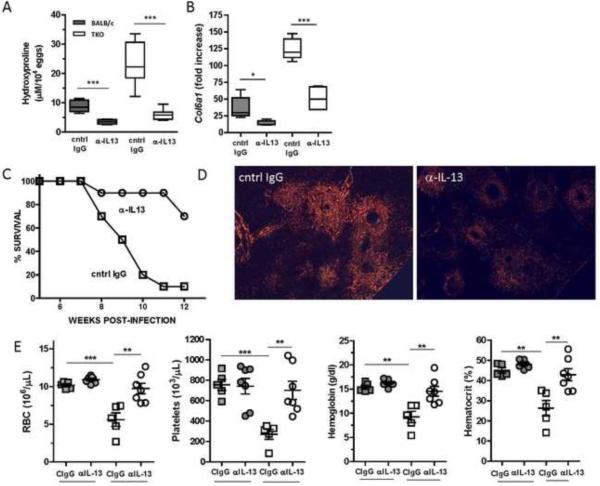
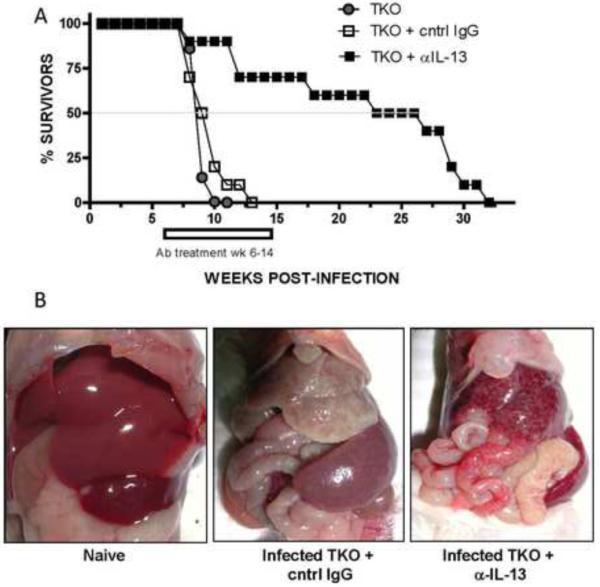
Results: Induction of inflammation by S mansoni, liver fibrosis, and mortality increased greatly in TKO mice compared with wild-type mice; 100% of the TKO mice died by 10 weeks after infection. Morbidity and mortality were associated with the development of portal hypertension, hepatosplenomegaly, gastrointestinal bleeding, ascites, thrombocytopenia, esophageal and gastric varices, anemia, and increased levels of liver enzymes, all features of advanced liver disease. IL-10, IL-12p40, and IL-13Rα2 reduced the production and activity of the profibrotic cytokine IL-13. A neutralizing antibody against IL-13 reduced the morbidity and mortality of the TKO mice following S mansoni infection.
Conclusions: IL-10, IL-12p40, and IL-13Rα2 act cooperatively to suppress liver fibrosis in mice following infection with S mansoni. This model rapidly reproduces many of the complications observed in patients with advanced cirrhosis, so it might be used to evaluate the efficacy of antifibrotic reagents being developed for schistosomiasis or other fibrotic diseases associated with a T-helper 2 cell-mediated immune response.
Copyright © 2011 AGA Institute. Published by Elsevier Inc. All rights reserved.
Figures
References
-
- Starley BQ, Calcagno CJ, Harrison SA. Nonalcoholic fatty liver disease and hepatocellular carcinoma: a weighty connection. Hepatology. 2010;51:1820–32. - PubMed
-
- Hoffmann KF, Wynn TA, Dunne DW. Cytokine-mediated host responses during schistosome infections; walking the fine line between immunological control and immunopathology. Adv Parasitol. 2002;52:265–307. - PubMed
Publication types
MeSH terms
Substances
Grants and funding
LinkOut - more resources
Full Text Sources
Other Literature Sources
Medical
