Review
. 2011 Aug 24;11(1):123-39.
doi: 10.1102/1470-7330.2011.0016.

CT, MRI and PET imaging in peritoneal malignancy

Affiliations
Review

CT, MRI and PET imaging in peritoneal malignancy

Chirag M Patel et al. Cancer Imaging. .

Abstract

Imaging plays a vital role in the evaluation of patients with suspected or proven peritoneal malignancy. Nevertheless, despite significant advances in imaging technology and protocols, assessment of peritoneal pathology remains challenging. The combination of complex peritoneal anatomy, an extensive surface area that may host tumour deposits and the considerable overlap of imaging appearances of various peritoneal diseases often makes interpretation difficult. Contrast-enhanced multidetector computed tomography (MDCT) remains the most versatile tool in the imaging of peritoneal malignancy. However, conventional and emerging magnetic resonance imaging (MRI) and positron emission tomography (PET)/CT techniques offer significant advantages over MDCT in detection and surveillance. This article reviews established and new techniques in CT, MRI and PET imaging in both primary and secondary peritoneal malignancies and provides an overview of peritoneal anatomy, function and modes of disease dissemination with illustration of common sites and imaging features of peritoneal malignancy.


Figures
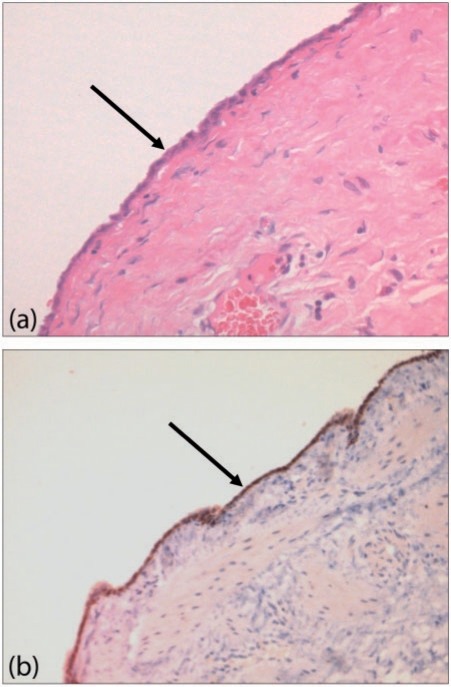
Figure 1
Figure 1
Normal mesothelium histological features. (a) Haematoxylin and eosin and (b) calretinin stains show normal mesothelium (arrows).
Figure 2
Figure 2
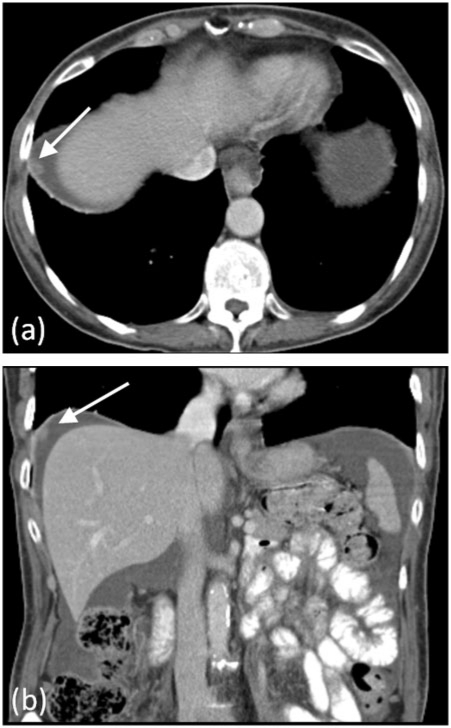
Subphrenic peritoneal deposit. Contrast-enhanced MDCT demonstrating a right subphrenic deposit (arrows) in (a) axial and (b) coronal planes from metastatic ovarian carcinoma.
Figure 3
Figure 3
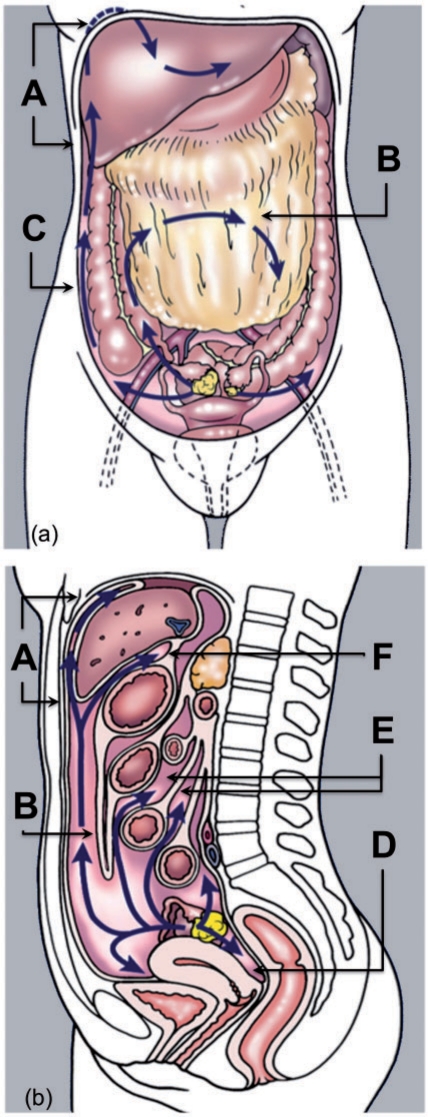
Flow of peritoneal fluid. (a) Coronal and (b) sagittal pictorial diagram showing flow of peritoneal fluid (blue arrows) in relation to peritoneal spaces, ligaments, omenta and mesenteries. A, perihepatic and subdiaphragmatic flow; B, flow over the greater omentum; C, flow along the paracolic gutters; D, peritoneal fluid lying within the most dependent peritoneal space (pouch of Douglas); E, flow around gut serosa; F, communication with lesser sac. (Adapted from Amin Z, Reznek RH. Peritoneal metastases. In: Husband JE, Reznek RH, editors. Imaging in oncology. 3rd ed. Informa Healthcare; 2009. p. 1094–114; with permission.)
Figure 4
Figure 4
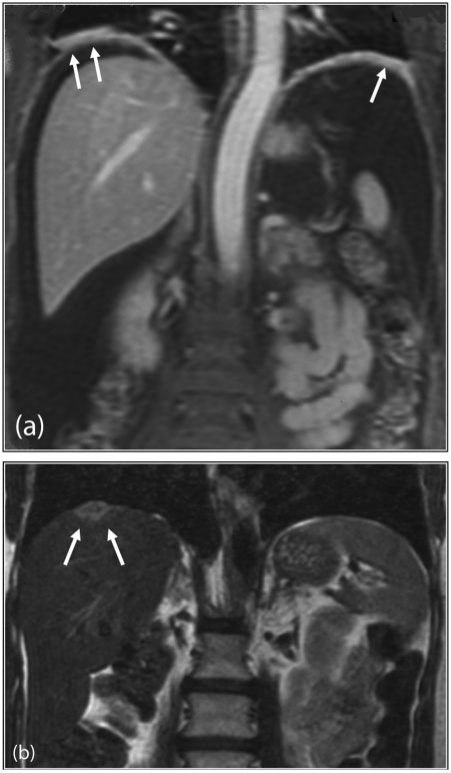
Subphrenic peritoneal disease. (a) Postgadolinium T1-weighted coronal MRI demonstrates nodular enhancement of bilateral subphrenic peritoneal deposits (arrows). (b) Coronal T2-weighted MRI of the upper abdomen shows a solitary right subphrenic deposit (arrows).
Figure 5
Figure 5
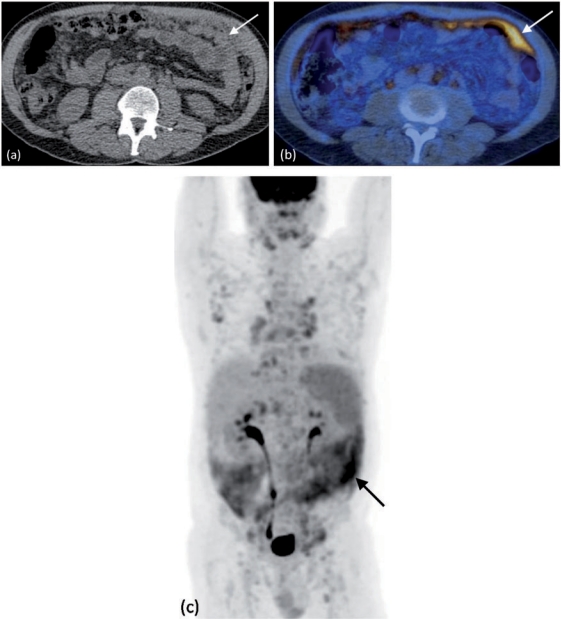
Peritoneal lymphoma. FDG PET/CT demonstrates diffuse deposits within the greater omentum (arrows) on (a) unenhanced CT. (b) Axial fused PET/CT and (c) coronal PET images show multiple areas of increased uptake within these and other greater omental deposits, including several retroperitoneal nodes (arrows).
Figure 6
Figure 6
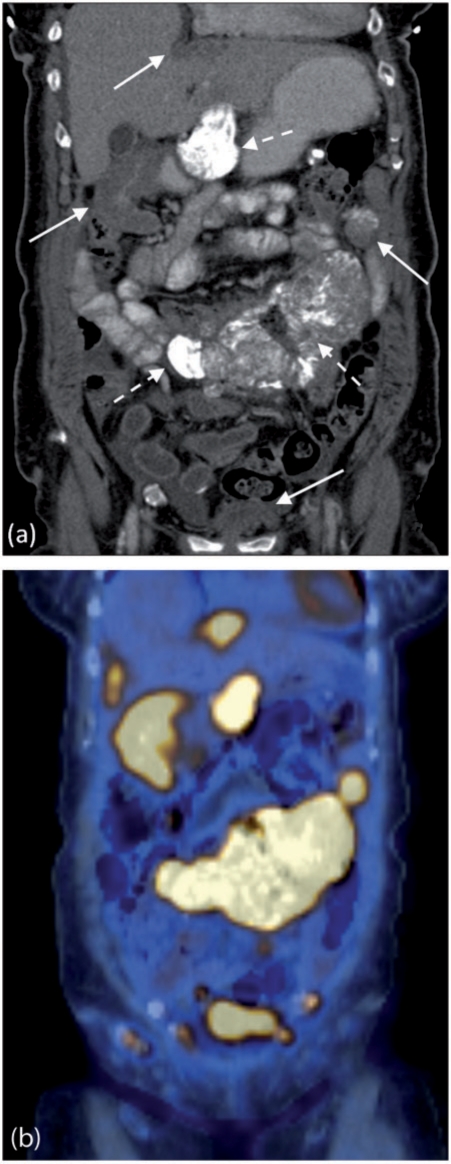
Metastatic ovarian carcinoma with calcified peritoneal deposits on FDG PET/CT. (a) Contrast-enhanced MDCT shows multiple calcified (dashed arrows) and non-calcified (solid arrows) peritoneal deposits. (b) Coronal fused PET/CT demonstrating avid FDG uptake within the calcified and non-calcified deposits.
Figure 7
Figure 7
Metastatic pancreatic neuroendocrine tumour. Axial contrast-enhanced MDCT shows the typical hypervascular peritoneal deposits from a neuroendocrine tumour (arrows).
Figure 8
Figure 8
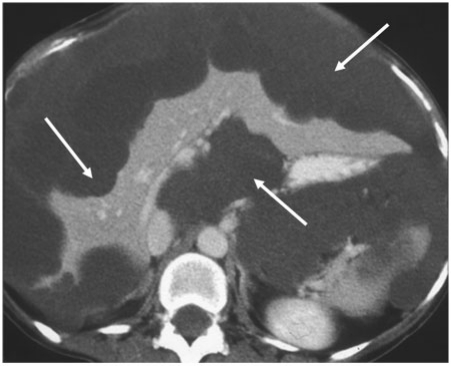
Pseudomyxoma peritonei. Axial contrast-enhanced CT shows the typical excessive scalloping of the liver and spleen from intraperitoneal mucin.
Figure 9
Figure 9
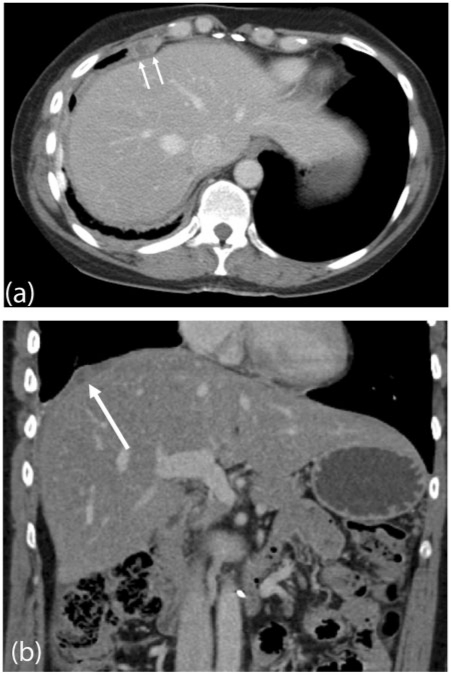
Subphrenic peritoneal deposit. Contrast-enhanced (a) axial and (b) coronal reformat MDCT showing a focal low attenuation peritoneal deposit (arrowed) from ovarian carcinomatosis.
Figure 10
Figure 10
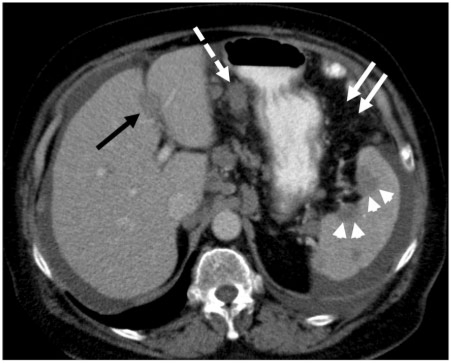
Ovarian peritoneal carcinomatosis. Contrast-enhanced MDCT showing multiple peritoneal deposits involving the falciform ligament (black arrow) and gastrohepatic ligament (dashed arrows). Note the scalloping capsular splenic deposits (arrow heads) and nodular involvement of the greater omentum (solid white arrows).
Figure 11
Figure 11
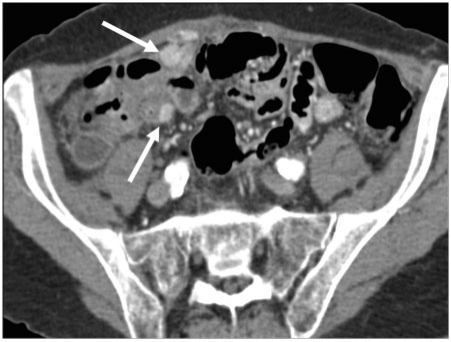
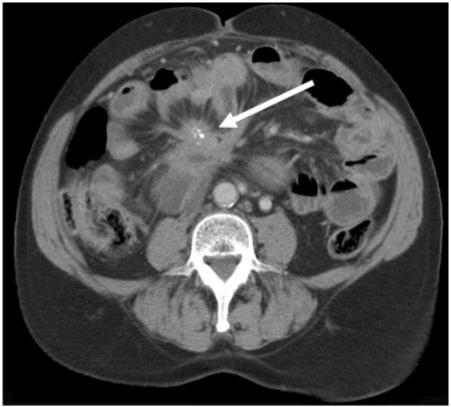
Carcinoid tumour. Contrast-enhanced MDCT shows a spiculated soft tissue mass within the small bowel mesentery (arrow). The central calcification and soft tissue projections extending from the mass are typical of the associated desmoplastic reaction.
Figure 12
Figure 12
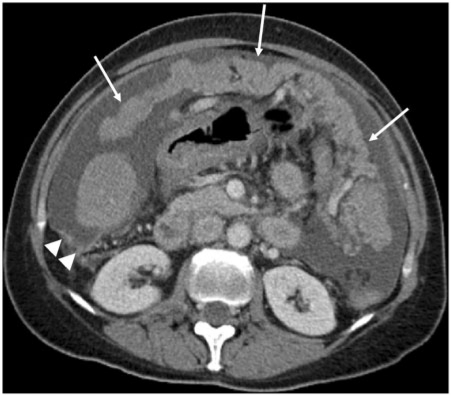
Greater omentum deposit. Axial contrast-enhanced CT shows extensive tumour involvement of the greater omentum (arrows), giving rise to an omental cake secondary to ovarian carcinoma. Note associated ascites and nodularity of the right paracolic peritoneal reflection (arrow heads).
Figure 13
Figure 13
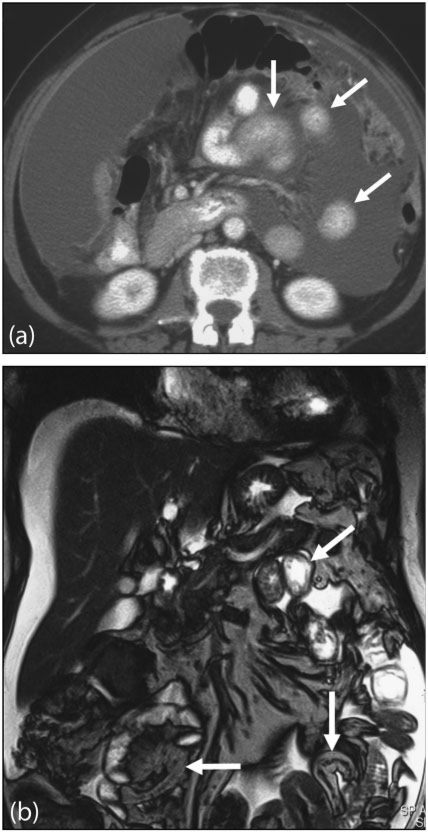
Serosal deposits. (a) Axial contrast-enhanced MDCT shows small bowel serosal deposits from metastatic ovarian carcinoma (arrows). Note involvement of the greater omentum and extensive ascites. In a different case, (b) coronal T2-weighted MRI demonstrates multisegment small bowel serosal deposits (arrows).
Figure 14
Figure 14
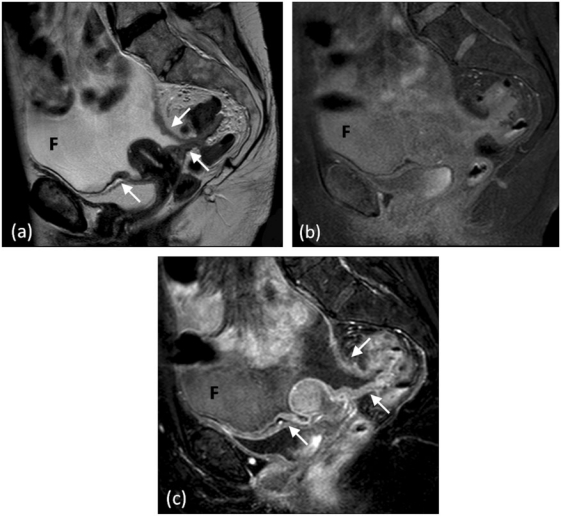
Pelvic peritoneal involvement. (a) Sagittal T2-weighted MRI depicting peritoneal thickening and nodularity (arrows). Sagittal T1-weighted fat-saturated MRI (b) before and (c) after intravenous injection of gadolinium demonstrating marked abnormal peritoneal enhancement. Ascitic fluid (F) outlines the pelvic peritoneal spaces.
Figure 15
Figure 15
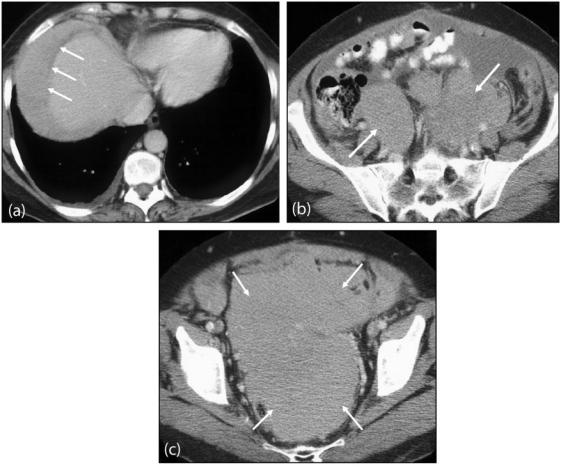
Malignant peritoneal mesothelioma. (a) Contrast-enhanced axial CT of the upper abdomen showing homogeneous tumour occupying the right subphrenic space (arrows), displacing adjacent liver parenchyma. (b) Axial images of the lower abdomen and (c) pelvis show an extensive confluent peritoneal mass (arrows) with associated ascites.
Figure 16
Figure 16
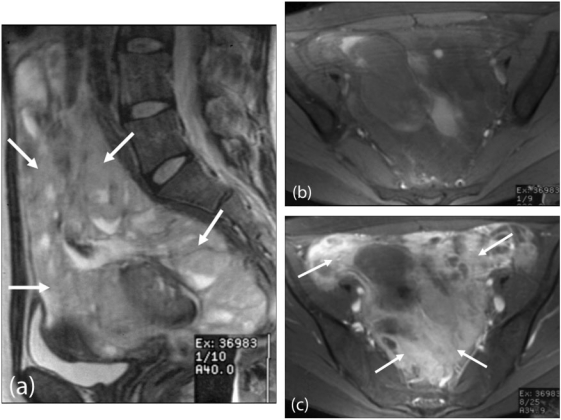
Desmoplastic small round cell tumour. MRI pelvis (a) sagittal T2-weighted and (b) axial T1-weighted images demonstrating a large lobulated peritoneal mass extending into the pelvis (arrows), which shows (c) enhancement after intravenous gadolinium injection (arrows).
Figure 17
Figure 17
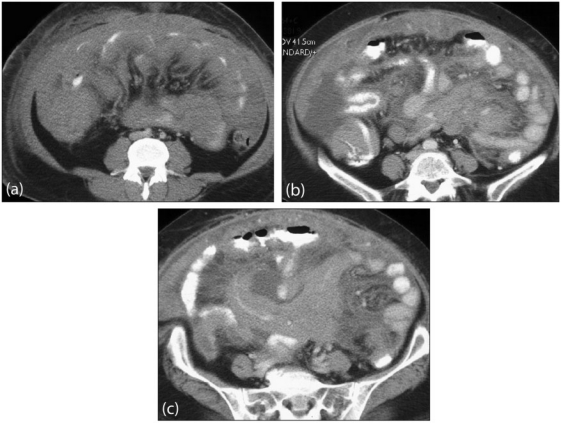
Primary peritoneal lymphoma. Axial contrast-enhanced MDCT images show (a) diffuse confluent mass involving the small bowel mesentery, bowel serosa and greater omentum. (b) and (c) show extensive disease involving the root of the small bowel mesentery and bowel wall. Note associated ascites.

References

    1. Meyers MA. Distribution of intra-abdominal malignant seeding: dependency on dynamics of flow of ascitic fluid. Am J Roentgenol Radium Ther Nucl Med. 1973;119:198–206. - PubMed
    1. Standring S. Gray's anatomy: the anatomical basis of clinical practice. 39th ed. Churchill Livingstone; 2004. Peritoneum and peritoneal cavity.
    1. Coakley FV, Hricak H. Imaging of peritoneal and mesenteric disease: key concepts for the clinical radiologist. Clin Radiol. 1999;54:563–74. doi: 10.1016/S0009-9260(99)90018-1. - DOI - PubMed
    1. DeMeo JH, Fulcher AS, Austin RF., Jr Anatomic CT demonstration of the peritoneal spaces, ligaments, and mesenteries: normal and pathologic processes. Radiographics. 1995;15:755–70. - PubMed
    1. Gore RM, Levine LS. Textbook of gastrointestinal radiology. 3rd ed. Saunders; 2007. Peritoneal and retroperitoneal anatomy; pp. 2071–97.

MeSH terms