


Dietary selenium as a modulator of PCB 126-induced hepatotoxicity in male Sprague-Dawley rats
- PMID: 21865291
- PMCID: PMC3196656
- DOI: 10.1093/toxsci/kfr215
Dietary selenium as a modulator of PCB 126-induced hepatotoxicity in male Sprague-Dawley rats
Abstract
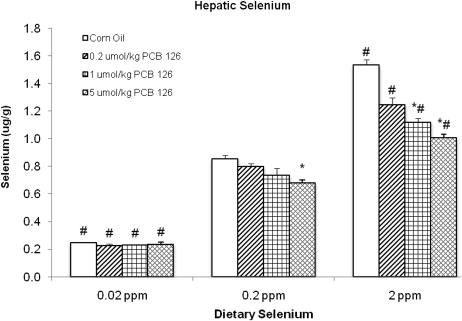
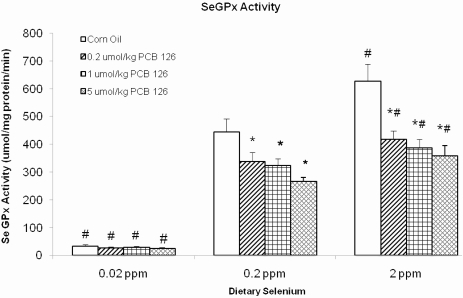
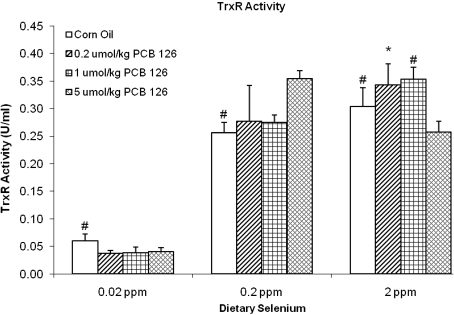
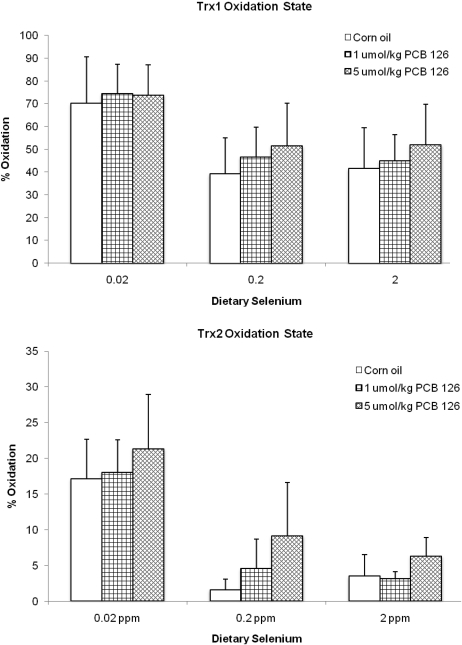
Homeostasis of selenium (Se), a critical antioxidant incorporated into amino acids and enzymes, is disrupted by exposure to aryl hydrocarbon receptor (AhR) agonists. Here we examined the importance of dietary Se in preventing the toxicity of the most toxic polychlorinated biphenyl congener, 3,3',4,4',5-pentachlorobiphenyl (PCB 126), a potent AhR agonist. Male Sprague-Dawley rats were fed a modified AIN-93 diet with differing dietary Se levels (0.02, 0.2, and 2 ppm). Following 3 weeks of acclimatization, rats from each dietary group were given a single ip injection of corn oil (vehicle), 0.2, 1, or 5 μmol/kg body weight PCB 126, followed 2 weeks later by euthanasia. PCB exposure caused dose-dependent increases in liver weight and at the highest PCB 126 dose decreases in whole body weight gains. Hepatic cytochrome P-450 (CYP1A1) activity was significantly increased even at the lowest dose of PCB 126, indicating potent AhR activation. PCB exposure diminished hepatic Se levels in a dose-dependent manner, and this was accompanied by diminished Se-dependent glutathione peroxidase activity. Both these effects were partially mitigated by Se supplementation. Conversely, thioredoxin (Trx) reductase activity and Trx oxidation state, although significantly diminished in the lowest dietary Se groups, were not affected by PCB exposure. In addition, PCB 126-induced changes in hepatic copper, iron, manganese, and zinc were observed. These results demonstrate that supplemental dietary Se was not able to completely prevent the toxicity caused by PCB 126 but was able to increase moderately the levels of several key antioxidants, thereby maintaining them roughly at normal levels.
Figures
References
-
- Alcock RE, Behnisch PA, Jones KC, Hagenmaier H. Dioxin-like PCBs in the environment-human exposure and the significance of sources. Chemosphere. 1998;37:1457–1472. - PubMed
-
- Anderson ME. Determination of glutathione and glutathione disulfide in biological samples. Methods Enzymol. 1985;113:548–555. - PubMed
-
- Bandiera S, Safe S, Okey AB. Binding of polychlorinated biphenyls classified as either phenobarbitone-, 3-methylcholanthrene- or mixed-type inducers to cytosolic Ah receptor. Chem. Biol. Interact. 1982;39:259–277. - PubMed
-
- Banni M, Messaoudi I, Said L, El Heni J, Kerkeni A, Said K. Metallothionein gene expression in liver of rats exposed to cadmium and supplemented with zinc and selenium. Arch. Environ. Contam. Toxicol. 2010;59:513–519. - PubMed
-
- Bardia A, Tleyjeh IM, Cerhan JR, Sood AK, Limburg PJ, Erwin PJ, Montori VM. Efficacy of antioxidant supplementation in reducing primary cancer incidence and mortality: systematic review and meta-analysis. Mayo Clin. Proc. 2008;83:23–34. - PubMed
Publication types
MeSH terms
Substances
Grants and funding
LinkOut - more resources
Full Text Sources
Medical
