


Effect of aneurysm on the mechanical dissection properties of the human ascending thoracic aorta
- PMID: 21868041
- PMCID: PMC8084112
- DOI: 10.1016/j.jtcvs.2011.07.058
Effect of aneurysm on the mechanical dissection properties of the human ascending thoracic aorta
Abstract
Objectives: The acute dissection of an ascending thoracic aortic aneurysm (ATAA) represents a devastating separation of elastic layers occurring when the hemodynamic loads on the diseased wall exceed the adhesive strength between layers. At present, the mechanics underlying aortic dissection are largely unclear, and the biomechanical delamination properties of the aneurysmal aorta are not defined. Individuals with bicuspid aortic valve (BAV) are particularly predisposed to ascending aortic aneurysm formation, with a marked risk of aortic dissection. The purpose of this study was to evaluate and compare the dissection properties of nonaneurysmal and aneurysmal human ascending thoracic aorta from patients with BAV morphology or normal tricuspid aortic valve (TAV) morphology using biomechanical delamination testing.
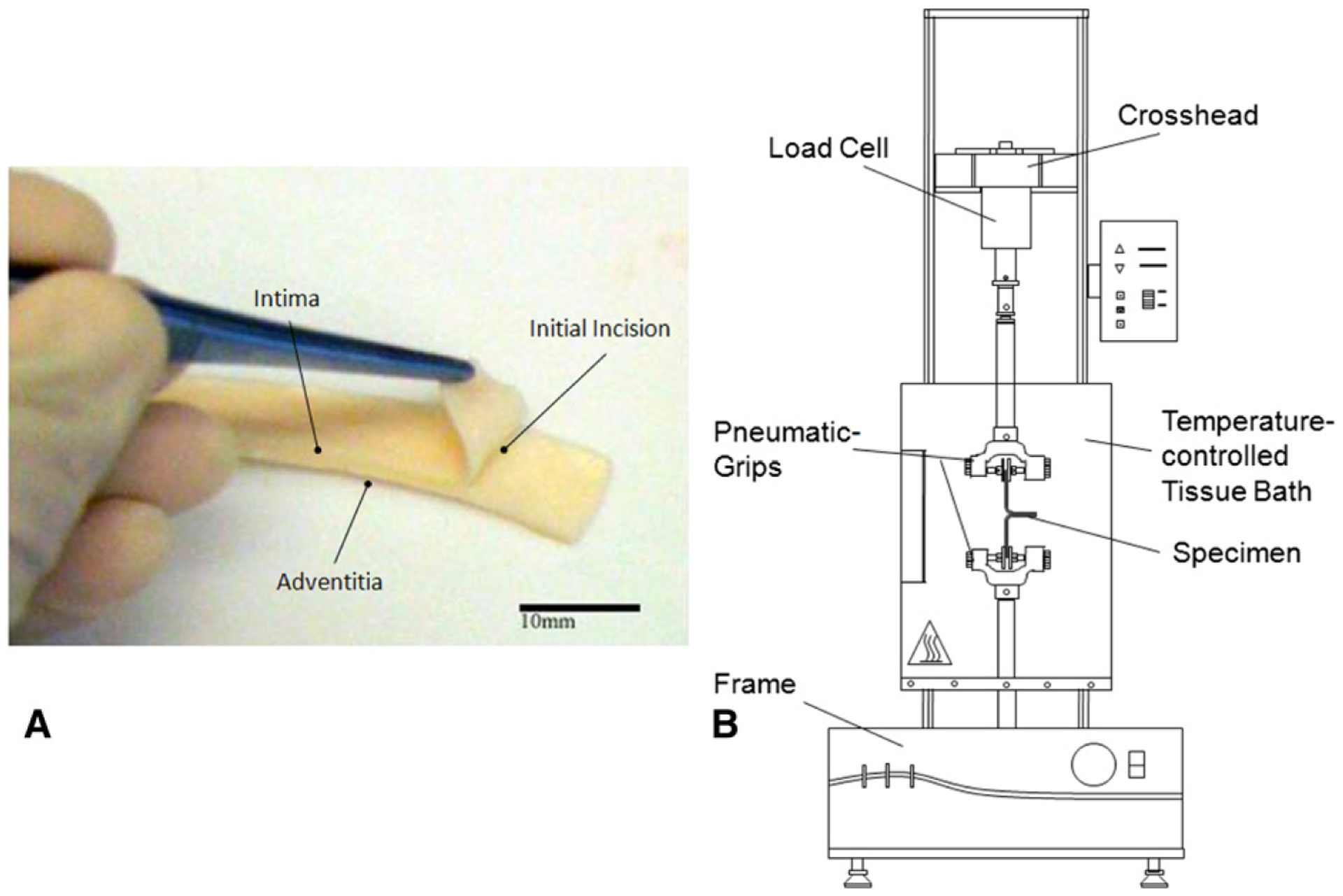
Methods: The influence on the delamination strength (S(d)) of the aorta associated with BAV was compared with that in patients with TAV. After complete delamination of ATAA tissue samples, tensile tests were performed on each delaminated half for comparison of their tensile strengths.
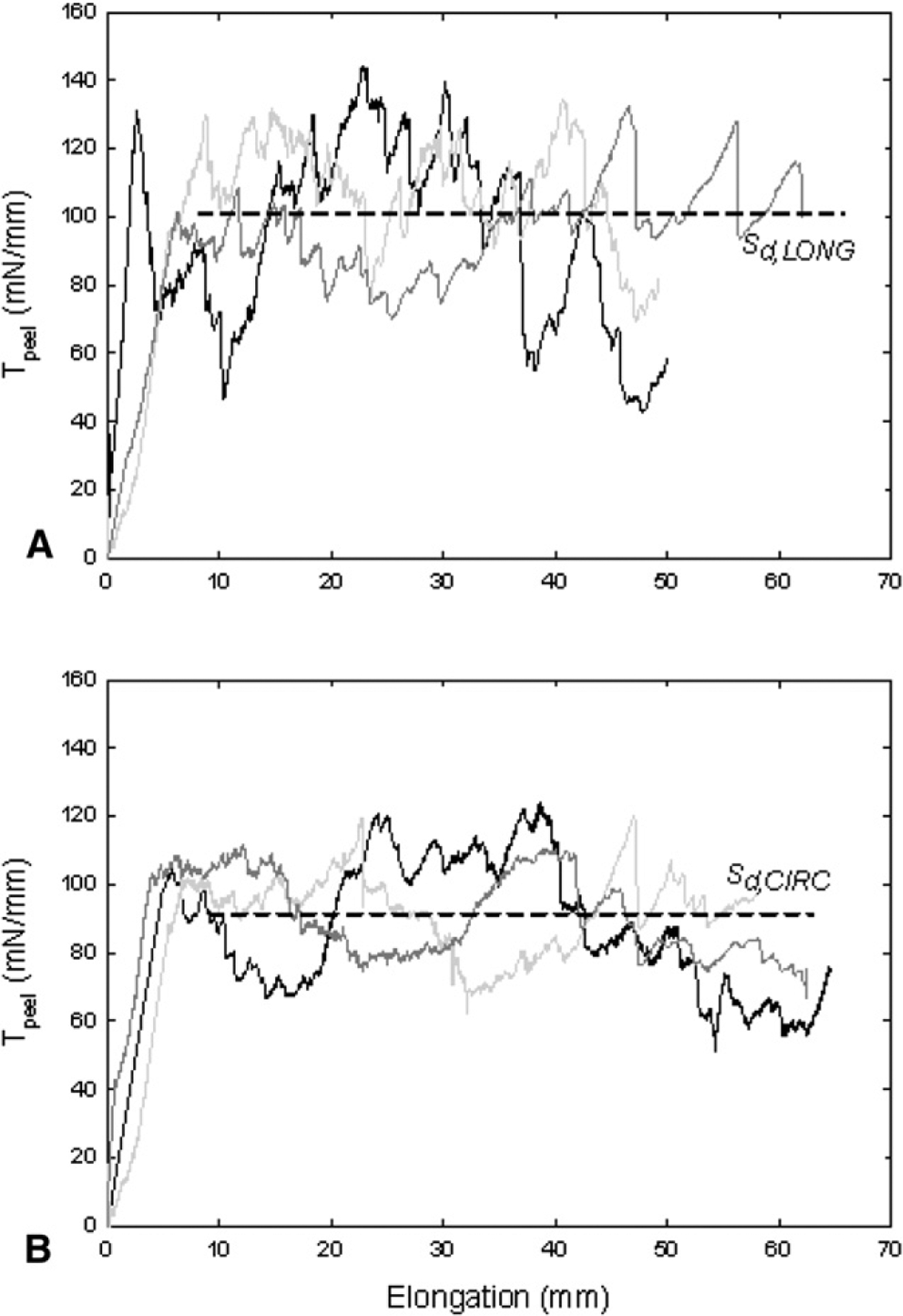
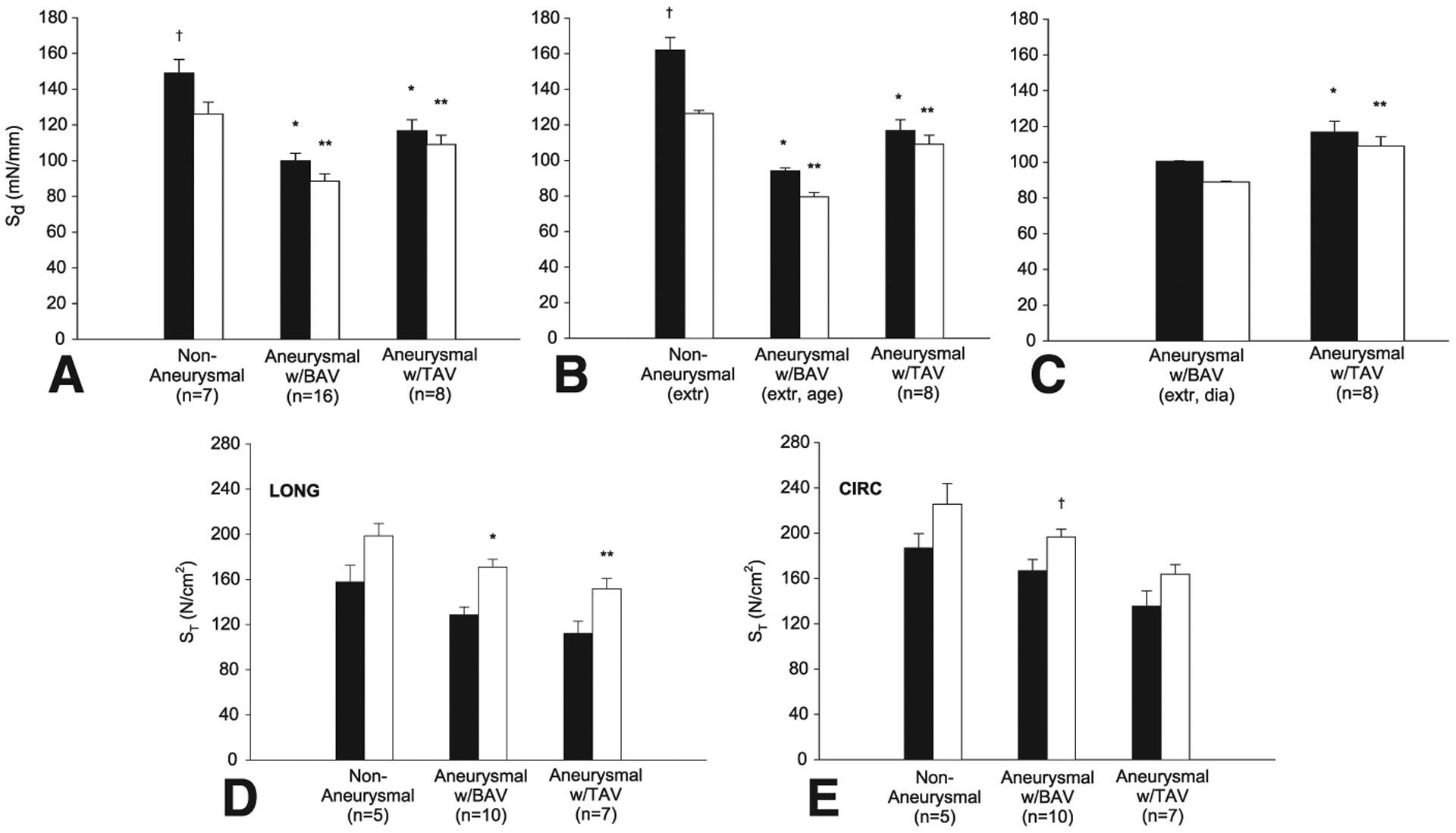
Results: The results showed that the aneurysmal aortas with BAV and TAV have lower S(d) than nonaneurysmal aortas and that ATAA with BAV has a lower S(d) than that with TAV. We have found a significant difference in S(d) between longitudinal and circumferential directions of the nondiseased aorta, suggesting anisotropic dissection properties.
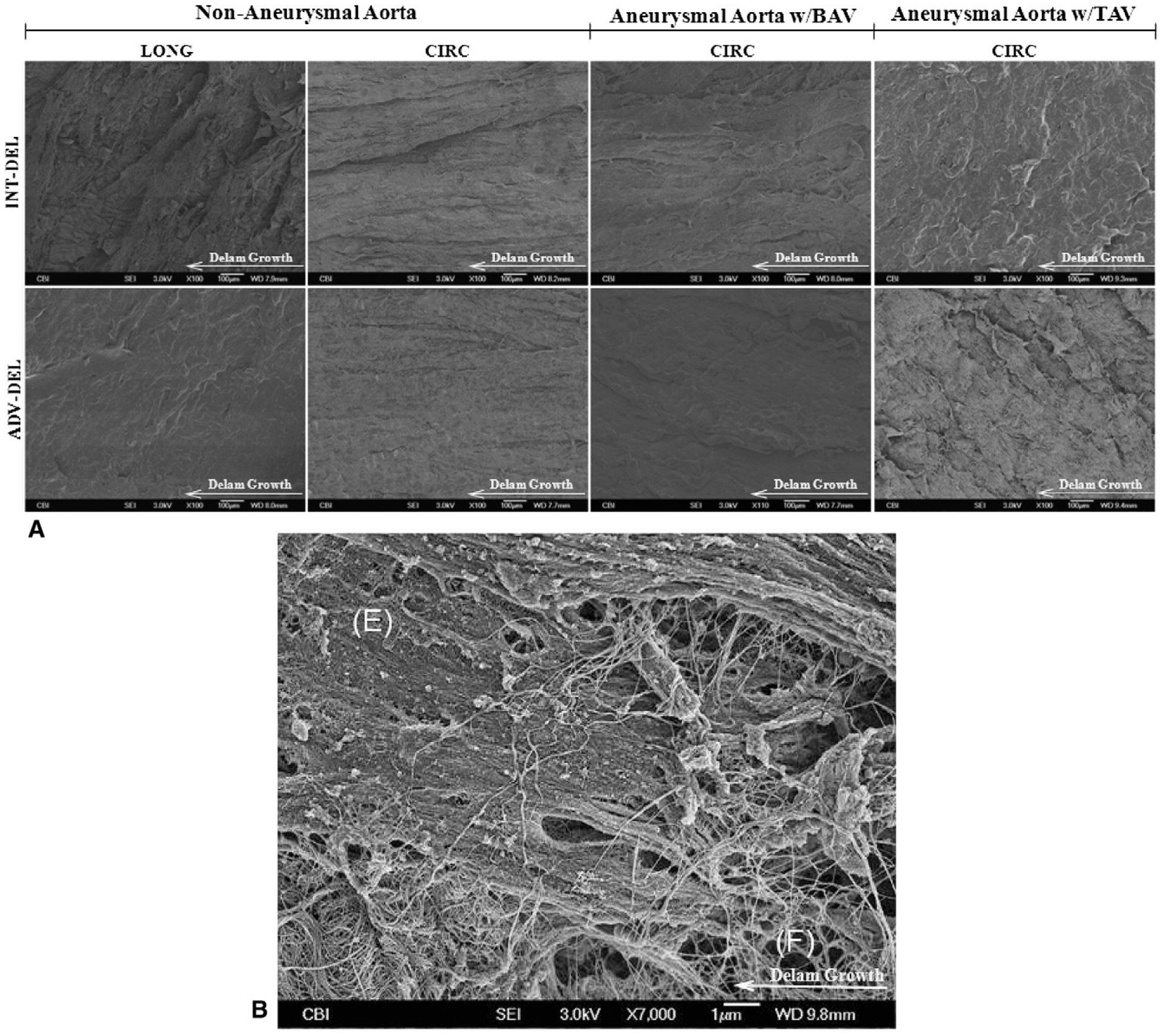
Conclusions: The tensile testing results suggest that the weaker intimal half of the aortic wall might fail before the outer adventitial half. Scanning electron microscope analyses suggest different failure modalities of dissection between the two morphologies, and the lower S(d) in ATAAs appears to be associated with a disorganized microstructure. BAV ATAAs have a lower S(d) than TAV ATAAs, suggesting a greater propensity for aortic dissection.
Published by Mosby, Inc.
Figures
References
-
- Bonnichsen CR, Sundt TM III, Anavekar NS, Foley TA, Morris MF, Martinez MW, et al. Aneurysms of the ascending aorta and arch: the role of imaging in diagnosis and surgical management. Expert Rev Cardiovasc Ther. 2011;9:45–61. - PubMed
-
- Gleason TG. Heritable disorders predisposing to aortic dissection. Semin Thorac Cardiovasc Surg. 2005;17:274–81. - PubMed
-
- Davies RR, Goldstein LJ, Coady MA, Tittle SL, Rizzo JA, Kopf GS, et al. Yearly rupture or dissection rates for thoracic aortic aneurysms: simple prediction based on size. Ann Thorac Surg. 2002;73:17–28. - PubMed
-
- Knipp BS, Deeb GM, Prager RL, Williams CY, Upchurch GR, Patel HJ. A contemporary analysis of outcomes for operative repair of type A aortic dissection in the United States. Surgery. 2007;142:524–8. - PubMed
-
- Rampoldi V, Trimarchi S, Eagle KA, Nienaber CA, Oh JK, Bossone E, et al. Simple risk models to predict surgical mortality in acute type A aortic dissection: the International Registry of Acute Aortic Dissection score. Ann Thorac Surg. 2007;83:55–61. - PubMed
Publication types
MeSH terms
Grants and funding
LinkOut - more resources
Full Text Sources
Medical
