


Angiogenesis in skeletal muscle precede improvements in peak oxygen uptake in peripheral artery disease patients
- PMID: 21868709
- PMCID: PMC3578302
- DOI: 10.1161/ATVBAHA.111.230441
Angiogenesis in skeletal muscle precede improvements in peak oxygen uptake in peripheral artery disease patients
Abstract
Objective: Peripheral artery disease (PAD) is characterized by impaired blood flow to the lower extremities, causing claudication and exercise intolerance. The mechanism(s) by which exercise training improves functional capacity is not understood. This study tested the hypothesis that in PAD patients who undergo supervised exercise training, increases in capillary density (CD) in calf muscle take place before improvements in peak oxygen uptake (VO(2)).
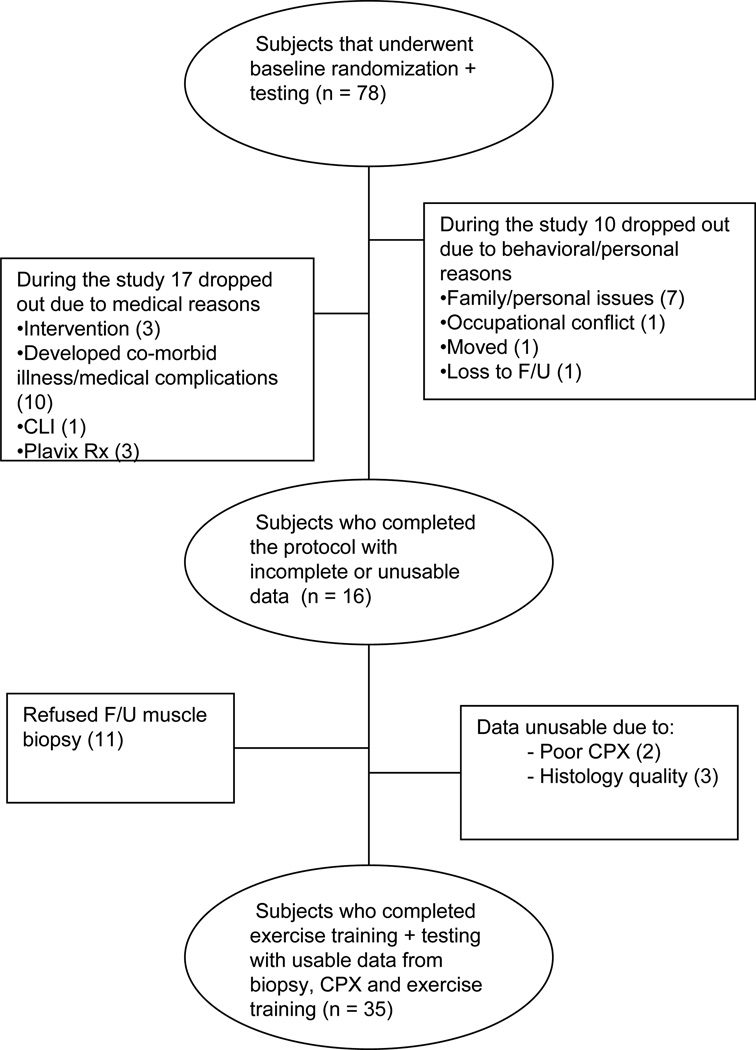
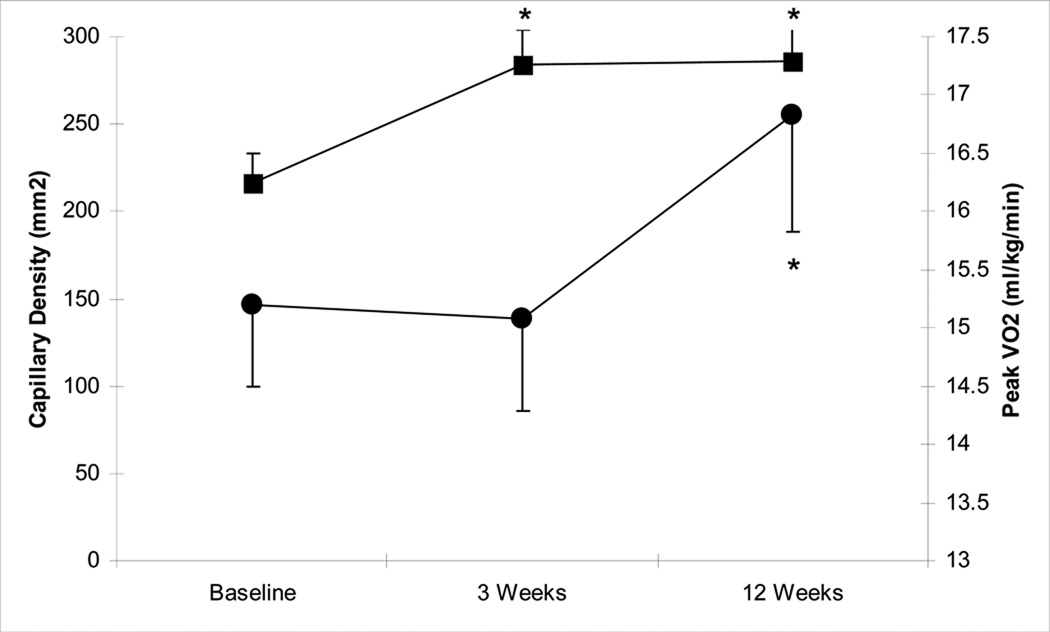
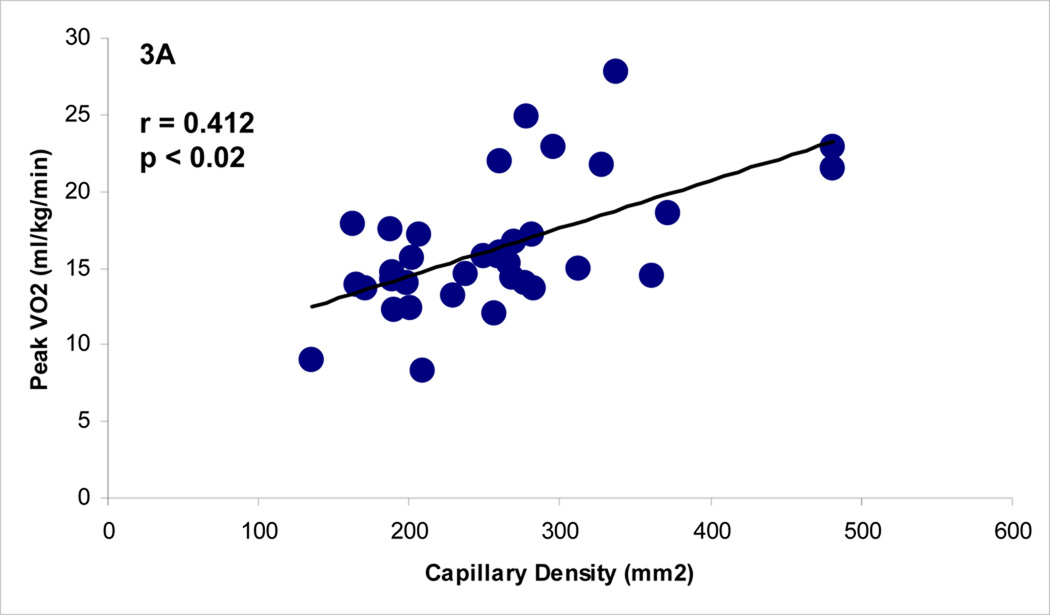
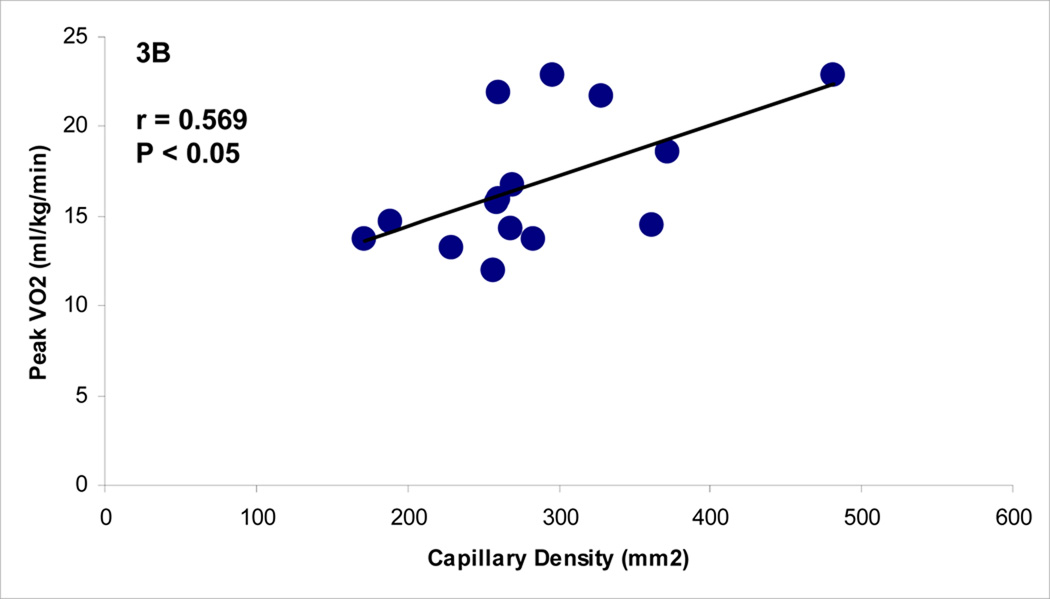
Methods and results: Thirty-five PAD patients were randomly assigned to 12 weeks of directly supervised or home-based exercise training. Peak VO(2) testing and gastrocnemius muscle biopsies were performed at baseline and after training. CD (endothelial cells/mm(2)) was measured using immunofluorescence staining. After 3 weeks of directly supervised training, patients had an increase in CD (216±66 versus 284±77, P<0.01) but no increase in peak VO(2). However, after 12 weeks, peak VO(2) increased (15.3±2.8 versus 16.8±3.8, P<0.01), whereas in muscle, CD remained increased over baseline, but there were no changes in markers of oxidative capacity. Within subjects, CD was related to peak VO(2) before and after directly supervised training.
Conclusion: Changes in CD in ischemic muscle with training may modulate the response to training, and those changes precede the increase in VO(2).
Conflict of interest statement
None of the authors have any conflicts of interest relative to the intervention.
Figures
References
-
- American Heart Association. Heart Disease and Stroke Statistics-2010 Update. http://americanheart.org.
-
- Hirsch AT, Criqui MH, Treat-Jacobson D, Regensteiner JG, Creager MA, Olin JW, Krook SH, Hunninghake DB, Comerota AJ, Walsh ME, McDermott MM, Hiatt WR. Peripheral arterial disease detection, awareness, and treatment in primary care. JAMA. 2001;286:1317–1324. - PubMed
-
- Hiatt WR, Regesteiner JG, Hargarten ME, Wolfel EE, Brass EP. Benefits of exercise training for patients with peripheral arterial disease. Ciculation. 1990;81:602–609. - PubMed
-
- Stewart KJ, Hiatt WR, Regensteiner JG, Hirsch AT. Exercise training for claudication. N Eng J Med. 2002;347:1941–1951. - PubMed
-
- Parmenter BJ, Raymond J, Fiatarone SMA. The effect of exercise on haemodynamics in intermittent claudication: a systematic review of randomized controlled trials. Sports Med. 2010;40:433–447. - PubMed
Publication types
MeSH terms
Grants and funding
LinkOut - more resources
Full Text Sources
Medical
