


Long-term respiratory muscle endurance training in patients with myasthenia gravis: first results after four months of training
- PMID: 21869926
- PMCID: PMC3159986
- DOI: 10.4061/2011/808607
Long-term respiratory muscle endurance training in patients with myasthenia gravis: first results after four months of training
Abstract
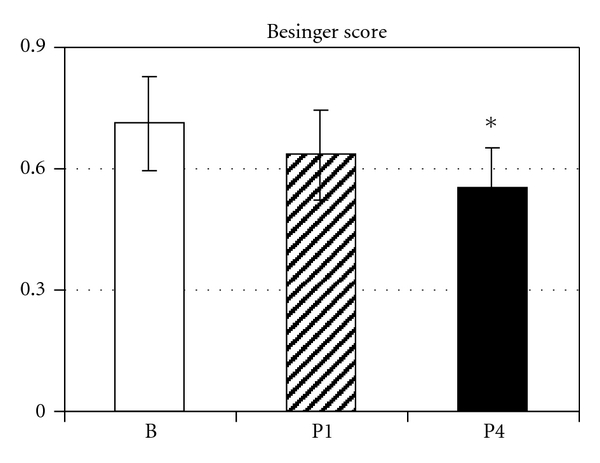
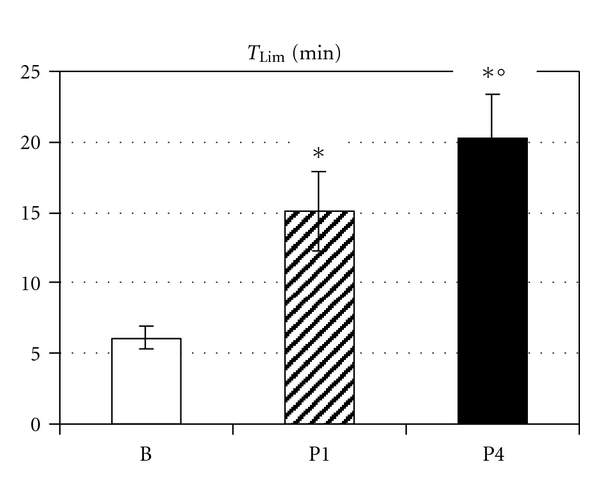
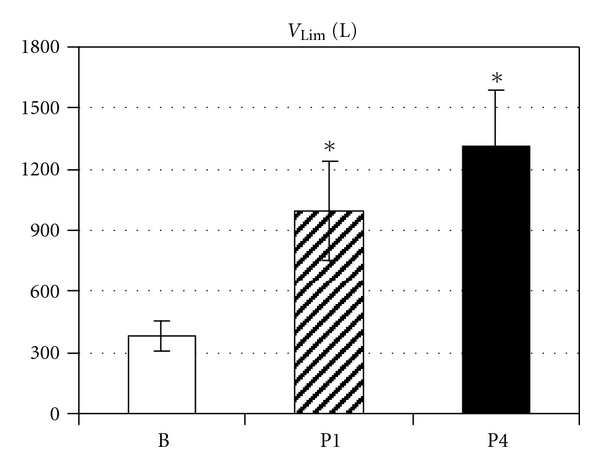
Myasthenia gravis (MG) is characterized by reduced muscle endurance and is often accompanied by respiratory complications. Improvement of respiratory function is therefore an important objective in MG therapy. A previous study demonstrated that respiratory muscle endurance training (RMET) over four weeks increased respiratory muscle endurance of MG patients to about 200% of baseline. The purpose of the present study was to establish an appropriate maintenance training and to test its effects over four months. Ten patients with mild to moderate MG participated in this study. During the first month, they performed five training sessions per week. For the following 3 months, training frequency was reduced to five sessions per two weeks. Myasthenia score, lung function, and respiratory endurance were determined prior to training, after the first month, and after 4 months. Myasthenia score improved from 0.71 ± 0.1 to 0.56 ± 0.1 (P = 0.007). Respiratory endurance time increased from 6.1 ± 0.8 to 20.3 ± 3.0 min (P < 0.001). In conclusion, this RMET maintenance program is feasible and is significantly beneficial for MG patients.
Figures
References
-
- Oosterhuis HJ. Myasthenia gravis. A survey. Clinical Neurology and Neurosurgery. 1981;83(3):105–135. - PubMed
-
- Keenan SP, Alexander D, Road JD, Ryan CF, Oger J, Wilcox PG. Ventilatory muscle strength and endurance in myasthenia gravis. European Respiratory Journal. 1995;8(7):1130–1135. - PubMed
-
- Heliopoulos I, Patlakas G, Vadikolias K, et al. Maximal voluntary ventilation in myasthenia gravis. Muscle and Nerve. 2003;27(6):715–719. - PubMed
-
- Putman MT, Wise RA. Myasthenia gravis and upper airway obstruction. Chest. 1996;109(2):400–404. - PubMed
-
- Quera-Salva MA, Guilleminault C, Chevret S, et al. Breathing disorders during sleep in myasthenia gravis. Annals of Neurology. 1992;31(1):86–92. - PubMed
LinkOut - more resources
Full Text Sources
