


Results of clinicians using a therapeutic robotic system in an inpatient stroke rehabilitation unit
- PMID: 21871095
- PMCID: PMC3182973
- DOI: 10.1186/1743-0003-8-50
Results of clinicians using a therapeutic robotic system in an inpatient stroke rehabilitation unit
Abstract
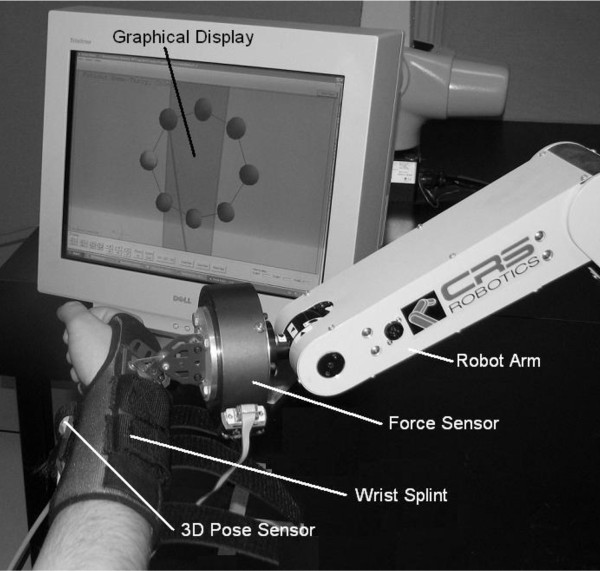
Background: Physical rehabilitation is an area where robotics could contribute significantly to improved motor return for individuals following a stroke. This paper presents the results of a preliminary randomized controlled trial (RCT) of a robot system used in the rehabilitation of the paretic arm following a stroke.
Methods: The study's objectives were to explore the efficacy of this new type of robotic therapy as compared to standard physiotherapy treatment in treating the post-stroke arm; to evaluate client satisfaction with the proposed robotic system; and to provide data for sample size calculations for a proposed larger multicenter RCT. Twenty clients admitted to an inpatient stroke rehabilitation unit were randomly allocated to one of two groups, an experimental (robotic arm therapy) group or a control group (conventional therapy). An occupational therapist blinded to patient allocation administered two reliable measures, the Chedoke Arm and Hand Activity Inventory (CAHAI-7) and the Chedoke McMaster Stroke Assessment of the Arm and Hand (CMSA) at admission and discharge. For both groups, at admission, the CMSA motor impairment stage of the affected arm was between 1 and 3.
Results: Data were compared to determine the effectiveness of robot-assisted versus conventional therapy treatments. At the functional level, both groups performed well, with improvement in scores on the CAHAI-7 showing clinical and statistical significance. The CAHAI-7 (range7-49) is a measure of motor performance using functional items. Individuals in the robotic therapy group, on average, improved by 62% (95% CI: 26% to 107%) while those in the conventional therapy group changed by 30% (95% CI: 4% to 61%). Although performance on this measure is influenced by hand recovery, our results showed that both groups had similar stages of motor impairment in the hand. Furthermore, the degree of shoulder pain, as measured by the CMSA pain inventory scale, did not worsen for either group over the course of treatment.
Conclusion: Our findings indicated that robotic arm therapy alone, without additional physical therapy interventions tailored to the paretic arm, was as effective as standard physiotherapy treatment for all responses and more effective than conventional treatment for the CMSA Arm (p = 0.04) and Hand (p = 0.04). At the functional level, both groups performed equally well.
Figures




References
Publication types
MeSH terms
LinkOut - more resources
Full Text Sources
Medical
