


Identification and characterization of cartilage oligomeric matrix protein as a novel pathogenic factor in keloids
- PMID: 21872564
- PMCID: PMC3181360
- DOI: 10.1016/j.ajpath.2011.06.034
Identification and characterization of cartilage oligomeric matrix protein as a novel pathogenic factor in keloids
Abstract
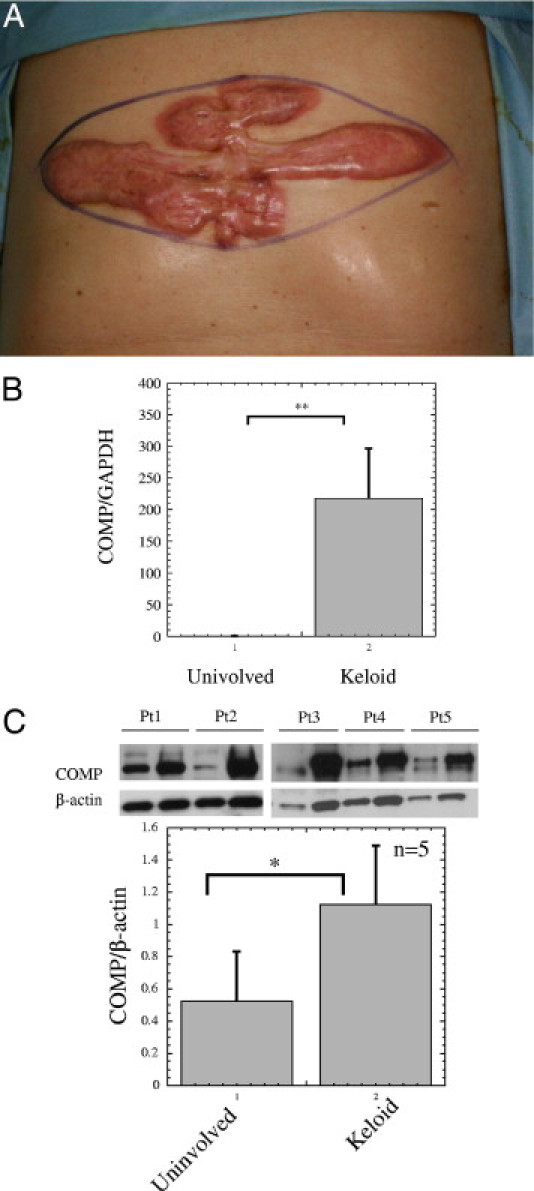
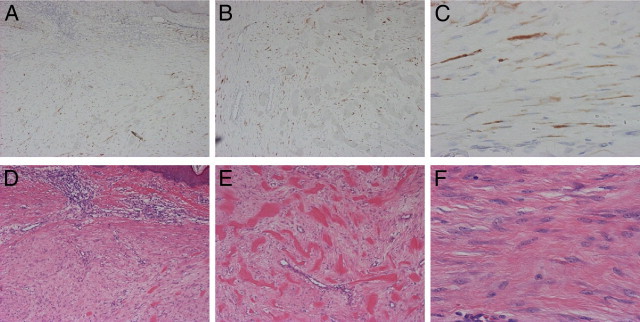
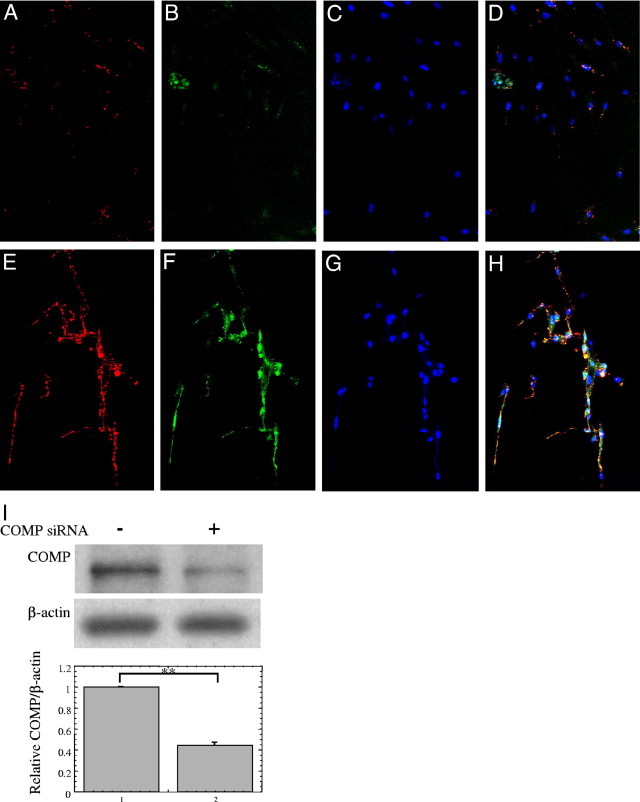
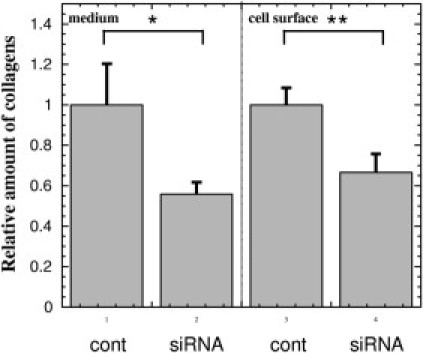
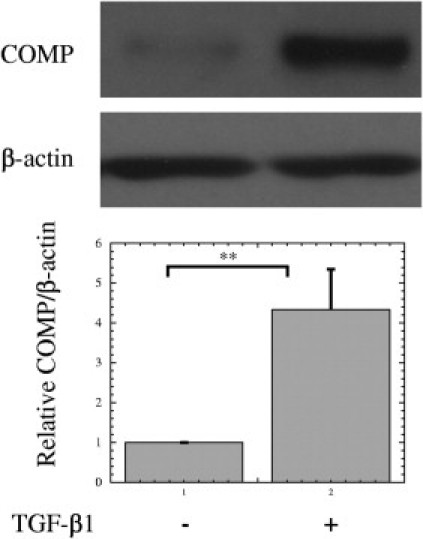
To elucidate pathogenic molecules in keloids, microarray analysis was performed using RNAs extracted from keloid-derived fibroblasts and normal skin-derived fibroblasts from the same patient with a typical keloid. Among 11 up-regulated extracellular matrix genes, cartilage oligomeric matrix protein (COMP) was most prominently increased. Up-regulation of COMP mRNA and protein was confirmed in the keloid tissue by quantitative RT-PCR and Western blot. Using immunohistochemistry, we compared 15 keloids and 6 control normal tissues using a COMP-specific antibody and found that COMP stained positively in 10 keloids (66.7%), whereas no staining was observed in normal tissues, demonstrating the ectopic expression of COMP in keloids. Comparing keloids smaller or larger than 10 cm(2), the larger keloids were significantly more intensely stained with the COMP-specific antibody. Because COMP reportedly accelerates collagen type I fibril assembly, we examined whether extracellular type I collagen deposition is altered by silencing COMP mRNA by small interfering RNA (siRNA). Immunocytochemistry showed at 96 hours after transfection with COMP siRNA that the extracellular deposition of type I collagen was decreased compared to that observed with control siRNA. Further, COMP knockdown decreased amount collagens type I to V in the medium and on the cell surfaces. Our data suggest that COMP facilitates keloid formation by accelerating collagen deposition, thus providing a new therapeutic target.
Copyright © 2011 American Society for Investigative Pathology. Published by Elsevier Inc. All rights reserved.
Figures
References
-
- Brown B.C., McKenna S.P., Siddhi K., McGrouther D.A., Bayat A. The hidden cost of skin scars: quality of life after skin scarring. J Plast Reconstr Aesthet Surg. 2008;61:1049–1058. - PubMed
-
- Shih B., Garside E., McGrouther D.A., Bayat A. Molecular dissection of abnormal wound healing processes resulting in keloid disease. Wound Repair Regen. 2010;18:139–153. - PubMed
-
- Russell J.D., Witt W.S. Cell size and growth characteristics of cultured fibroblasts isolated from normal and keloid tissue. Plast Reconstr Surg. 1976;57:207–212. - PubMed
Publication types
MeSH terms
Substances
LinkOut - more resources
Full Text Sources
Other Literature Sources
Miscellaneous
