


Connective tissue growth factor acts within both endothelial cells and beta cells to promote proliferation of developing beta cells
- PMID: 21876171
- PMCID: PMC3174622
- DOI: 10.1073/pnas.1100072108
Connective tissue growth factor acts within both endothelial cells and beta cells to promote proliferation of developing beta cells
Abstract
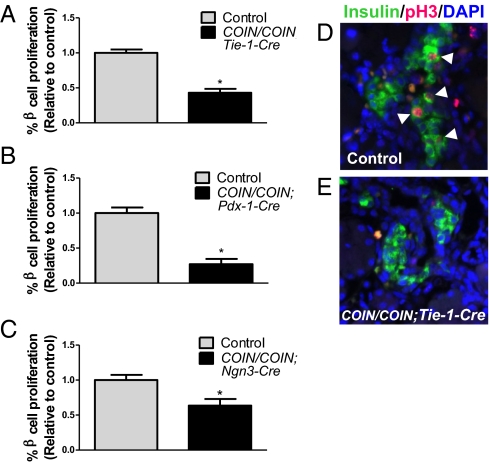
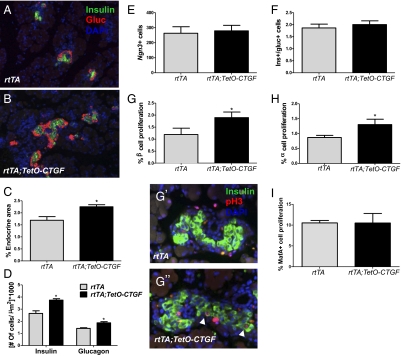
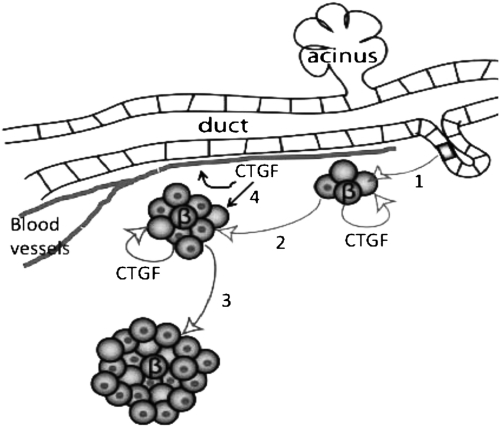
Type 1 and type 2 diabetes result from an absolute or relative reduction in functional β-cell mass. One approach to replacing lost β-cell mass is transplantation of cadaveric islets; however, this approach is limited by lack of adequate donor tissue. Therefore, there is much interest in identifying factors that enhance β-cell differentiation and proliferation in vivo or in vitro. Connective tissue growth factor (CTGF) is a secreted molecule expressed in endothelial cells, pancreatic ducts, and embryonic β cells that we previously showed is required for β-cell proliferation, differentiation, and islet morphogenesis during development. The current study investigated the tissue interactions by which CTGF promotes normal pancreatic islet development. We found that loss of CTGF from either endothelial cells or β cells results in decreased embryonic β-cell proliferation, making CTGF unique as an identified β cell-derived factor that regulates embryonic β-cell proliferation. Endothelial CTGF inactivation was associated with decreased islet vascularity, highlighting the proposed role of endothelial cells in β-cell proliferation. Furthermore, CTGF overexpression in β cells during embryogenesis using an inducible transgenic system increased islet mass at birth by promoting proliferation of immature β cells, in the absence of changes in islet vascularity. Together, these findings demonstrate that CTGF acts in an autocrine manner during pancreas development and suggest that CTGF has the potential to enhance expansion of immature β cells in directed differentiation or regeneration protocols.
Conflict of interest statement
Conflict of interest statement: A.N.E. is a paid employee and shareholder of Regeneron Pharmaceuticals.
Figures
References
-
- Apelqvist A, et al. Notch signalling controls pancreatic cell differentiation. Nature. 1999;400:877–881. - PubMed
-
- Jensen J, et al. Independent development of pancreatic alpha- and beta-cells from neurogenin3-expressing precursors: A role for the notch pathway in repression of premature differentiation. Diabetes. 2000;49(2):163–176. - PubMed
-
- Gu G, Dubauskaite J, Melton DA. Direct evidence for the pancreatic lineage: NGN3+ cells are islet progenitors and are distinct from duct progenitors. Development. 2002;129:2447–2457. - PubMed
-
- Bhushan A, et al. Fgf10 is essential for maintaining the proliferative capacity of epithelial progenitor cells during early pancreatic organogenesis. Development. 2001;128:5109–5117. - PubMed
Publication types
MeSH terms
Substances
Grants and funding
LinkOut - more resources
Full Text Sources
Molecular Biology Databases
Miscellaneous
