doi: 10.3410/B3-17.
Epub 2011 Aug 1.
Harnessing the immune system's arsenal: producing human monoclonal antibodies for therapeutics and investigating immune responses
- PMID: 21876728
- PMCID: PMC3155207
- DOI: 10.3410/B3-17
Item in Clipboard
Harnessing the immune system's arsenal: producing human monoclonal antibodies for therapeutics and investigating immune responses
F1000 Biol Rep.
2011.
Abstract
Monoclonal antibody technology has undergone rapid and innovative reinvention over the last 30 years. Application of these technologies to human samples revealed valuable therapeutic and experimental insights. These technologies, each with their own benefits and flaws, have proven indispensable for immunological research and in our fight to provide new treatments and improved vaccines for infectious disease.
Figures
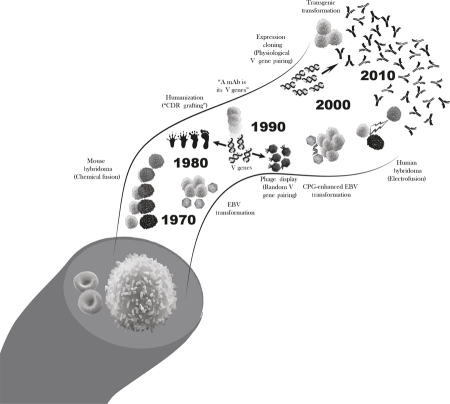
B cells are immune cells that circulate in the blood, each producing antibodies with unique amino acid sequences and binding specificities. Monoclonal antibody (mAb) technology first relied on technologies that immortalized B cells of interest. As these protocols primarily used rodent cells, technologies designed to humanize antibodies were needed to make them safe for human use. Later, the idea emerged that monoclonal antibodies were truly the product of the genes that code for the variable region of their structure (their V genes). This gave way to technologies that relied on the cloning of antibody genes and their production in vitro, which allowed researchers to paint a detailed portrait of the in vivo immune response. One of the most important advances in monoclonal antibody technology was the adaptation and specialization of these protocols for human samples, allowing researchers to study directly relevant and translatable human responses. CDR, complimentary determining region; CPG, —C—phosphate—G—; EBV, Epstein–Barr virus.
References
-
- Burnet FM. A modification of Jerne’s theory of antibody production using the concept of clonal selection. Australian Journal of Science. 1957;20:67–9. - PubMed
-
Evaluated by Patrick C. Wilson 21 Jul 2011
Grants and funding
LinkOut - more resources
Full Text Sources
Other Literature Sources