


Endothelium-derived hyperpolarizing factor and vascular function
- PMID: 21876822
- PMCID: PMC3157651
- DOI: 10.4061/2011/156146
Endothelium-derived hyperpolarizing factor and vascular function
Abstract
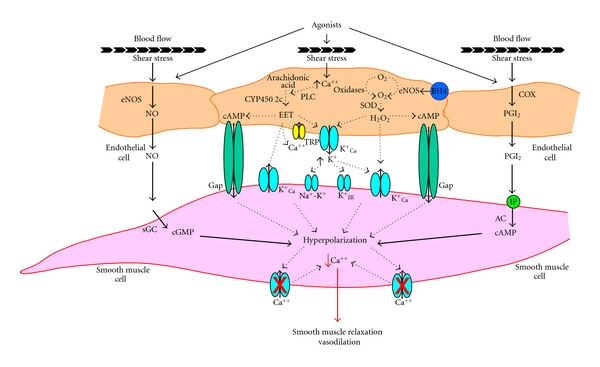
Endothelial function refers to a multitude of physiological processes that maintain healthy homeostasis of the vascular wall. Exposure of the endothelium to cardiac risk factors results in endothelial dysfunction and is associated with an alteration in the balance of vasoactive substances produced by endothelial cells. These include a reduction in nitric oxide (NO), an increase in generation of potential vasoconstrictor substances and a potential compensatory increase in other mediators of vasodilation. The latter has been surmised from data demonstrating persistent endothelium-dependent vasodilatation despite complete inhibition of NO and prostaglandins. This remaining non-NO, non-prostaglandin mediated endothelium-dependent vasodilator response has been attributed to endothelium-derived hyperpolarizing factor/s (EDHF). Endothelial hyperpolarization is likely due to several factors that appear to be site and species specific. Experimental studies suggest that the contribution of the EDHFs increase as the vessel size decreases, with a predominance of EDHF activity in the resistance vessels, and a compensatory up-regulation of hyperpolarization in states characterized by reduced NO availability. Since endothelial dysfunction is a precursor for atherosclerosis development and its magnitude is a reflection of future risk, then the mechanisms underlying endothelial dysfunction need to be fully understood, so that adequate therapeutic interventions can be designed.
Figures
References
-
- Quyyumi AA, Dakak N, Mulcahy D, et al. Nitric oxide activity in the atherosclerotic human coronary circulation. Journal of the American College of Cardiology. 1997;29(2):308–317. - PubMed
-
- Ashfaq S, Beinart SC, Abramson JL, et al. Plasma glutathione redox state: a novel marker of oxidative stress, correlates with early atherosclerosis in humans. Journal of the American College of Cardiology. 2003;41:293A–294A.
-
- Quyyumi AA. Endothelial function in health and disease: new insights into the genesis of cardiovascular disease. American Journal of Medicine. 1998;105:32S–39S. - PubMed
-
- Woolfson RG, Poston L. Effect of NG-monomethyl-L-arginine on endothelium-dependent relaxation of human subcutaneous resistance arteries. Clinical Science. 1990;79(3):273–278. - PubMed
Grants and funding
LinkOut - more resources
Full Text Sources