


Neoadjuvant therapy in pancreatic adenocarcinoma: a meta-analysis of phase II trials
- PMID: 21878232
- PMCID: PMC3164966
- DOI: 10.1016/j.surg.2011.07.006
Neoadjuvant therapy in pancreatic adenocarcinoma: a meta-analysis of phase II trials
Abstract
Background: Neoadjuvant treatment has proven beneficial for many gastrointestinal (GI) malignancies, but no phase III trials have been completed examining this approach in pancreatic cancer. This meta-analysis examines the best available phase II trials using neoadjuvant treatment for resectable and borderline/unresectable pancreatic adenocarcinoma.
Methods: Phase II trials were identified using a MEDLINE search, and the Cochrane Central Register of Controlled Trials from 1960 to July 2010. Patients were divided into 2 groups: Patients with initially resectable tumors (group A), and patients with borderline/unresectable tumors (group B). Primary outcome measures were rate of resection and survival. Pooled proportions and 95% confidence intervals (CIs) were calculated using random-effects or fixed-effects models based on the heterogeneity of included studies.
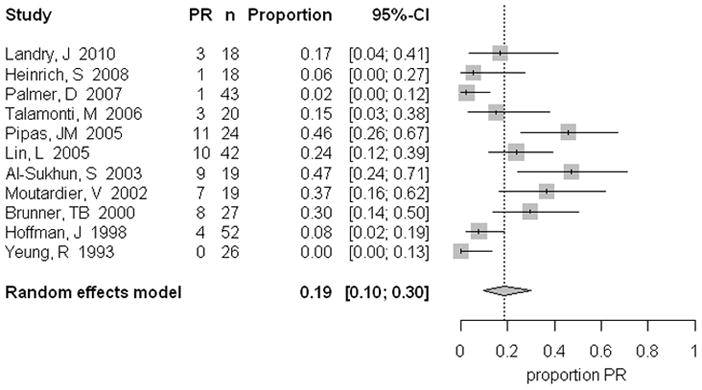
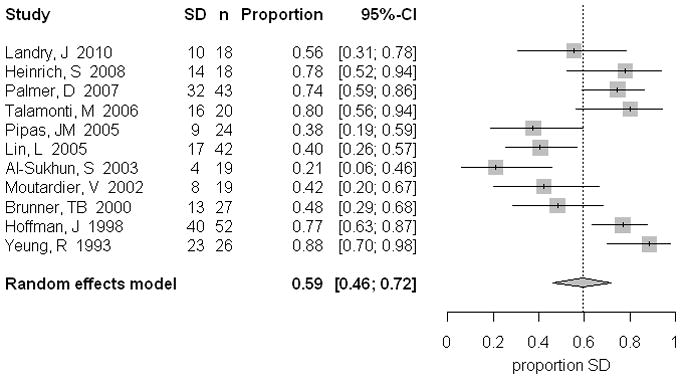
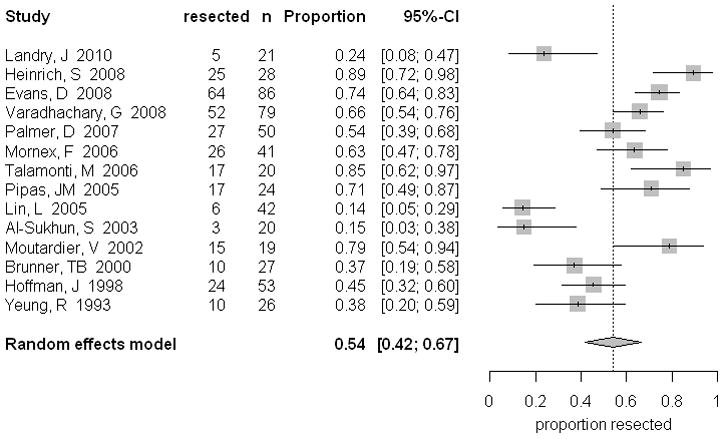
Results: A total of 14 phase II clinical trials including 536 patients were analyzed. After treatment, resectability was 65.8% (95% CI, 55.4-75.6%) compared with 31.6% in group B (95% CI, 14.0-52.5%). A partial response was observed in patients with borderline/unresectable tumors; 31.8 (95% CI, 24.2-39.8%) in group B and 9.5% (95% CI, 2.9-19.4%) in group A (P = .003). Progressive disease was seen in 17.0% (95% CI, 11.9-22.7) of patients in group A versus 21.8% (95% CI, 10.1-36.5%) in group B (P = .006). Median survival in resected patients was 23 months for group A and 22 months for group B.
Conclusion: Neoadjuvant treatment seems to have some activity in patients with borderline/unresectable pancreatic adenocarcinoma. Nearly one third of tumors initially deemed marginal for operative intervention were able to be ultimately resected after treatment. Until more effective targeted chemotherapeutics are developed, the only group of patients with pancreatic cancer that may benefit from neoadjuvant treatment are those with locally advanced disease.
Copyright © 2011 Mosby, Inc. All rights reserved.
Figures
References
-
- Jemal A, Siegel R, Xu J, Ward E. Cancer Statistics, 2010. CA Cancer J Clin. 2010;60:277–300. - PubMed
-
- Bradley EL. Long-term survival after pancreatoduodenectomy for ductal adenocarcinoma: the emperor has no clothes? Pancreas. 2008;37:349–351. - PubMed
-
- Kazanjian KK, Hines OJ, Duffy JP, Yoon DY, Cortina G, Reber HA. Improved survival following pancreaticoduodenectomy to treat adenocarcinoma of the pancreas: the influence of operative blood loss. Arch Surg. 2008;143:116–71. - PubMed
-
- Oettle H, Post S, Neuhaus P, Gellert K, Langrehr J, Ridwelski K, et al. Adjuvant chemotherapy with gemictabine vs observation in patients undergoing curative-intent resection of pancreatic cancer: a randomized controlled trial. JAMA. 2007;297:267–277. - PubMed
Publication types
MeSH terms
Grants and funding
LinkOut - more resources
Full Text Sources
Medical
