Review
. 2012 Mar;1823(3):767-73.
doi: 10.1016/j.bbamcr.2011.08.007. Epub 2011 Aug 22.

TRAP-1, the mitochondrial Hsp90

Affiliations
Review

TRAP-1, the mitochondrial Hsp90

Dario C Altieri et al. Biochim Biophys Acta. 2012 Mar.

Abstract

Protein folding quality control does not occur randomly in cells, but requires the action of specialized molecular chaperones compartmentalized in subcellular microenvironments and organelles. Fresh experimental evidence has now linked a mitochondrial-specific Heat Shock Protein-90 (Hsp90) homolog, Tumor Necrosis Factor Receptor-Associated Protein-1 (TRAP-1) to pleiotropic signaling circuitries of organelle integrity and cellular homeostasis. TRAP-1-directed compartmentalized protein folding is broadly exploited in cancer and neurodegenerative diseases, presenting new opportunities for therapeutic intervention in humans. This article is part of a Special Issue entitled: Heat Shock Protein 90 (Hsp90).


Conflict of interest statement

CONFLICT OF INTEREST

The authors declare that no conflict of interest exists.

Figures

Figure 1
Figure 1. TRAP-1 cytoprotection
The differential expression of TRAP-1 in cancer, as opposed to normal tissues has been implicated in inhibition of mitochondrial apoptosis, suppression of ROS production, and acquisition of resistance to standard chemotherapeutics. Effective cytoprotection under these conditions may require TRAP-1 phosphorylation by the mitochondrial-localized kinase, PINK1, which associates with TRAP-1, in vivo. The Ca2+ binding protein, Sorcin is also a TRAP-1-associated molecule, which opposes TRAP-1 degradation within the organelle.
Figure 2
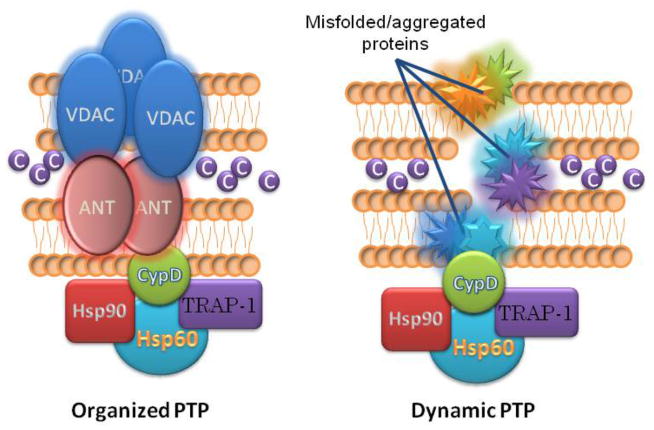
Figure 2. Regulation of mitochondrial permeability pore opening by an organelle-specific chaperone network
Molecular chaperones Hsp90, Hsp60 and TRAP-1 physically associate with CypD, and mediate ATPase dependent closing of the permeability transition pore (PTP). Two potential models of PTP regulation are presented: an organized PTP comprising CypD, VDAC and ANT (left), and a dynamic PTP (right), characterized by the pore-forming properties of clusters of misfolded and aggregated proteins generated at the outer mitochondrial membrane under conditions of stress. VDAC, voltage-dependent anion channel; ANT, adenine nucleotide translocator; CypD, cyclophilin D; C, cytochrome c.
Figure 3
Figure 3. TRAP-1 control of cell survival and stress response
Inhibition of TRAP-1 and mitochondrial Hsp90 ATPase activity by subcellularly targeted small molecule, Gamitrinibs, results in activation of apoptosis, induction of UPR with transcriptional upregulation of a stress response gene signature, and compensatory autophagy.

References

    1. Taipale M, Jarosz DF, Lindquist S. HSP90 at the hub of protein homeostasis: emerging mechanistic insights. Nat Rev Mol Cell Biol. 2010;11:515–528. - PubMed
    1. Whitesell L, Lindquist SL. HSP90 and the chaperoning of cancer. Nat Rev Cancer. 2005;5:761–772. - PubMed
    1. Trepel J, Mollapour M, Giaccone G, Neckers L. Targeting the dynamic HSP90 complex in cancer. Nat Rev Cancer. 2010;10:537–549. - PMC - PubMed
    1. Young JC, Barral JM, Ulrich Hartl F. More than folding: localized functions of cytosolic chaperones. Trends Biochem Sci. 2003;28:541–547. - PubMed
    1. Eletto D, Dersh D, Argon Y. GRP94 in ER quality control and stress responses. Seminars in Cell & Developmental Biology. 2010;21:479–485. - PMC - PubMed

Publication types

MeSH terms