. 2012 Feb;45(1):15-29.
doi: 10.1016/j.jbi.2011.08.013. Epub 2011 Aug 25.

Abstraction of complex concepts with a refined partial-area taxonomy of SNOMED

Affiliations

Abstraction of complex concepts with a refined partial-area taxonomy of SNOMED

Yue Wang et al. J Biomed Inform. 2012 Feb.

Abstract

An algorithmically-derived abstraction network, called the partial-area taxonomy, for a SNOMED hierarchy has led to the identification of concepts considered complex. The designation "complex" is arrived at automatically on the basis of structural analyses of overlap among the constituent concept groups of the partial-area taxonomy. Such complex concepts, called overlapping concepts, constitute a tangled portion of a hierarchy and can be obstacles to users trying to gain an understanding of the hierarchy's content. A new methodology for partitioning the entire collection of overlapping concepts into singly-rooted groups, that are more manageable to work with and comprehend, is presented. Different kinds of overlapping concepts with varying degrees of complexity are identified. This leads to an abstract model of the overlapping concepts called the disjoint partial-area taxonomy, which serves as a vehicle for enhanced, high-level display. The methodology is demonstrated with an application to SNOMED's Specimen hierarchy. Overall, the resulting disjoint partial-area taxonomy offers a refined view of the hierarchy's structural organization and conceptual content that can aid users, such as maintenance personnel, working with SNOMED. The utility of the disjoint partial-area taxonomy as the basis for a SNOMED auditing regimen is presented in a companion paper.


Figures

Fig. 1
Fig. 1
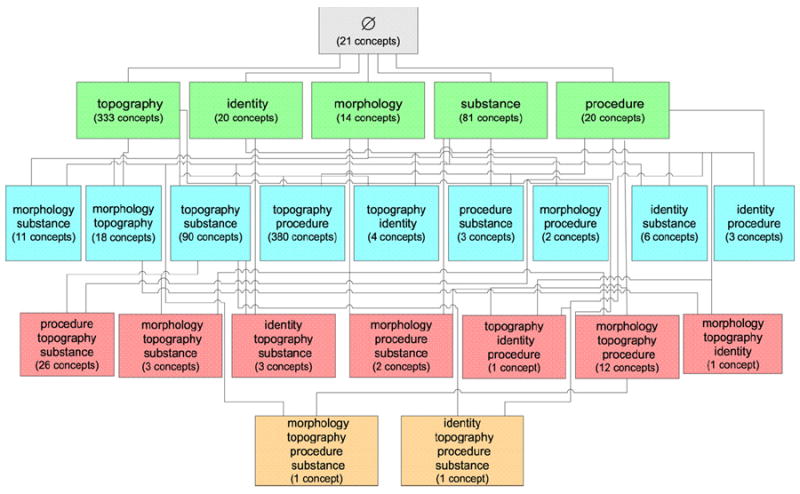
Area taxonomy for SNOMED’s Specimen hierarchy (July 2007). The nodes (boxes) are the areas, and the lines are the child-of relationships.
Fig. 2
Fig. 2
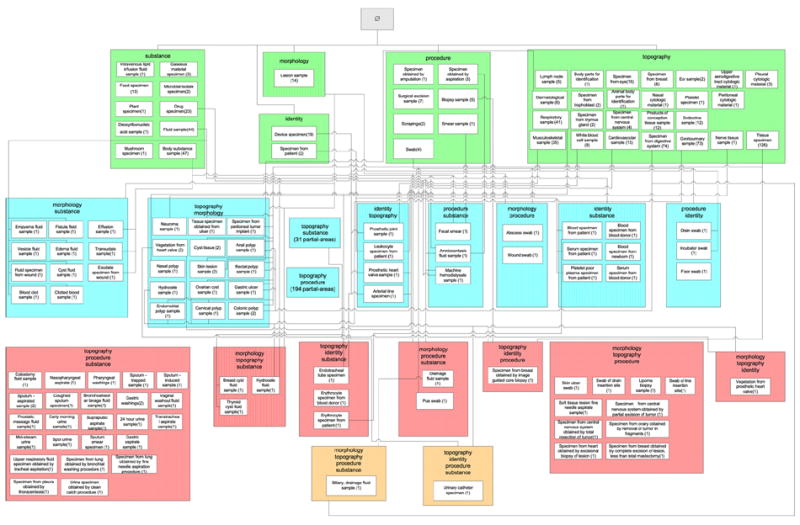
Partial-area taxonomy (abridged) for the Specimen hierarchy (July 2007). The main boxes are the areas, and the lines are the child-of relationships. The embedded boxes are the partial-areas.
Fig. 3
Fig. 3
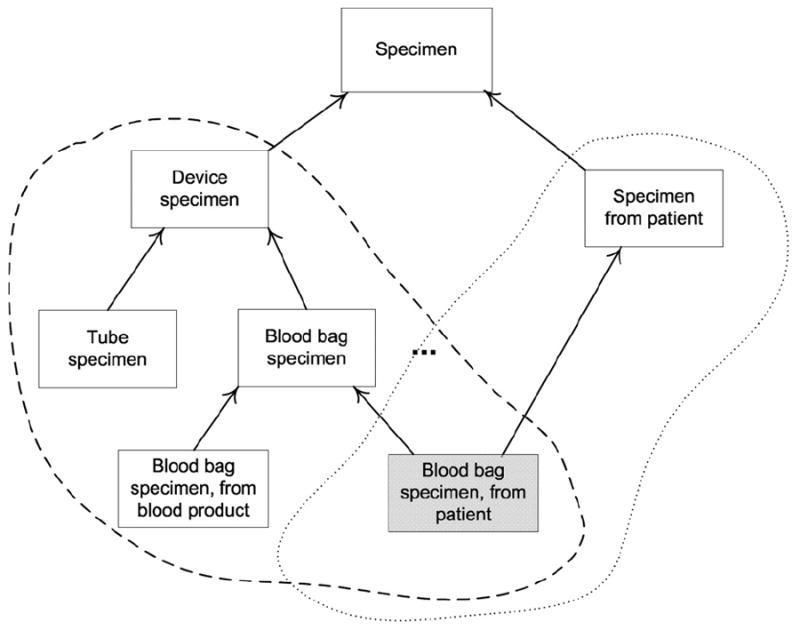
The overlapping concept Blood bag specimen, from patient resides in two partial-areas, Device specimen and Specimen from patient, demarcated by the dashed bubbles.
Fig. 4
Fig. 4
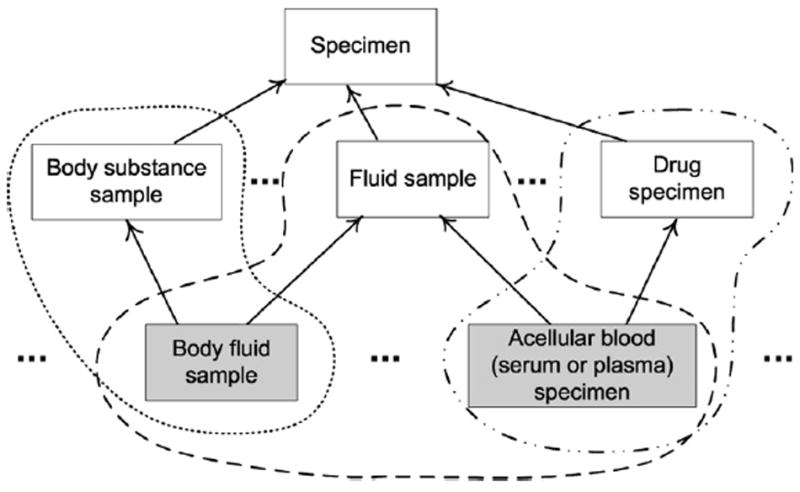
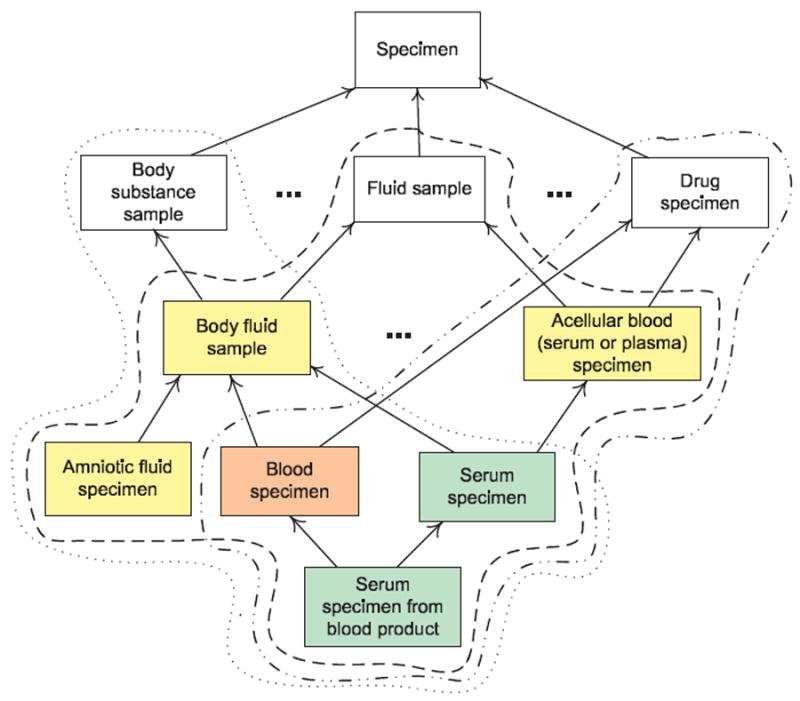
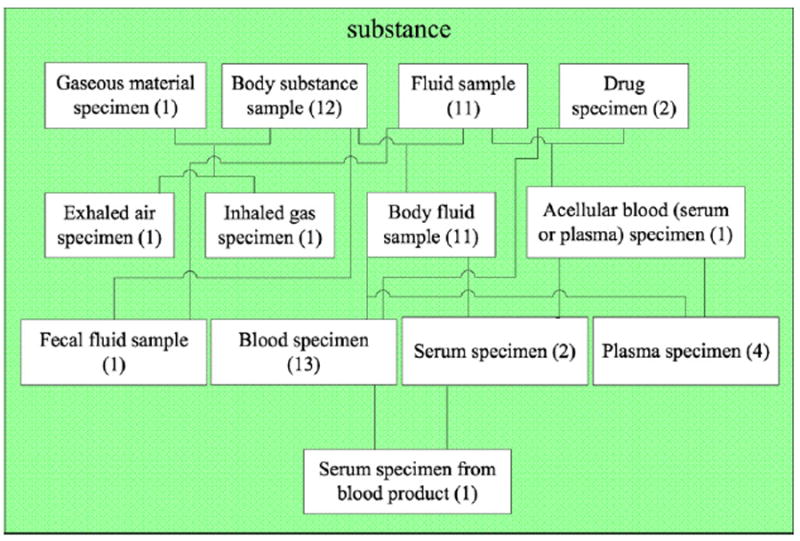
The overlapping concepts Body fluid sample and Acellular blood (serum or plasma) specimen (shaded) in the area {substance}.
Fig. 5
Fig. 5
Differing degrees of complexity for overlapping concepts in the area {substance}. The green overlapping concepts are more complex than the orange overlapping concept which is more complex than the yellow overlapping concepts.
Fig. 6
Fig. 6
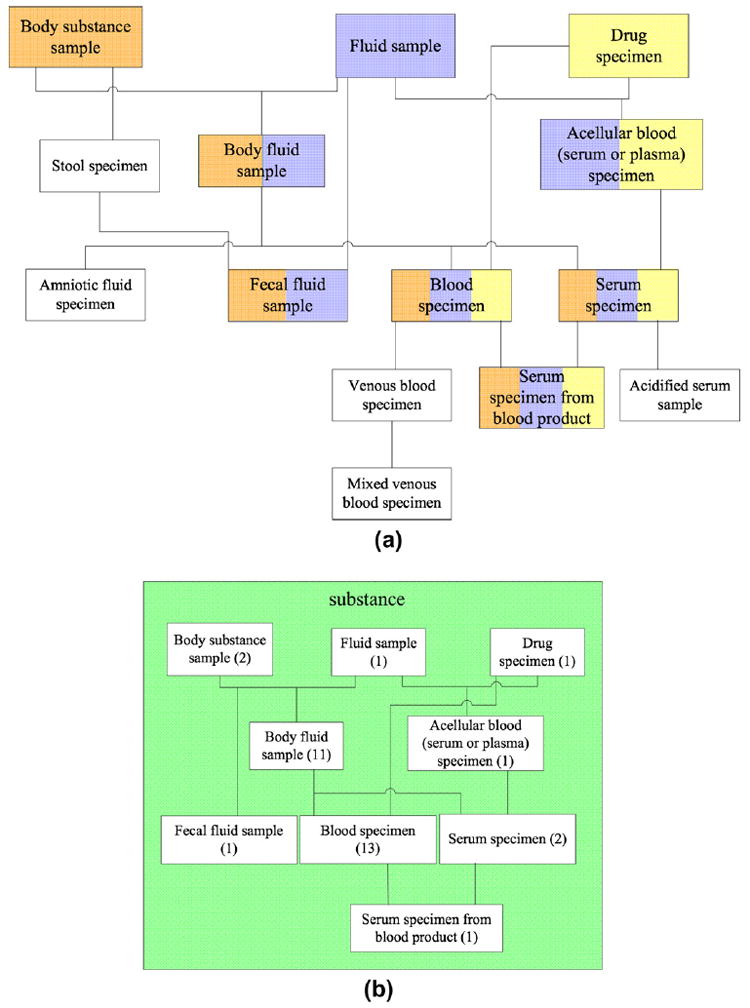
(a) Some overlapping roots (shown as multi-colored boxes) from the area {substance} in the Specimen hierarchy; (b) corresponding excerpt of the d-partial-area taxonomy representation of {substance}, where the embedded boxes are d-partial-areas.
Fig. 7
Fig. 7
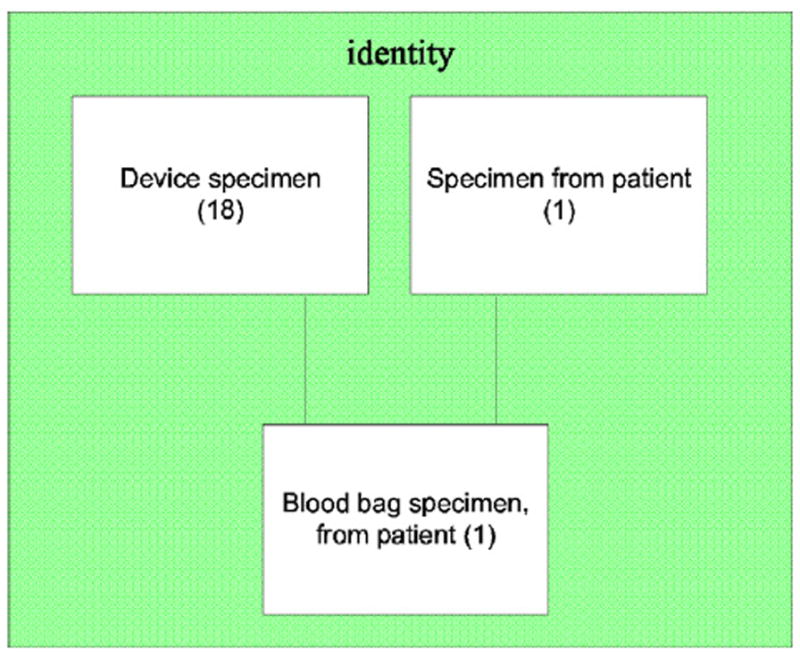
The d-partial-areas Device specimen, Specimen from patient, and Blood bag specimen, from patient of the area {identity}.
Fig. 8
Fig. 8
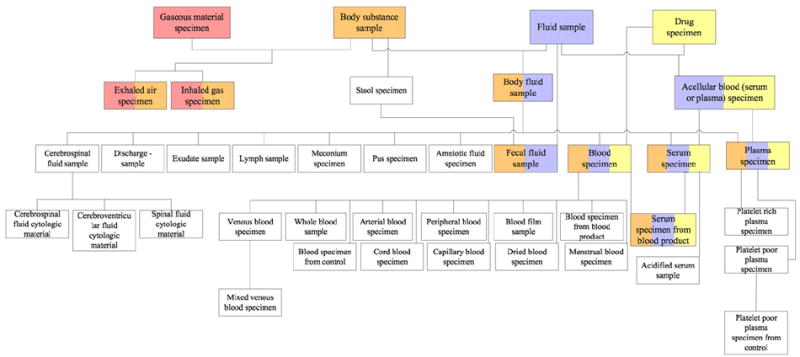
The nine overlapping roots from the area {substance} are shown as multi-colored boxes among other concepts.
Fig. 9
Fig. 9
The d-partial-area taxonomy excerpt consisting of 13 d-partial-areas corresponding to the concept network appearing in Fig. 8.
Fig. 10
Fig. 10
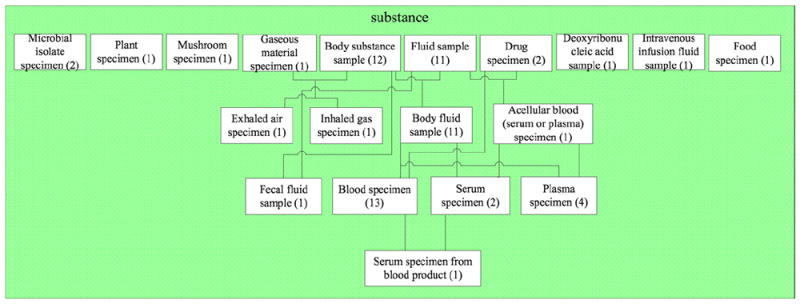
The d-partial-area taxonomy node for the area {substance} containing 19 embedded d-partial-areas. The numbers in parentheses indicate the numbers of concepts in the respective d-partial-areas.
Fig. 11
Fig. 11
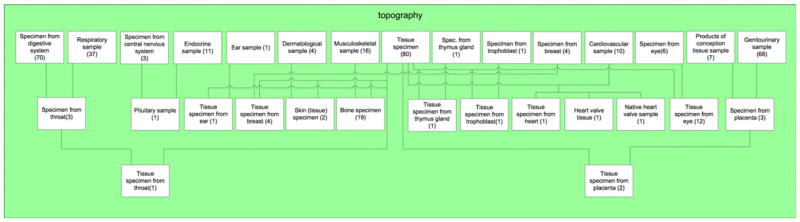
An excerpt of the d-partial-area taxonomy for the area {topography} consisting of 30 d-partial-areas.

References

    1. IHTSDO: SNOMED CT. [30.03.11]; < http://www.ihtsdo.org/snomed-ct>.
    1. Wang Y, Halper M, Min H, Perl Y, Chen Y, Spackman KA. Structural methodologies for auditing SNOMED. J Biomed Inform. 2007;40(5):561–81. - PubMed
    1. Halper M, Wang Y, Min H, Chen Y, Hripcsak G, Perl Y, et al. Analysis of error concentrations in SNOMED. In: Teich JM, Suermondt J, Hripcsak G, editors. Proceedings of 2007 AMIA annual symposium. Chicago, IL: 2007. pp. 314–8. - PMC - PubMed
    1. Wang Y, Halper M, Wei D, Gu H, Perl Y, Xu J, et al. Auditing complex concepts of SNOMED using a refined hierarchical abstraction network. J Biomed Inform. doi: 10.1016/j.jbi.2011.08.016. - DOI - PMC - PubMed
    1. IHTSDO. SNOMED CT abstract logical models and representational forms (draft document) 2008 January;

Publication types

LinkOut - more resources