


At last, a Pennsylvanian stem-stonefly (Plecoptera) discovered
- PMID: 21880126
- PMCID: PMC3225047
- DOI: 10.1186/1471-2148-11-248
At last, a Pennsylvanian stem-stonefly (Plecoptera) discovered
Abstract
Background: Stem-relatives of many winged insect orders have been identified among Pennsylvanian fossils (Carboniferous Period). Owing to their presumed 'basal' position in insect phylogeny, stoneflies were expected to occur at this period. However, no relative has ever been designated convincingly.
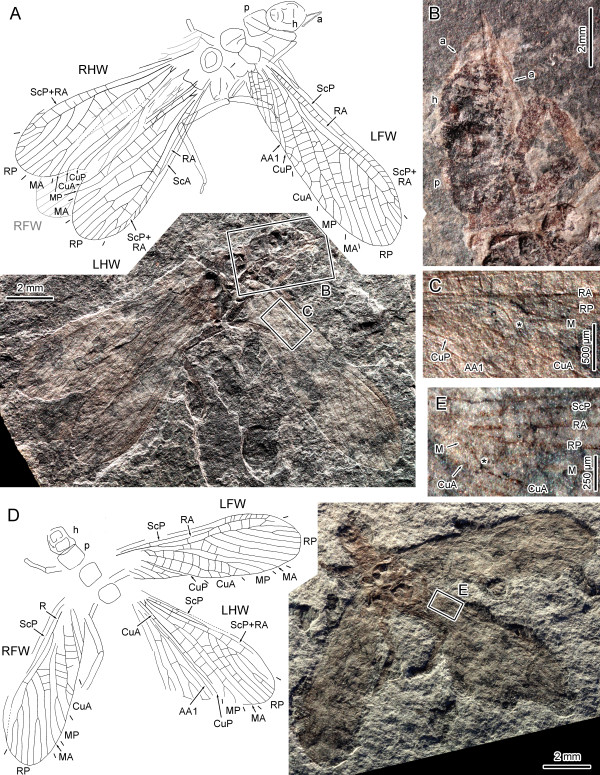
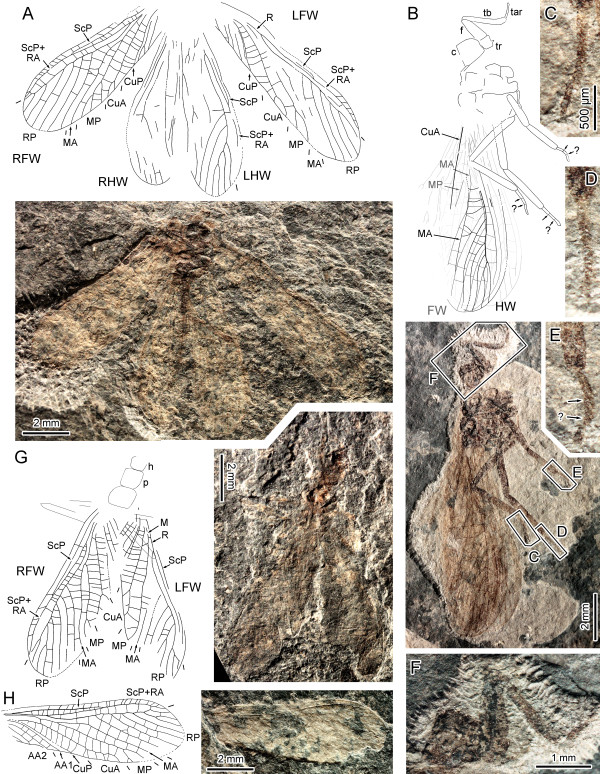
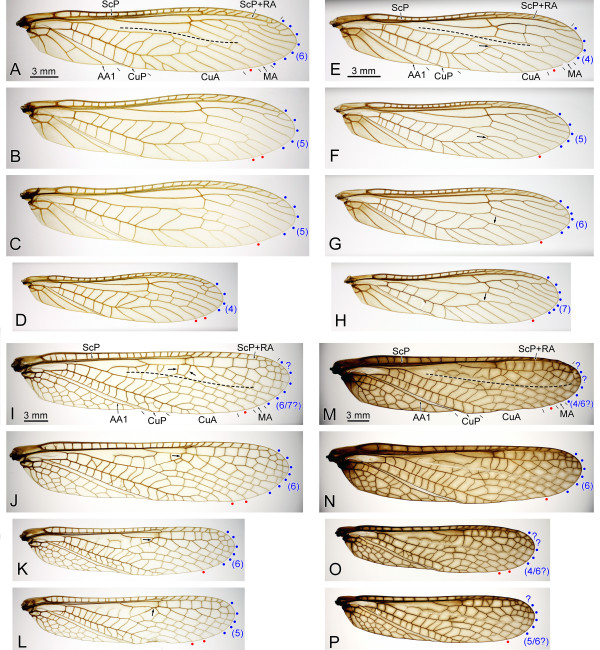
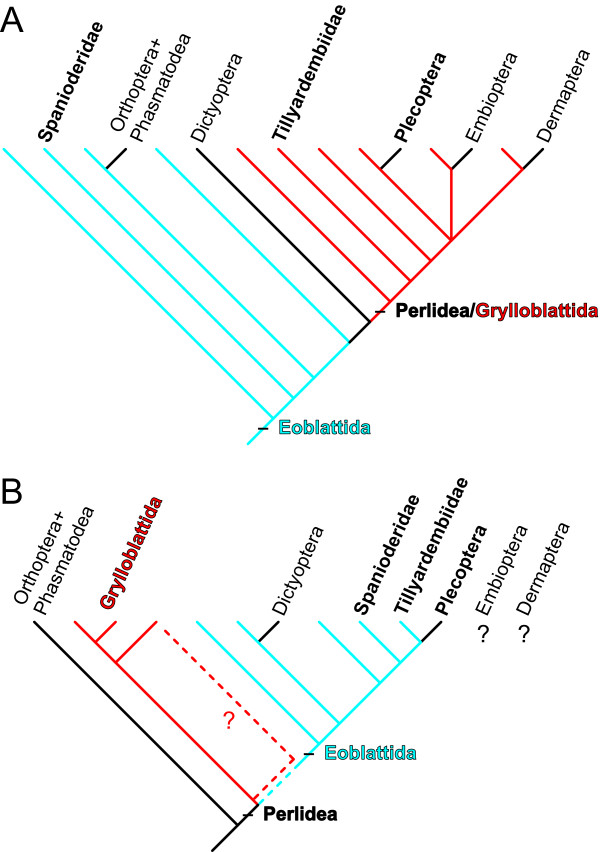
Results: In this paper, we report specimens belonging to a new fossil insect species collected from the Tupo Formation (Pennsylvanian; China). The wing venation of Gulou carpenteri gen. et sp. nov. exhibits character states diagnostic of the order Plecoptera, but lack character states shared by unequivocal representatives of the order. Derived from this identification, the delimitation of the fossil species is ascertained based on comparison of several extant stonefly species. This comparative analysis allowed a trait present in G. carpenteri gen. et sp. nov., but rarely occurring in extant species, to be documented and highlighted as atavistic. Affinities of taxa formerly proposed as putative stem-stoneflies are reconsidered in the light of the new discovery.
Conclusions: Gulou carpenteri gen. et sp. nov. is considered the only genuine Plecoptera reported from the Pennsylvanian. Continuing efforts on the systematics of Pennsylvanian winged insects indicate a fauna more diverse than previously appreciated. It suggests that insects already had a long, yet undocumented, history by this time.
Figures
References
-
- Grimaldi D, Engel MS. Evolution of the Insects. New York: Cambridge University Press; 2005.
-
- Belayeva NV, Blagoderov VA, Dmitriev VY, Eskov KY, Gorochov AV, Ivanov VD, Kluge NY, Kozlov MV, Lukashevich ED, Mostovski MB, History of Insects. Dordrecht: Kluwer Academic Publishers; 2002.
-
- Carpenter FM. In: Richardson's Guide to The Fossil Fauna of Mazon Creek. Shabica CW, Hay AA, editor. Chicago: Northeastern Illinois University; 1997. Insecta; pp. 184–193.
-
- Prokop J, Nel A. An enigmatic Palaeozoic stem-group: Paoliida, designation of new taxa from the Upper Carboniferous of the Czech Republic (Insecta: Paoliidae, Katerinkidae fam. n.) Afr Inver. 2007;48:77–86.
-
- Nel A, Rocques P, Nel P, Prokop J, Steyer JS. The earliest holometabolous insect from the Carboniferous: a "crucial" innovation with delayed success (Insecta Protomeropina Protomeropidae) Ann Soc Entomol Fr (NS) 2007;43:349–355.
Publication types
MeSH terms
LinkOut - more resources
Full Text Sources
