Review
. 2011 Sep;121(9):3367-74.
doi: 10.1172/JCI46263. Epub 2011 Sep 1.

Genetics of kidney failure and the evolving story of APOL1

Affiliations
Review

Genetics of kidney failure and the evolving story of APOL1

David J Friedman et al. J Clin Invest. 2011 Sep.

Abstract

Chronic kidney disease (CKD) results from a wide array of processes that impair the kidney's ability to perform its major functions. As many as 20 million Americans suffer from CKD and nearly a half million from end-stage renal disease, but there are also examples of centenarians with adequate renal function. Family-based and genome-wide studies suggest that genetic differences substantially influence an individual's lifetime risk for kidney disease. One emerging theme is that evolution of genes related to host defense against pathogens may limit kidney longevity. The identification of these genetic factors will be critical for expanding our understanding of renal development and function as well as for the design of novel therapeutics for kidney disease.


Figures
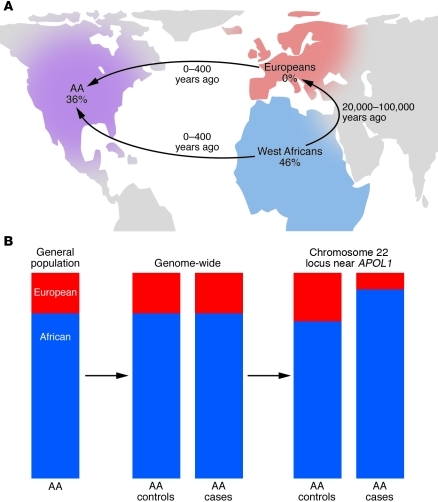
Figure 1
Figure 1. APOL1 risk variants: admixture and MALD.
(A) APOL1 risk variants arose approximately 4,000 years ago in Africa and rose quickly to high frequency. In Yoruba (Nigeria), approximately 46% of chromosomes contain either the G1 or G2 allele. The ancestors of modern Europeans left Africa many millennia before the origin of these risk alleles, so the risk alleles are not found in Europeans. Today, approximately 36% of all African Americans (AA) carry the G1 or G2 alleles. (B) MALD. In the US, African Americans have roughly 80% African ancestry and 20% European ancestry. Since African Americans have much more renal disease than European Americans, MALD tests for chromosomal regions in African Americans with renal disease (cases) that are disproportionately African in origin. Genome-wide, there is no excess African ancestry in renal disease cases. However, at the chromosome 22 locus, there is a marked excess of African ancestry in cases. The odds of this distribution by chance alone are several billion to one (41, 42).
Figure 2
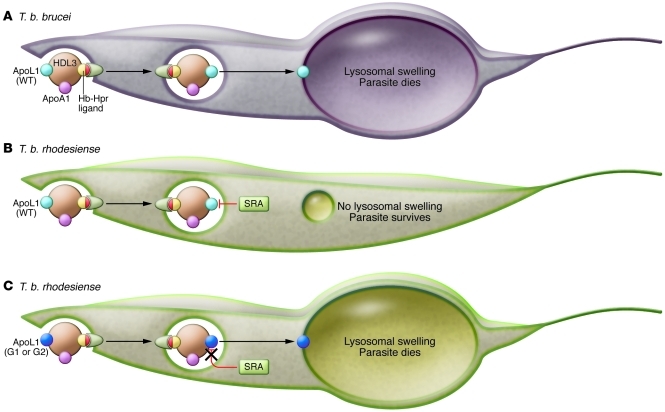
Figure 2. ApoL1 circulates as part of the HDL3 complex, which includes hemoglobin and haptoglobin-related protein.
(A) In one current model, the ApoL1-containing complex is taken up by T. b. brucei via a receptor that binds hemoglobin and haptoglobin-related protein (Hb-Hpr). ApoL1 traffics to the trypanosomal lysosome, where the acidic pH causes a conformational change, leading to activation of anion channel function in the ApoL1 N terminus. Lysosomal swelling kills the trypanosome. Thus, ApoL1 confers innate immunity against this parasite. (B) Over time, T. b. brucei developed a virulence factor called SRA that can inactivate ApoL1 protein, although the cellular location of this interaction is unknown. These SRA-expressing trypanosomes evolved into T. b. rhodesiense, the etiologic agent that causes acute African sleeping sickness (57, 58). (C) The kidney disease–associated G1 and G2 variants encode forms of ApoL1 that evade SRA and remain active against T. b. rhodesiense. This, and/or other biological effects, may have conferred a selective advantage to G1 and G2 heterozygotes, causing a selective sweep. Figure adapted with permission from Current Opinion in Immunology (67).
Figure 3
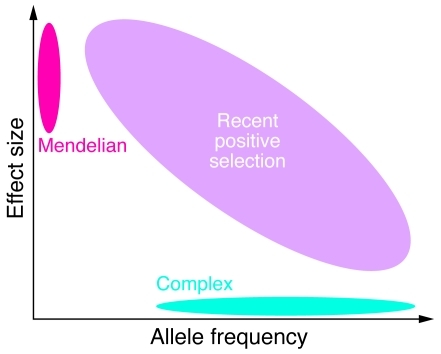
Figure 3. Effect size versus allele frequency.
For genetic variants influencing human traits, effect size tends to vary inversely with allele frequency. As a rule, Mendelian diseases are caused by extremely rare variants (including unique mutations) with very large effect size (~1,000-fold), whereas most analyses of complex traits to date by GWAS have led to the identification of common genetic variants with individually small effect (typically less than 2-fold; in most reports to date, just slightly above 1). In contrast, variants on which recent positive selection has been acting may become more common than expected and still have large effect size. The disorders caused by mutations in HBB (such as sickle cell disease) and APOL1-associated kidney disease are examples of this phenomenon.

References

    1. US Renal Data System.USRDS 2009 annual data report: atlas of chronic kidney disease and end-stage renal disease in the United States . Bethesda, Maryland, USA: National Institutes of Health, National Institute of Diabetes and Digestive and Kidney Diseases; 2009.
    1. Mitchell-Olds T, Willis JH, Goldstein DB. Which evolutionary processes influence natural genetic variation for phenotypic traits? Nat Rev Genet. 2007;8(11):845–856. doi: 10.1038/nrg2207. - DOI - PubMed
    1. Harris PC, Torres VE. Polycystic kidney disease. Annu Rev Med. 2009;60:321–337. doi: 10.1146/annurev.med.60.101707.125712. - DOI - PMC - PubMed
    1. Winn MP, et al. A mutation in the TRPC6 cation channel causes familial focal segmental glomerulosclerosis. Science. 2005;308(5729):1801–1804. doi: 10.1126/science.1106215. - DOI - PubMed
    1. Kaplan JM, et al. Mutations in ACTN4, encoding alpha-actinin-4, cause familial focal segmental glomerulosclerosis. Nat Genet. 2000;24(3):251–256. doi: 10.1038/73456. - DOI - PubMed