


Systems biology of kidney diseases
- PMID: 21881558
- PMCID: PMC3240740
- DOI: 10.1038/ki.2011.314
Systems biology of kidney diseases
Abstract
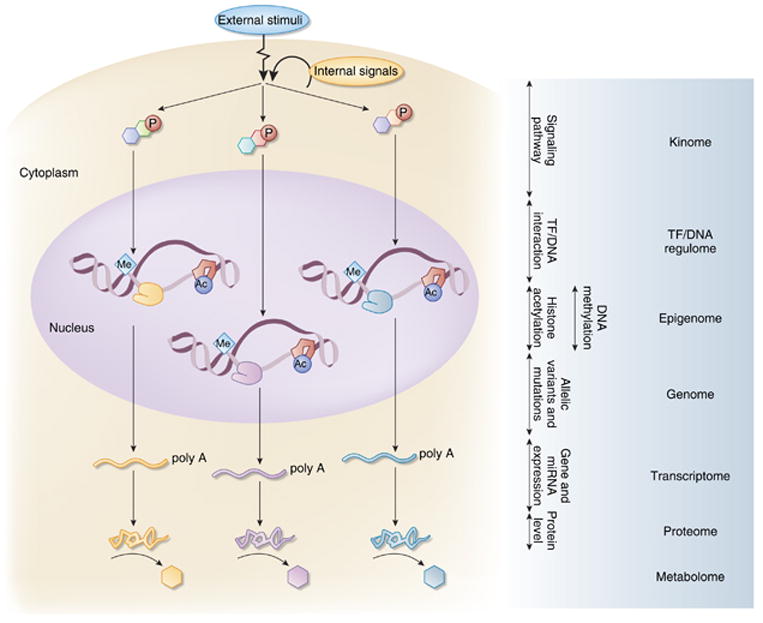
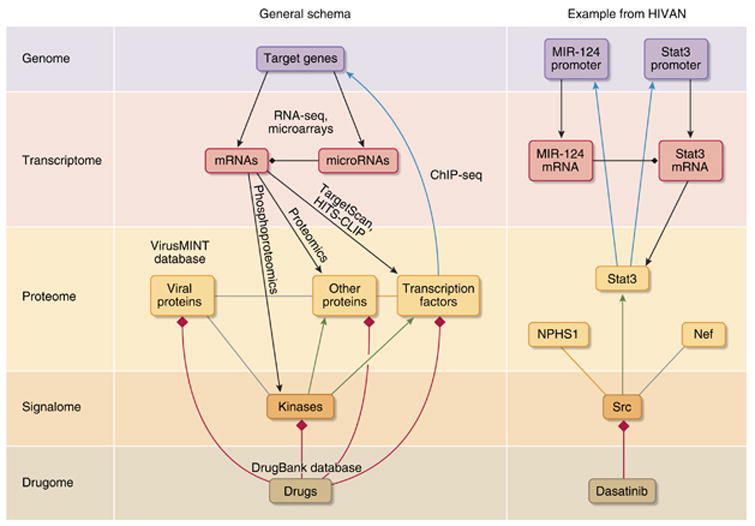
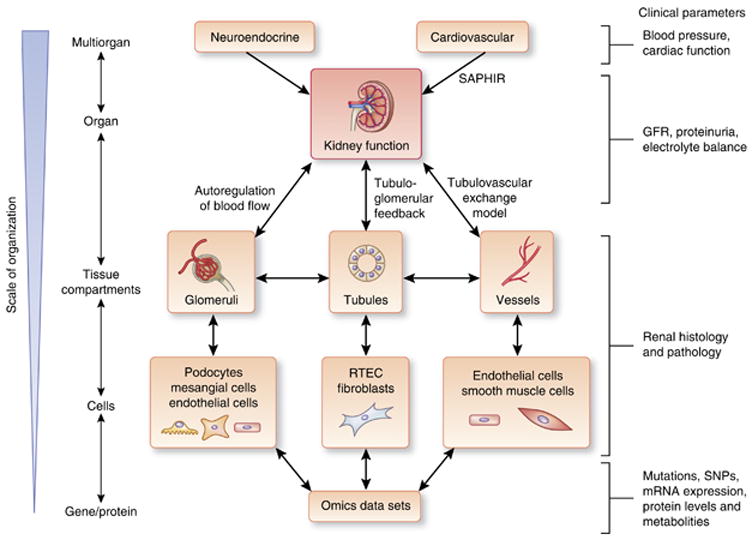
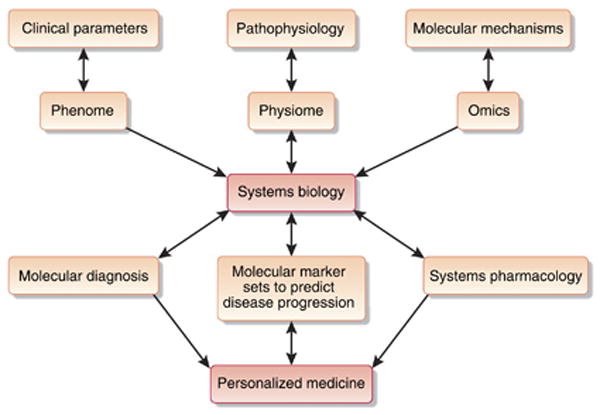
Kidney diseases manifest in progressive loss of renal function, which ultimately leads to complete kidney failure. The mechanisms underlying the origins and progression of kidney diseases are not fully understood. Multiple factors involved in the pathogenesis of kidney diseases have made the traditional candidate gene approach of limited value toward full understanding of the molecular mechanisms of these diseases. A systems biology approach that integrates computational modeling with large-scale data gathering of the molecular changes could be useful in identifying the multiple interacting genes and their products that drive kidney diseases. Advances in biotechnology now make it possible to gather large data sets to characterize the role of the genome, epigenome, transcriptome, proteome, and metabolome in kidney diseases. When combined with computational analyses, these experimental approaches will provide a comprehensive understanding of the underlying biological processes. Multiscale analysis that connects the molecular interactions and cell biology of different kidney cells to renal physiology and pathology can be utilized to identify modules of biological and clinical importance that are perturbed in disease processes. This integration of experimental approaches and computational modeling is expected to generate new knowledge that can help to identify marker sets to guide the diagnosis, monitor disease progression, and identify new therapeutic targets.
Figures
References
-
- Schelling JR, Abboud HE, Nicholas SB, et al. Genome-wide scan for estimated glomerular filtration rate in multi-ethnic diabetic populations: the Family Investigation of Nephropathy and Diabetes (FIND) Diabetes. 2008;57:235–243. - PubMed
Publication types
MeSH terms
Substances
Grants and funding
- K08 DK082760/DK/NIDDK NIH HHS/United States
- P50 GM071558/GM/NIGMS NIH HHS/United States
- R01 DK088541/DK/NIDDK NIH HHS/United States
- 1R01DK088541/DK/NIDDK NIH HHS/United States
- 5R01DK087650/DK/NIDDK NIH HHS/United States
- 5P50GM071558/GM/NIGMS NIH HHS/United States
- RC2 LM010994/LM/NLM NIH HHS/United States
- R01 DK087650/DK/NIDDK NIH HHS/United States
- 5K08DK082760/DK/NIDDK NIH HHS/United States
- 1RC4DK090860/DK/NIDDK NIH HHS/United States
- RC4 DK090860/DK/NIDDK NIH HHS/United States
- R01 GM054508/GM/NIGMS NIH HHS/United States
- R01 DK078897/DK/NIDDK NIH HHS/United States
- 1R01DK078897/DK/NIDDK NIH HHS/United States
- RC2LM010994-01/LM/NLM NIH HHS/United States
LinkOut - more resources
Full Text Sources
Other Literature Sources
Medical
