


Bilateral pudendal afferent stimulation improves bladder emptying in rats with urinary retention
- PMID: 21883860
- PMCID: PMC3235226
- DOI: 10.1111/j.1464-410X.2011.10526.x
Bilateral pudendal afferent stimulation improves bladder emptying in rats with urinary retention
Abstract
Objective: To determine whether bilateral electrical stimulation (BiES) of the transected pudendal sensory nerves could further enhance the voiding efficiency beyond that produced by unilateral electrical stimulation (UniES) of transected pudendal afferents in rats with urinary retention.
Materials and methods: The efficiency of bladder emptying with either UniES or BiES of pudendal nerve afferents was measured after acute bilateral transection of the sensory branch of the pudendal nerve. The effects of UniES and BiES on voiding in a partially denervated bladder and acute spinal transection, respectively, were determined.
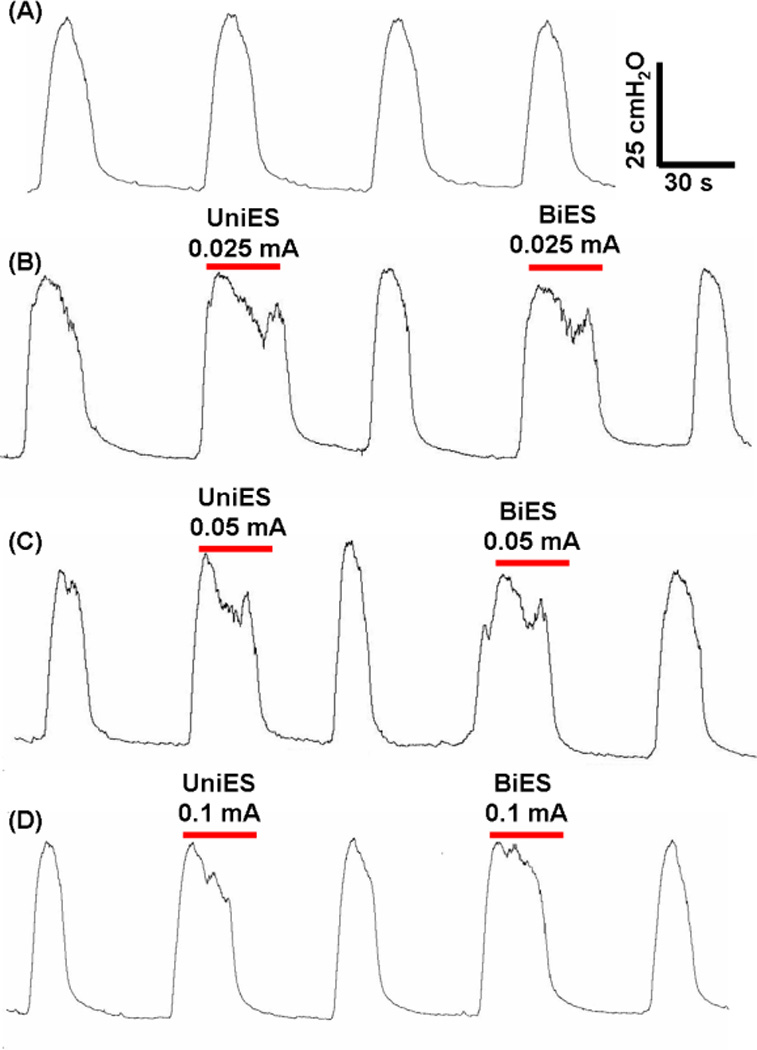
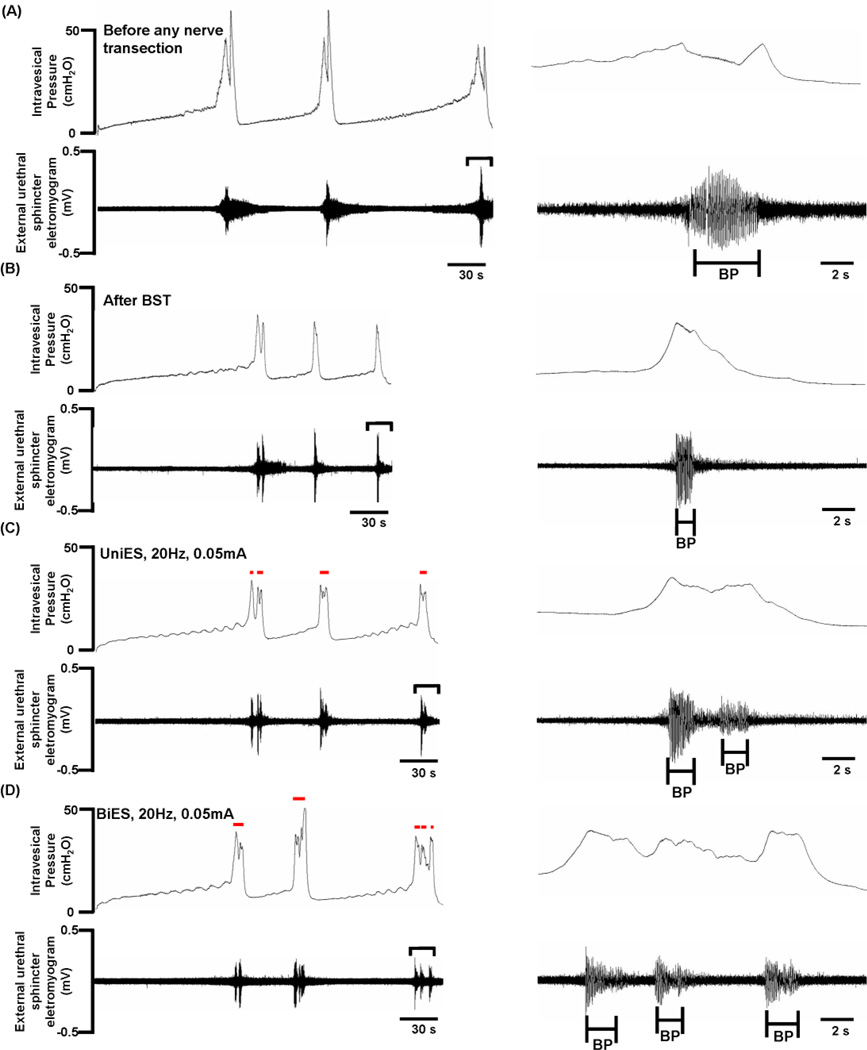
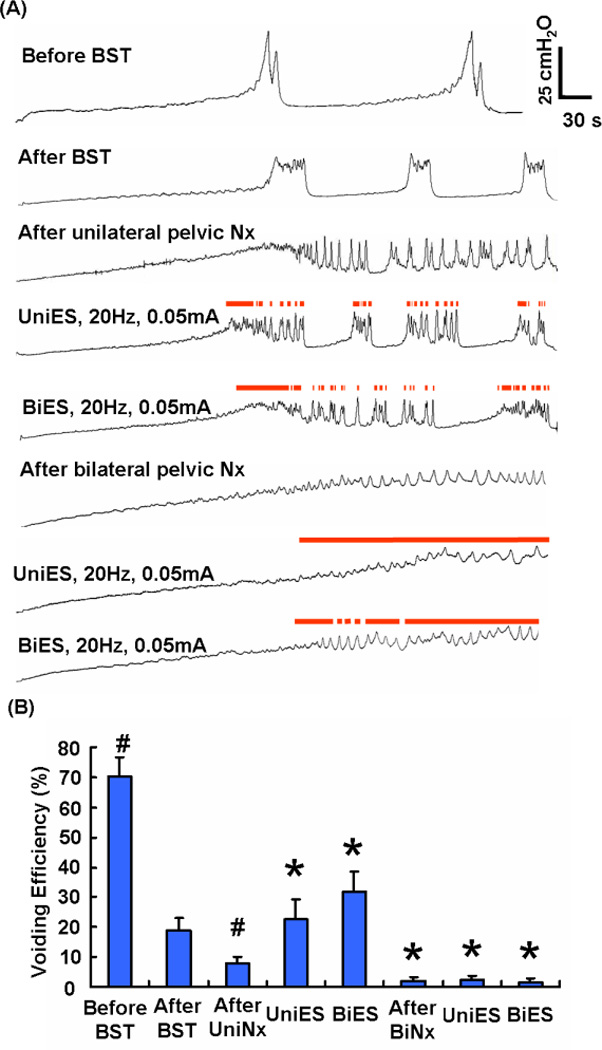
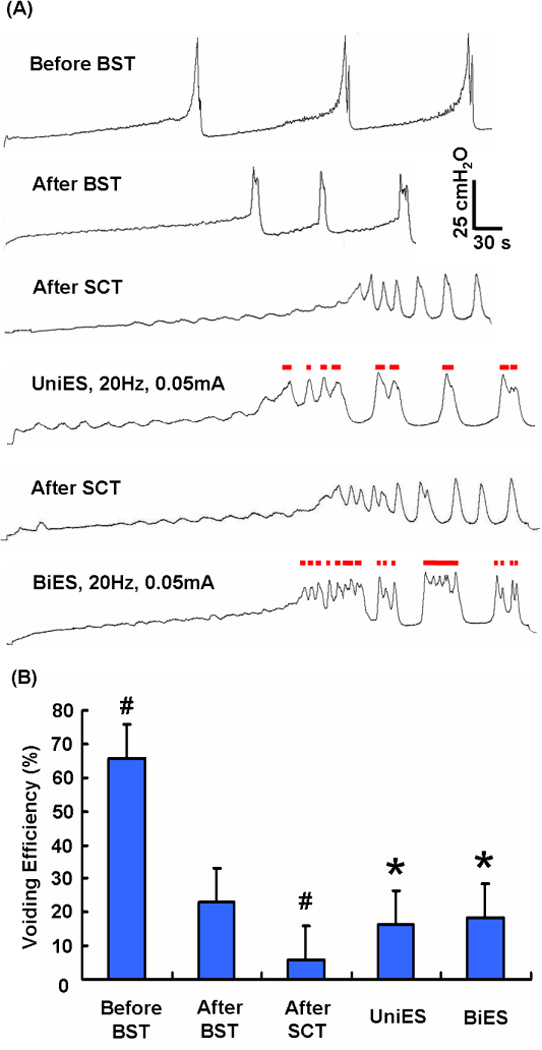
Results: The voiding efficiency (VE) was reduced from 69 to 22% after bilateral transection of the sensory branch of the pudendal nerve. UniES or BiES increased the VE to 49-62%. Although in most instances BiES consistently generated more efficient bladder emptying than did UniES, these differences were not significant. Both UniES and BiES increased VE after unilateral pelvic nerve transection, demonstrating efficacy in a partially denervated bladder. The enhancement of VE by either UniES or BiES was preserved after acute T(9)-T(10), demonstrating the spinal origin of this augmenting reflex.
Conclusions: The results of the present study are consistent with an essential role for pudendal sensory feedback in efficient bladder emptying, and unilateral and bilateral electrical activation of pudendal nerve afferents are equally efficient in improving bladder emptying in an animal model of urinary retention. This could provide an approach to improve bladder emptying in patients with non-obstructive urinary retention.
© 2011 THE AUTHORS. BJU INTERNATIONAL © 2011 BJU INTERNATIONAL.
Figures
References
-
- Jonas U, Fowler CJ, Chancellor MB, et al. Efficacy of sacral nerve stimulation for urinary retention: results 18 months after implantation. J Urol. 2001;165:15–19. - PubMed
-
- Aboseif S, Tamaddon K, Chalfin S, et al. Sacral neuromodulation in functional urinary retention: an effective way to restore voiding. BJU Int. 2002;90:662–665. - PubMed
-
- Shaker HS, Hassouna M. Sacral root neuromodulation in idiopathic nonobstructive chronic urinary retention. J Urol. 1998;159:1476–1478. - PubMed
-
- Barrington FJF. The component reflexes of micturition in the cat, parts I and II. Brain. 1931;54:177–188.
Publication types
MeSH terms
Grants and funding
LinkOut - more resources
Full Text Sources
Other Literature Sources
Medical
