


Islet xenotransplantation using gal-deficient neonatal donors improves engraftment and function
- PMID: 21883917
- PMCID: PMC3226931
- DOI: 10.1111/j.1600-6143.2011.03720.x
Islet xenotransplantation using gal-deficient neonatal donors improves engraftment and function
Abstract
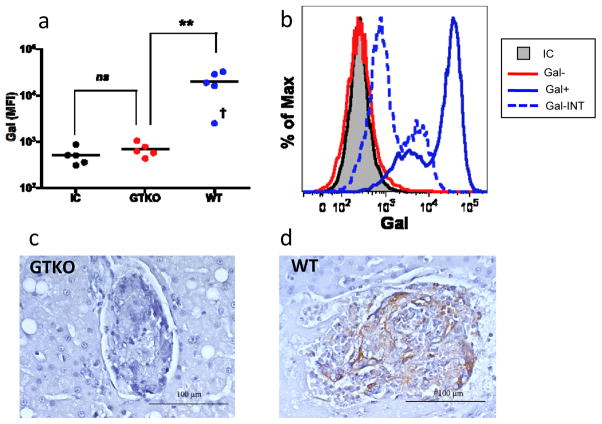
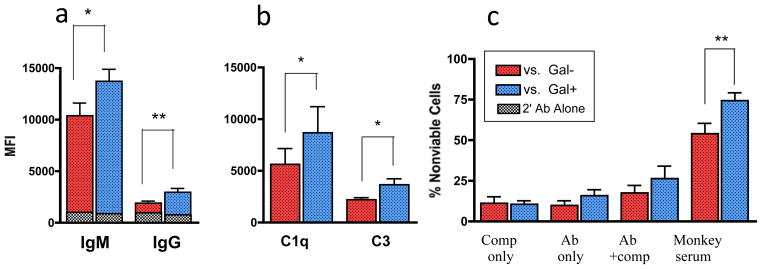
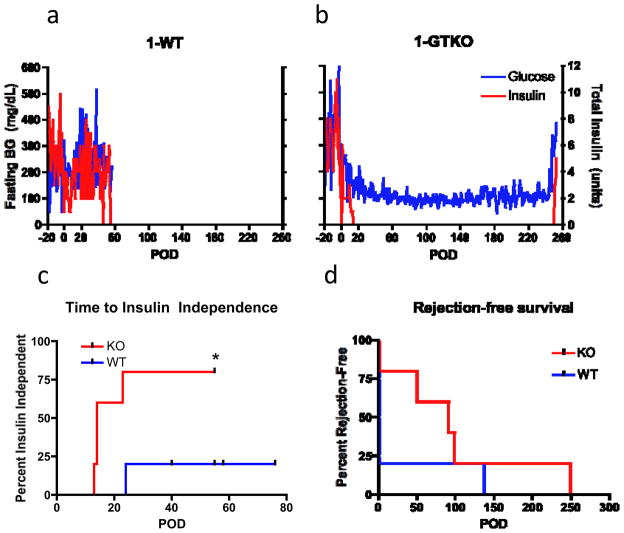
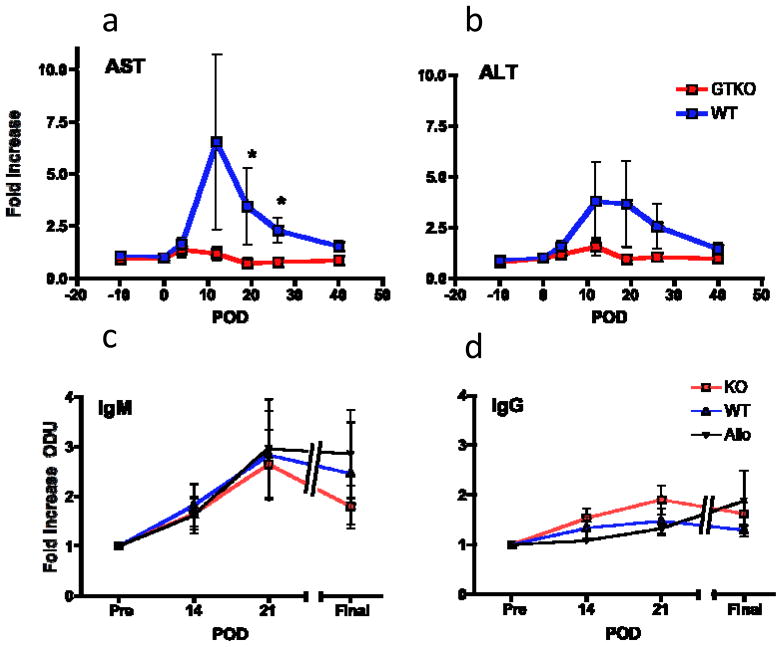
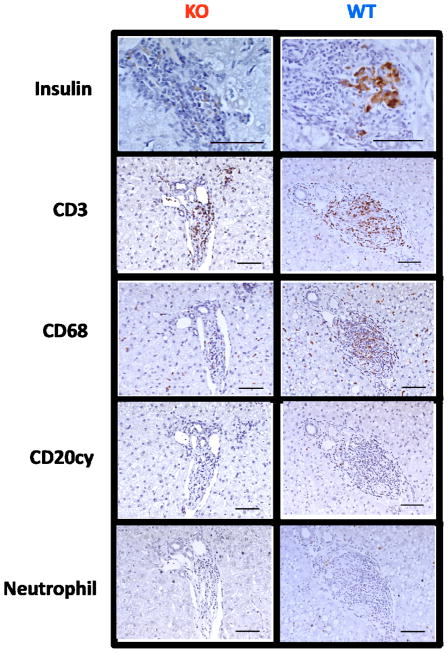
Significant deficiencies in understanding of xenospecific immunity have impeded the success of preclinical trials in xenoislet transplantation. Although galactose-α1,3-galactose, the gal epitope, has emerged as the principal target of rejection in pig-to-primate models of solid organ transplant, the importance of gal-specific immunity in islet xenotransplant models has yet to be clearly demonstrated. Here, we directly compare the immunogenicity, survival and function of neonatal porcine islets (NPIs) from gal-expressing wild-type (WT) or gal-deficient galactosyl transferase knockout (GTKO) donors. Paired diabetic rhesus macaques were transplanted with either WT (n = 5) or GTKO (n = 5) NPIs. Recipient blood glucose, transaminase and serum xenoantibody levels were used to monitor response to transplant. Four of five GTKO versus one of five WT recipients achieved insulin-independent normoglycemia; transplantation of WT islets resulted in significantly greater transaminitis. The WT NPIs were more susceptible to antibody and complement binding and destruction in vitro. Our results confirm that gal is an important variable in xenoislet transplantation. The GTKO NPI recipients have improved rates of normoglycemia, likely due to decreased susceptibility of xenografts to innate immunity mediated by complement and preformed xenoantibody. Therefore, the use of GTKO donors is an important step toward improved consistency and interpretability of results in future xenoislet studies.
©Copyright 2011 The American Society of Transplantation and the American Society of Transplant Surgeons.
Conflict of interest statement
The authors of this manuscript have no conflicts of interest to disclose as described by the American Journal of Transplantation.
Figures
References
-
- Cardona K, Korbutt GS, Milas Z, Lyon J, Cano J, Jiang W, et al. Long-term survival of neonatal porcine islets in nonhuman primates by targeting costimulation pathways. Nat Med. 2006;12(3):304–306. - PubMed
-
- Hering BJ, Wijkstrom M, Graham ML, Hardstedt M, Aasheim TC, Jie T, et al. Prolonged diabetes reversal after intraportal xenotransplantation of wild-type porcine islets in immunosuppressed nonhuman primates. Nat Med. 2006;12(3):301–303. - PubMed
-
- Galili U. Interaction of the natural anti-Gal antibody with alpha-galactosyl epitopes: a major obstacle for xenotransplantation in humans. Immunol Today. 1993;14(10):480–482. - PubMed
Publication types
MeSH terms
Substances
Grants and funding
LinkOut - more resources
Full Text Sources
Other Literature Sources
Medical
