


Review
doi: 10.1111/j.1749-6632.2011.06152.x.
Extreme marginalization: addiction and other mental health disorders, stigma, and imprisonment
Affiliations
- PMID: 21884162
- PMCID: PMC3716375
- DOI: 10.1111/j.1749-6632.2011.06152.x
Item in Clipboard
Review
Extreme marginalization: addiction and other mental health disorders, stigma, and imprisonment
Ann N Y Acad Sci.
2011 Aug.
Abstract
Major well-defined medical problems that are, in part, the unfortunate outcome of a negative social environment may include specific addictive diseases and other mental health disorders, in particular the affective disorders of anxiety, depression, social phobia, and posttraumatic stress syndrome. This overview touches on the topic of extreme marginalization associated with addiction and other mental health disorders, along with arrest, imprisonment, and parole. All of these are characterized by a lasting stigma that hauntingly continues to affect each person suffering from any of these problems.
© 2011 New York Academy of Sciences.
Figures
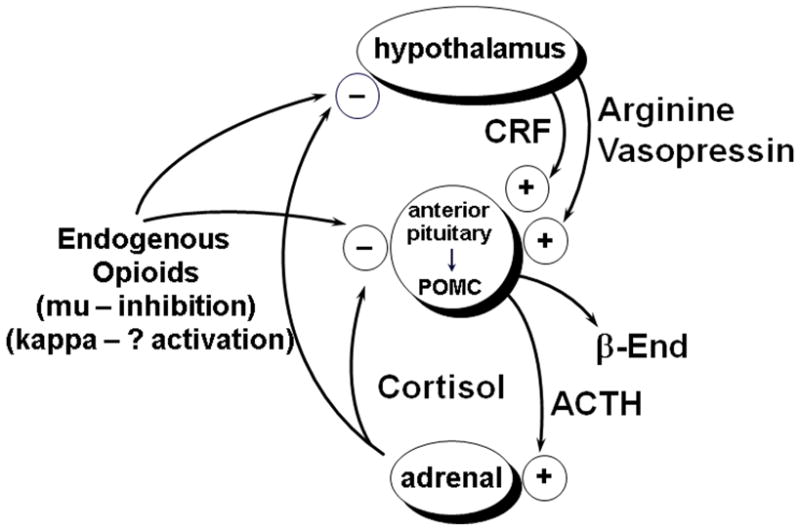
The hypothalamic-pituitary-adrenal stress responsive axis.
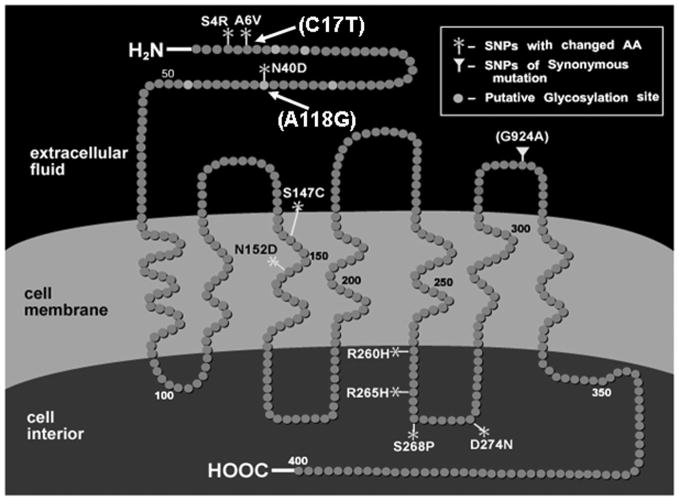
The human mu opioid receptor: SNPs identified.
References
-
- Bond C, LaForge KS, Tian M, Melia D, Zhang S, Borg L, Gong J, Schluger J, Strong JA, Leal SM, Tischfield JA, Kreek MJ, Yu L. Single nucleotide polymorphism in the human mu opioid receptor gene alters beta-endorphin binding and activity: Possible implications for opiate addiction. Proc Natl Acad Sci USA. 1998;95:9608–9613. - PMC - PubMed
-
- LaForge KS, Yuferov V, Kreek MJ. Opioid receptor and peptide gene polymorphisms: potential implications for addictions. Eur J Pharmacol. 2000;410:249–268. - PubMed
-
- Kreek MJ, LaForge KS. Stress responsivity, addiction, and a functional variant of the human mu-opioid receptor gene. Molec Interv. 2007;7:74–78. - PubMed
-
- Dole VP, Nyswander ME, Kreek MJ. Narcotic blockade. Arch Intern Med. 1966;118:304–309. - PubMed
Publication types
MeSH terms
Grants and funding
LinkOut - more resources
Full Text Sources
Medical
