Review
. 2011 Aug 16;13(4):217.
doi: 10.1186/bcr2846.

Vitamin D and breast cancer: interpreting current evidence

Affiliations
Review

Vitamin D and breast cancer: interpreting current evidence

Rowan T Chlebowski. Breast Cancer Res. .

Abstract

Preclinical investigations and selected clinical observational studies support an association between higher vitamin D intake and 25-hydroxyvitamin D levels with lower breast cancer risk. However, the recently updated report from the Institute of Medicine concluded that, for cancer and vitamin D, the evidence was 'inconsistent and insufficient to inform nutritional requirements'. Against this background, reports examining vitamin D intake, 25-hydroxyvitamin D levels and breast cancer incidence and outcome were reviewed. Current evidence supports the pursuit of several research questions but not routine 25-hydroxyvitamin D monitoring and vitamin D supplementation to reduce breast cancer incidence or improve breast cancer outcome.


Figures
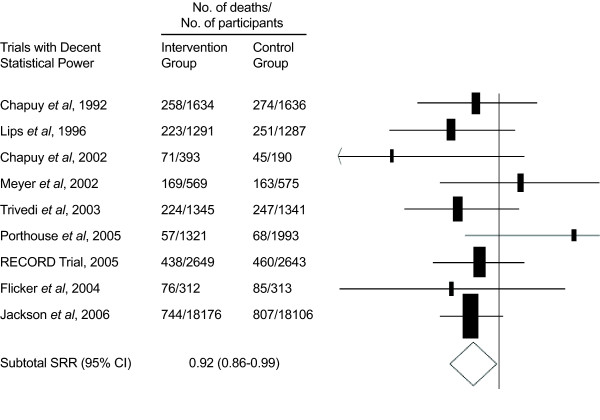
Figure 1
Figure 1
Vitamin D and total mortality in a meta-analysis of randomized controlled trials. Meta-analysis of randomized, controlled trials evaluating supplementation with vitamin D alone or in combination with calcium compared with placebo or no intervention on total mortality. The size of the box indicates the number of deaths, and the horizontal lines indicate the 95% confidence interval (CI). Adapted with permission from Autier and Gandini [73]. RR, relative risk.
Figure 2
Figure 2
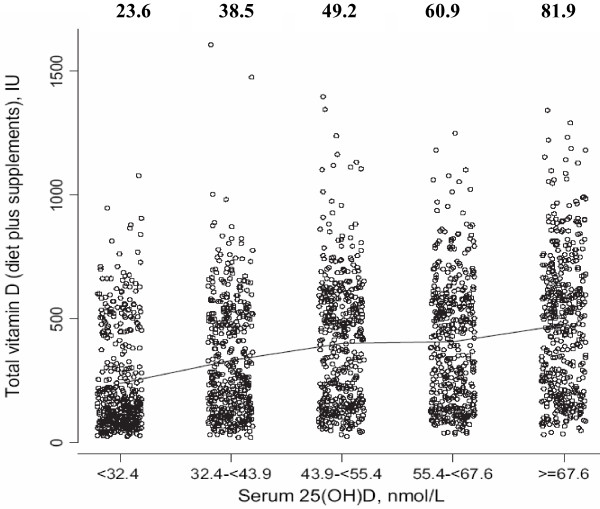
Total vitamin D intake and serum 25-hydroxyvitamin D by quintile. Individual total vitamin D intake (diet plus supplementation) and serum 25-hydroxyvitamin D (25(OH)D) levels at baseline. Serum 25(OH)D levels from 1,067 women identified as control subjects from a nested case-control study performed in the Women's Health Initiative trial evaluating calcium and vitamin D. Daily intakes of dietary and supplemental vitamin D were determined from self-report. The range of vitamin D intakes substantially overlaps in each 25(OH)D quintile. Line segments connect the mean vitamin D intake level in each quintile, which was 23.6, 38.5, 49.2, 60.9, and 81.9 nmol/l, respectively. Adapted with permission from Chlebowski and colleagues [42].

References

    1. Deeb KK, Trump DL, Johnson CS. Vitamin D signaling pathways in cancer: potential for anticancer therapeutics. Nat Rev Cancer. 2007;7:684–700. doi: 10.1038/nrc2196. - DOI - PubMed
    1. James SY, Mackay AG, Colston KW. Effects of 1,25 dihydroxyvitamin D3 and its analogues on induction of apoptosis in breast cancer cells. J Steroid Biochem Mol Biol. 1996;58:395–401. doi: 10.1016/0960-0760(96)00048-9. - DOI - PubMed
    1. Matthews D, LaPorta E, Zinser GM, Narvaez CJ, Welsh J. Genomic vitamin D signaling in breast cancer: insights from animal models and human cells. J Steroid Biochem Mol Biol. 2010;121:362–367. doi: 10.1016/j.jsbmb.2010.03.061. - DOI - PMC - PubMed
    1. Welsh J. Vitamin D and breast cancer: insights from animal models. Am J Clin Nutr. 2004;80:1721S–1724S. - PubMed
    1. John EM, Schwartz GG, Dreon DM, Koo J. Vitamin D and breast cancer risk: the NHANES I Epidemiologic follow-up study, 1971-1975 to 1992. National Health and Nutrition Examination Survey. Cancer Epidemiol Biomarkers Prev. 1999;8:399–406. - PubMed

Publication types