


Synaptic glutamate spillover increases NMDA receptor reliability at the cerebellar glomerulus
- PMID: 21884708
- PMCID: PMC3191251
- DOI: 10.1016/j.jtbi.2011.08.018
Synaptic glutamate spillover increases NMDA receptor reliability at the cerebellar glomerulus
Abstract
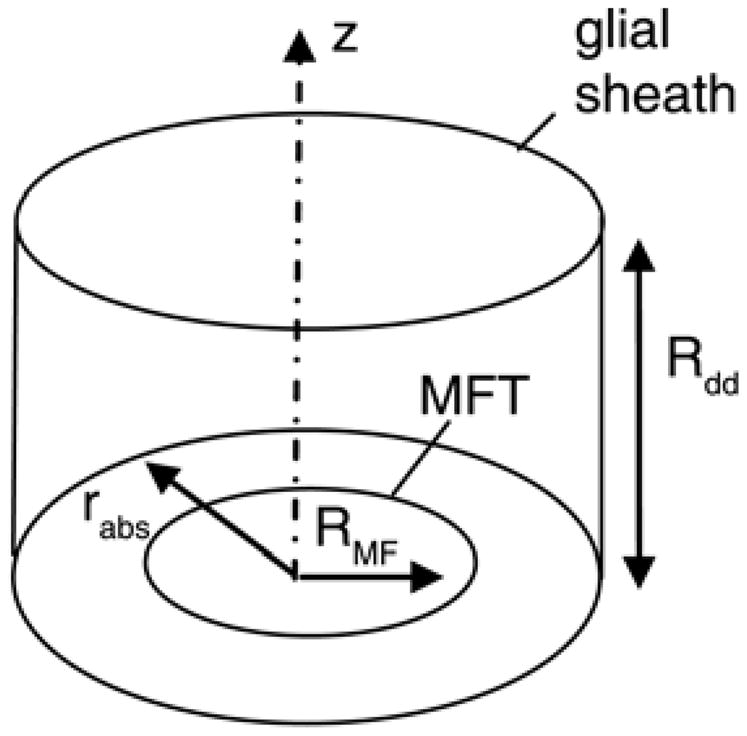
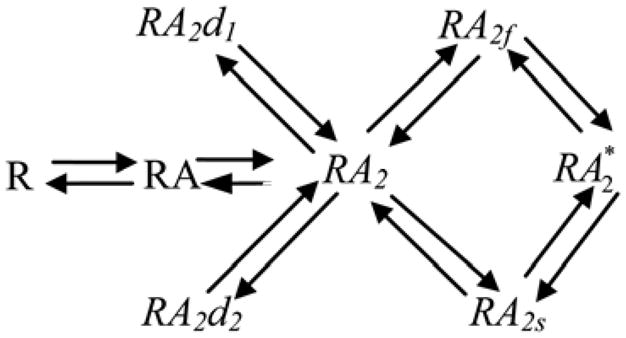
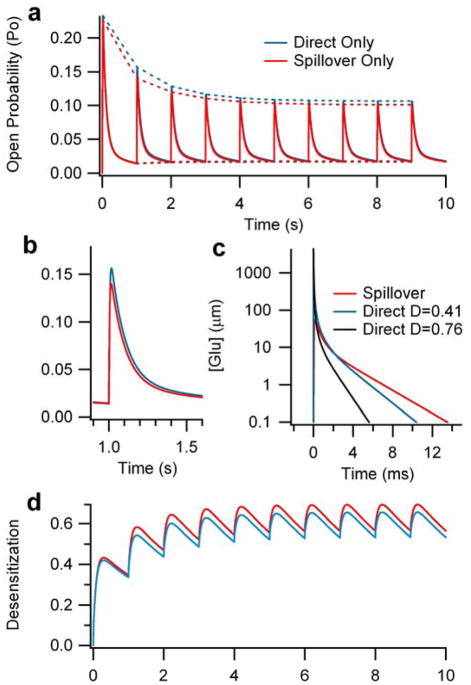
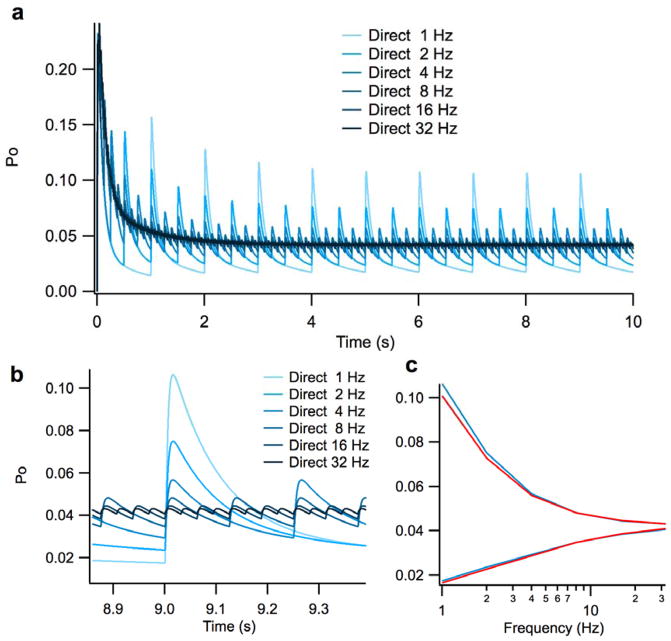
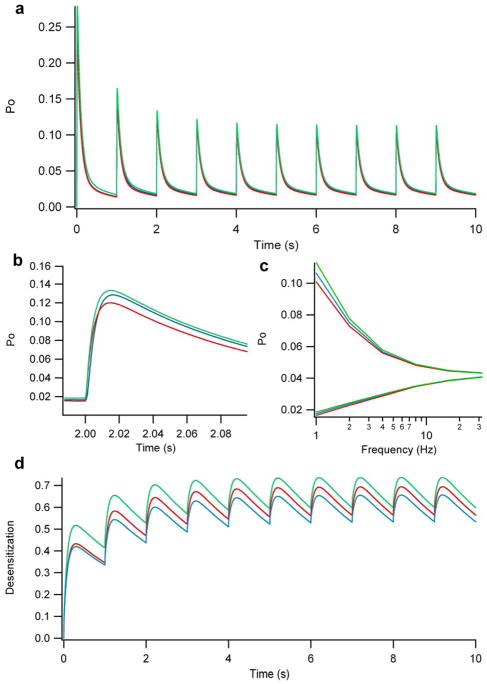
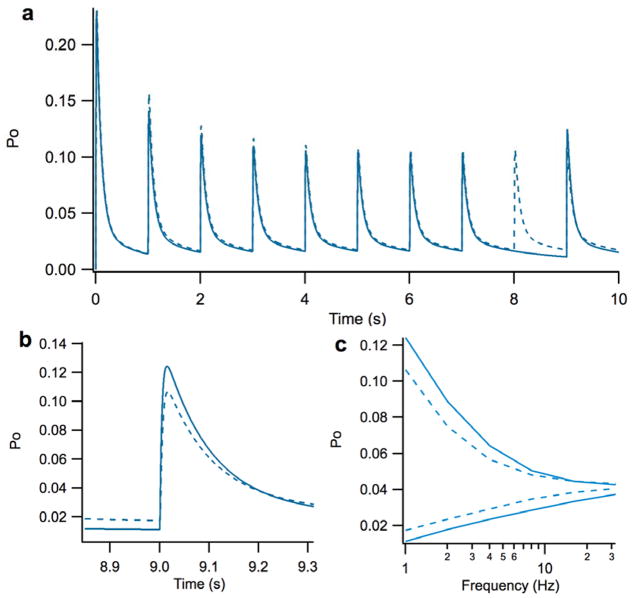
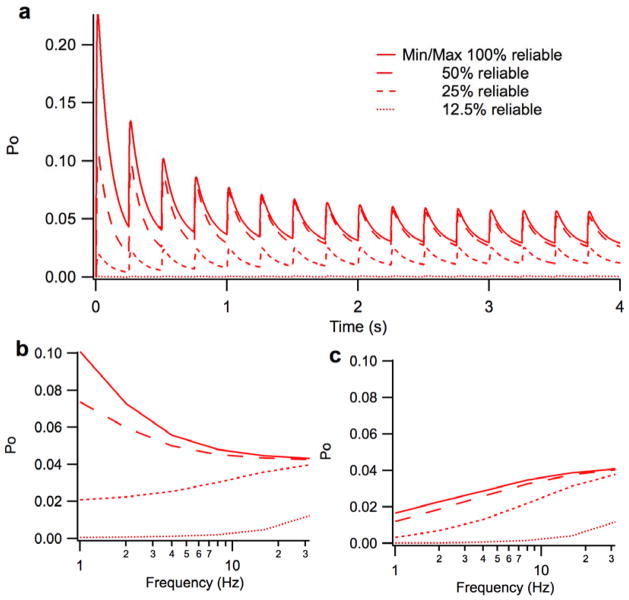
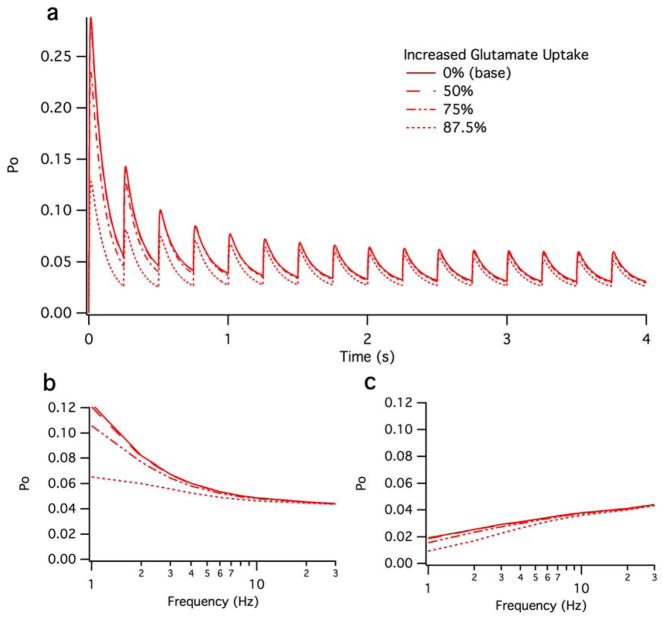
Glutamate spillover in the mossy fiber to granule cell cerebellar glomeruli has been hypothesized to increase neurotransmission reliability. In this study, we evaluate this hypothesis using an experimentally based quantitative model of glutamate spillover on the N-methyl-d-aspartate receptors (NMDA-Rs) at the cerebellar glomerulus. The transient and steady-state responses of NMDA-Rs were examined over a physiological range of firing rates. Examined cases included direct glutamate release activation, glutamate spillover activation, and a combination of direct and spillover activation. Our results illustrate that the effects of spillover alone are equivalent to direct release and, notably, combined spillover and direct release effects on NMDA-Rs are not additive. Our results show that spillover does in fact provide a high degree of reliability given that the synaptic vesicle release rate must fall to approximately 15-25% of what is considered the normal baseline level in order to substantially alter neurotransmission across the examined range of frequencies. We suggest that the high reliability provided by activation due to glutamate spillover could be used to conserve energy by reducing the required overall glutamate load at higher frequencies.
Copyright © 2011 Elsevier Ltd. All rights reserved.
Conflict of interest statement
The authors have no conflict of interest with regard to this manuscript.
Figures
References
-
- Arnth-Jensen N, Jabaudon D, et al. Cooperation between independent hippocampal synapses is controlled by glutamate uptake. Nat Neurosci. 2002;5(4):325–331. - PubMed
-
- Asztely F, Erdemli G, et al. Extrasynaptic glutamate spillover in the hippocampus: dependence on temperature and the role of active glutamate uptake. Neuron. 1997;18(2):281–293. - PubMed
-
- Baldino F, Jr, Wolfson B, et al. An N-methyl-D-aspartate (NMDA) receptor antagonist reduces bicuculline-induced depolarization shifts in neocortical explant cultures. Neurosci Lett. 1986;70(1):101–105. - PubMed
-
- Banke TG, Traynelis SF. Activation of NR1/NR2B NMDA receptors. Nat Neurosci. 2003;6(2):144–152. - PubMed
-
- Boucher J, Kroger H, et al. Realistic modelling of receptor activation in hippocampal excitatory synapses: analysis of multivesicular release, release location, temperature and synaptic cross-talk. Brain Struct Funct. 215(1):49–65. - PubMed
Publication types
MeSH terms
Substances
Grants and funding
LinkOut - more resources
Full Text Sources
