. 2011 Dec;339(3):757-67.
doi: 10.1124/jpet.111.185769. Epub 2011 Sep 1.

Indirect sympatholytic actions at β-adrenoceptors account for the ocular hypotensive actions of cannabinoid receptor agonists

Affiliations

Indirect sympatholytic actions at β-adrenoceptors account for the ocular hypotensive actions of cannabinoid receptor agonists

Brian D Hudson et al. J Pharmacol Exp Ther. 2011 Dec.

Abstract

Intraocular pressure (IOP) is the primary risk factor for glaucoma, a blinding eye disease. Cannabinoid agonists have long been known to decrease IOP, suggesting they may be useful in glaucoma treatment. However, the specific mechanism by which cannabinoids generate this ocular hypotensive effect remains unknown. The current evidence suggests the cannabinoids reduce IOP through actions at cannabinoid 1 (CB(1)) receptors within the eye, and adrenergic receptors (ARs) may also contribute to this action of cannabinoids. Considering this, the present study aimed to elucidate the mechanism behind the ocular hypotensive properties of cannabinoids through the use of mice genetically lacking either cannabinoid receptors or βARs. Cannabinoid agonists, βAR antagonists, and βAR agonists decreased IOP in wild-type mice and CB(2)(-/-) mice. In contrast, none of these compounds were found to reduce IOP in βAR(-/-) or CB(1)(-/-) mice. Desensitization of the βARs and depletion of catecholamines in wild-type mice also eliminated the ability of the cannabinoid agonist (R)-(+)-[2,3-dihydro-5-methyl-3-(4-morpholinylmethyl)pyrrolo[1,2,3-de]-1,4-benzoxazin-6-yl]-1-naphthalenylmethanone mesylate (WIN 55,212-2) to reduce IOP, strongly implicating a role for both βARs and catecholamines in the ocular hypotensive properties of cannabinoids. Finally, CB(1) receptors were shown to colocalize with tyrosine hydroxylase, a marker for adrenergic neurons. Taken together, these findings suggest that βARs are required for the ocular hypotensive properties of cannabinoids, and cannabinoids reduce IOP by acting as indirect sympatholytics and inhibiting norepinephrine release within the eye.


Figures
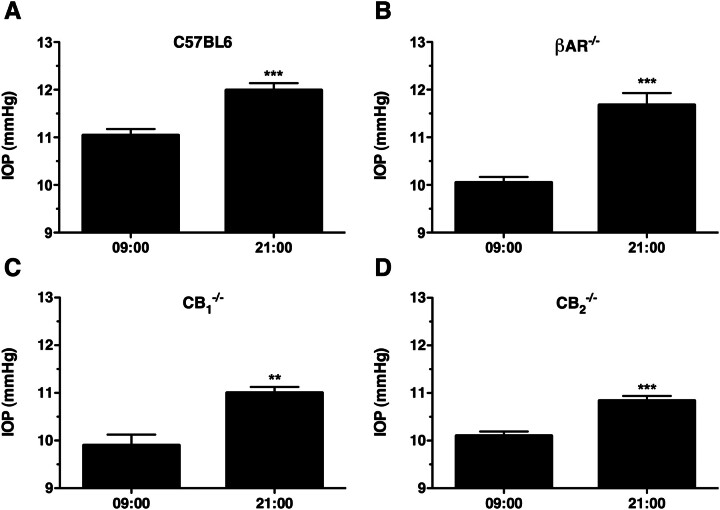
Fig. 1.
Fig. 1.
Diurnal variation in the IOP of C57BL6, βAR(−/−), CB1(−/−), and CB2(−/−) mice. A, mean IOP data recorded from wild-type male C57BL6 mice at 9:00 AM (left) and 9:00 PM (right) of the same day. ***, p < 0.001; n = 9. B, mean IOP data recorded from male βAR(−/−) mice at 9:00 AM (left) and 9:00 PM (right) of the same day. ***, p < 0.001; n = 8. C, mean IOP measured from C57BL6-CB1(−/−) mice at 9:00 AM (left) and 9:00 PM (right) of the same day. **, p < 0.01; n = 6. D, IOP measured from CB2(−/−) mice at 9:00 AM (left) and 9:00 PM (right) of the same day. ***, p < 0.001; n = 8.
Fig. 2.
Fig. 2.
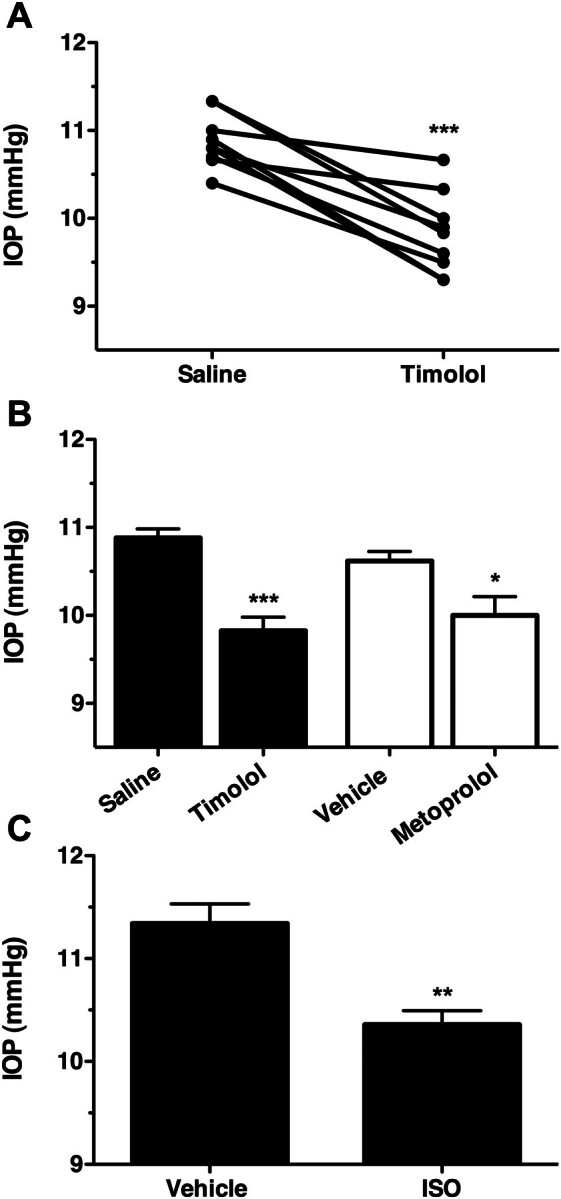
Topical application of βAR antagonists and agonists both reduce IOP in C57BL6 mice. A, IOP data from wild-type C57BL6 mice treated topically with either vehicle or 0.5% timolol. Data are plotted as individual points showing the difference between vehicle and treated eyes of the same animal. ***, p < 0.001 B, mean IOP data recorded from wild-type male C57BL6 mice treated with vehicle, the nonselective βAR antagonist timolol (0.5%; n = 9), or the β1AR-selective antagonist metoprolol (1.0%; n = 5). ***, p < 0.001; *, p < 0.01 compared with the appropriate vehicle control. C, IOP measured from wild-type male C57BL6 mice treated with vehicle or the nonselective βAR agonist ISO (1.0%; n = 5). **, p < 0.01.
Fig. 3.
Fig. 3.
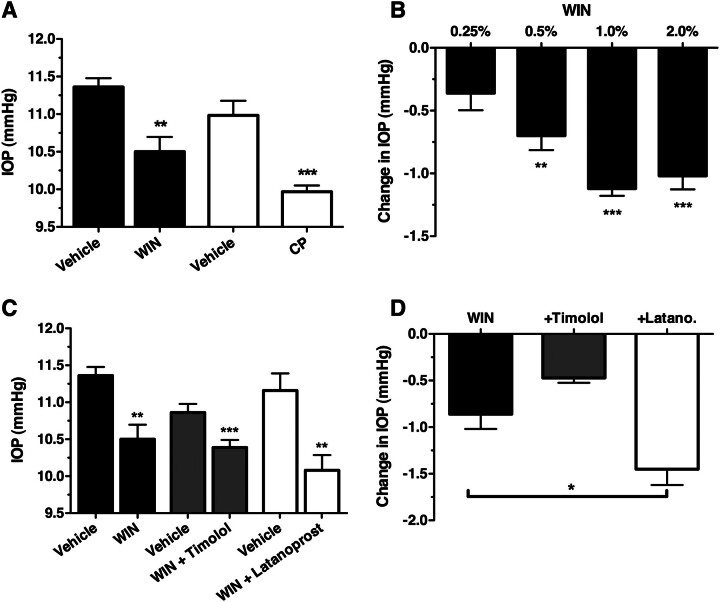
Cannabinoid agonists reduce IOP in C57BL6 mice, but are not additive with βAR antagonists. A, mean IOP data recorded from wild-type male C57BL6 mice treated for 1 h with vehicle or WIN (1.0%; n = 6) or with vehicle or CP (1.0%; n = 6). **, p < 0.01; ***, p < 0.001 compared with appropriate vehicle control. B, mean change in IOP between vehicle- and WIN-treated (0.25, 0.5, 1.0, and 2.0%) eyes of the same animal. Statistically significant changes in IOP between vehicle- and WIN-treated eyes are indicated as **, p < 0.01 and ***, p < 0.001, respectively; n = 5. C, mean IOP measured from wild-type male C57BL6 mice treated with vehicle or WIN (1%; solid bars; n = 6) or a combination of WIN (1%) and timolol (0.5%; dark gray bars; n = 6) or latanoprost (0.005%; open bars; n = 5). ***, p < 0.001; **, p < 0.01 compared with the appropriate vehicle control. D, mean change in IOP after treatment with WIN, WIN + timolol (+Timolol), and WIN + latanoprost (+Latano). *, p < 0.05.
Fig. 4.
Fig. 4.
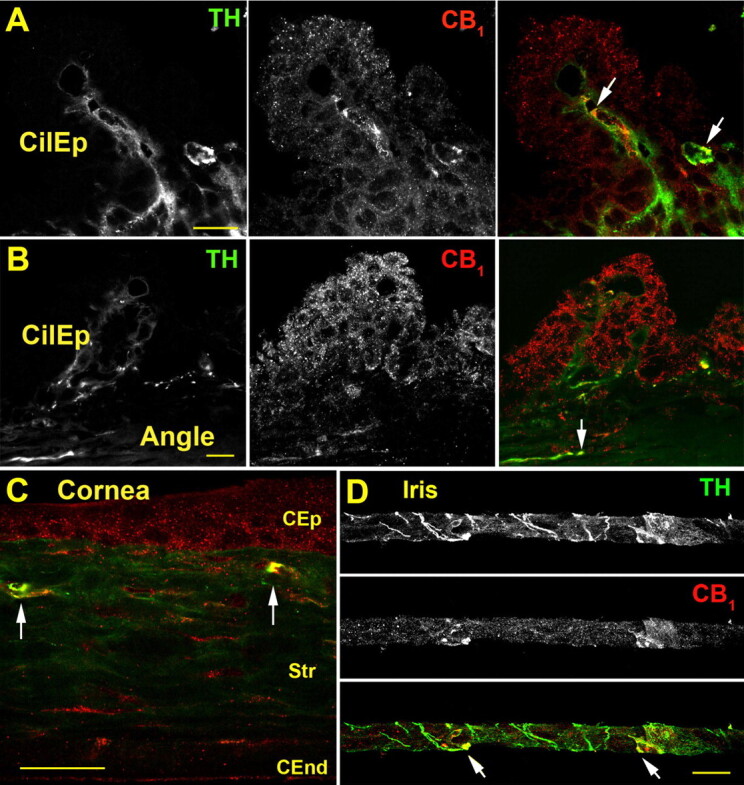
CB1 colocalizes with TH in the murine anterior eye. A, TH (left) and CB1 staining (center) in the ciliary epithelium (CilEp), and TH (green) and CB1 (red), with overlapping staining in yellow (arrows) (right). B, overview of ciliary epithelium (CilEp); including the angle shows TH and CB1 staining in the angle (arrow). C, in the cornea, CB1 is present in corneal epithelium (CEP), stroma (Str), and corneal endothelium (CEnd) and colocalizes with TH in the peripheral distal stroma (arrows). D, CB1 exhibits partial overlap with TH in the iris (arrows). Scale bars, 25 μm.
Fig. 5.
Fig. 5.
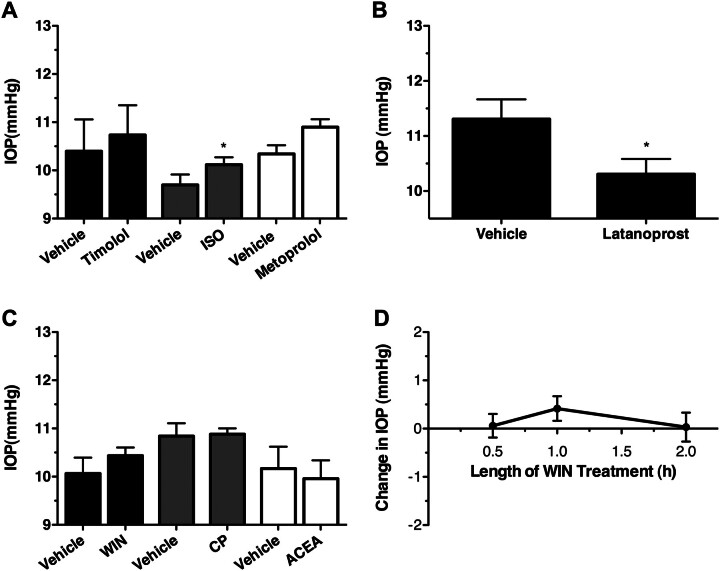
βAR antagonists, βAR agonists, and cannabinoid agonists do not reduce the IOP of βAR(−/−) mice. A, mean IOP data recorded from βAR(−/−) mice after the topical administration of vehicle with the βAR antagonists timolol (0.5%; solid bars; n = 5) and metoprolol (1.0%; gray bars; n = 5) or the βAR agonist ISO (1.0%; open bars; n = 5). *, p < 0.05 compared with appropriate vehicle. B, mean IOP data recorded from βAR(−/−) mice after the topical administration of either vehicle or latanoprost. *, p < 0.05; n = 6. C, mean IOP data obtained from βAR(−/−) mice after 1-h topical administration of vehicle, the nonselective cannabinoid agonists WIN (1.0%; n = 13) and CP (1.0%; n = 5), or the CB1-selective agonist ACEA (1%; n = 4). D, time course for change in IOP in βAR(−/−) mice after administration of WIN (1.0%; n = 5).
Fig. 6.
Fig. 6.
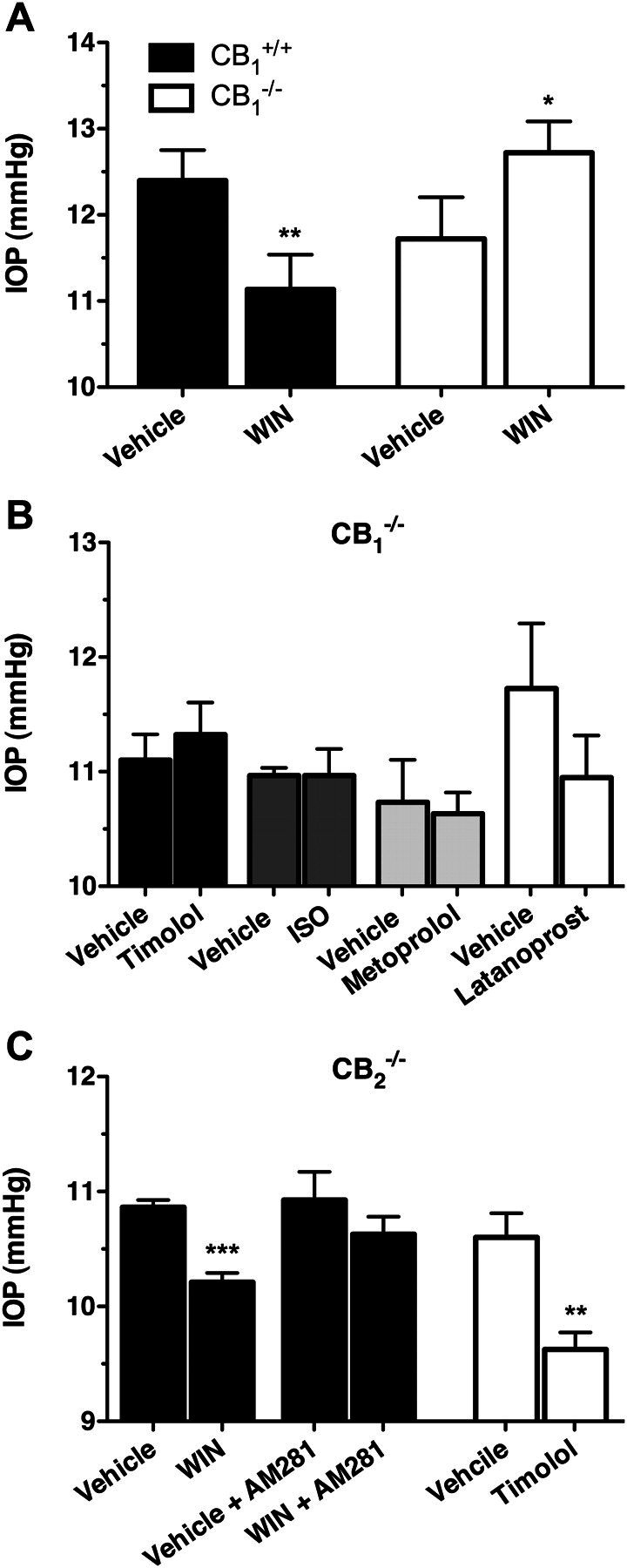
The effect of cannabinoid and βAR ligands on IOP in CB1(−/−) and CB2(−/−) mice on a C57BL6 genetic background. A, mean IOP data recoded from either C57BL6 CB1(−/−) (n = 3) mice or CB1(+/+) (n = 5) littermates after the topical application of either vehicle or WIN (1%). **, p < 0.01; *, p < 0.05 compared with the appropriate vehicle control. B, mean IOP measured in CB1(−/−) mice after treatment with vehicle and timolol (0.5%; n = 4), ISO (1%; n = 3), or latanoprost (0.005%; n = 4). C, IOP measured in CB2(−/−) mice after 1-h topical administration of WIN (1.0%; solid bars) or timolol (0.5%; open bars). ***, p < 0.001; **, p < 0.01 compared with the appropriate vehicle control.
Fig. 7.
Fig. 7.
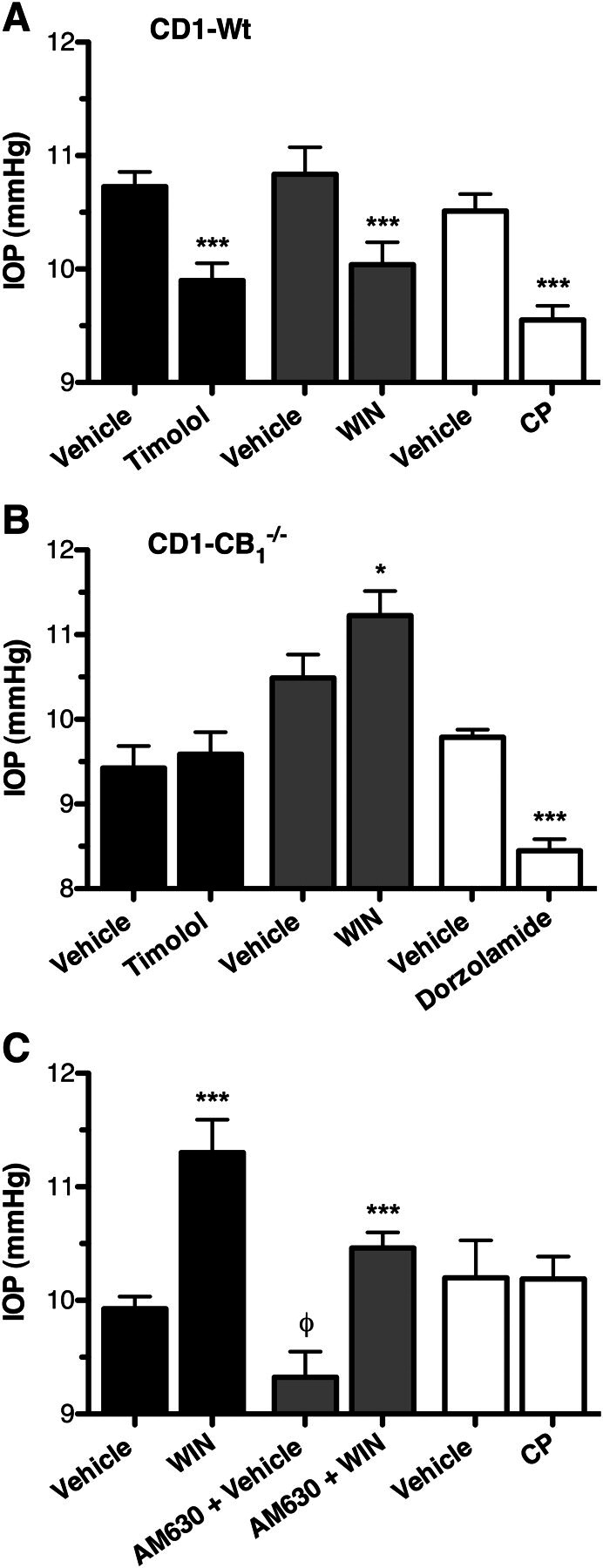
The effect of cannabinoid and βAR ligands on IOP in CB1(−/−) mice on a CD1 genetic background. A, mean IOP measured from male wild-type CD1 mice after topical application of the appropriate vehicle or timolol (0.5%), WIN (1.0%), or CP (1.0%). ***, p < 0.001 compared with appropriate vehicle control. B, mean IOP measured in male CD1-CB1(−/−) mice after treatment with vehicle and timolol (0.5%; n = 8), WIN (1%; n = 8), or dorzolamide (1.0%; n = 8). ***, p < 0.001; *, p < 0.05 compared with the appropriate vehicle control. C, IOP measured from male CD1-CB1(−/−) mice after topical treatment with vehicle, WIN (1.0%), or CP (1.0%) in the absence or presence of pretreatment with the CB2 antagonist AM630. ***, p < 0.001 compared with the appropriate vehicle control. φ, p < 0.05 compared with non-AM630-treated vehicle.
Fig. 8.
Fig. 8.
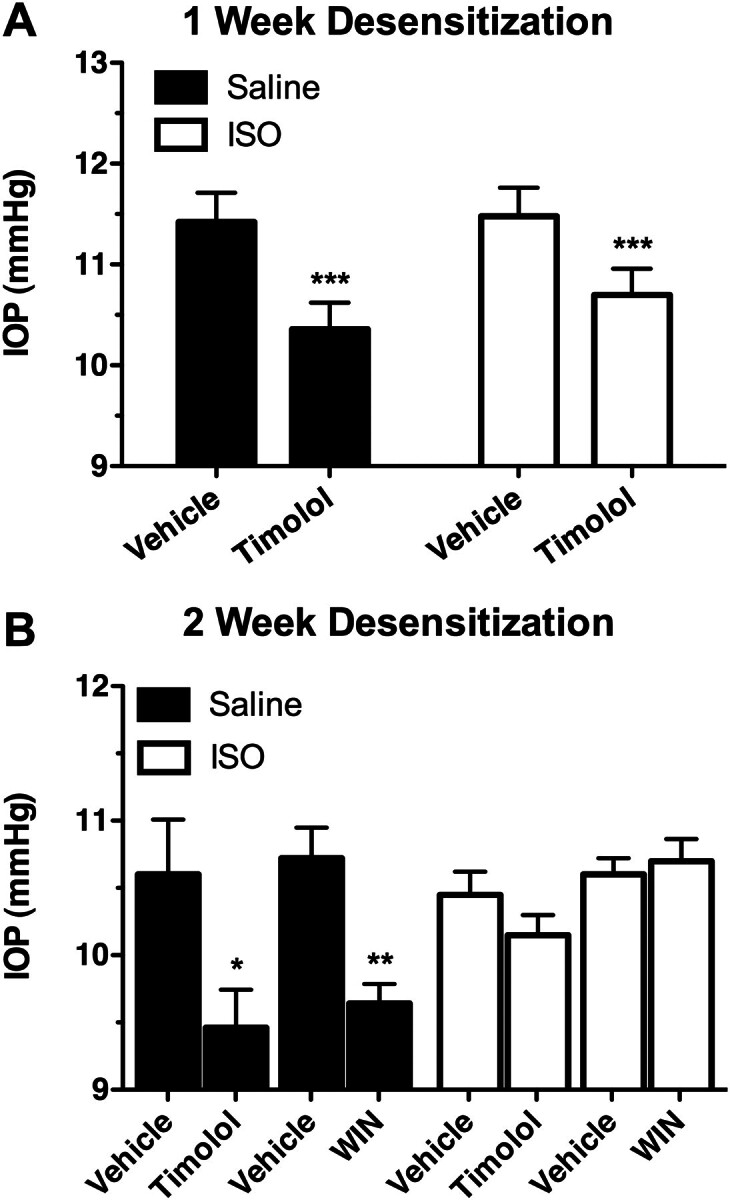
Chronic topical application of the βAR agonist ISO desensitizes the IOP response to timolol in C57BL6 mice. A, mean IOPs measured from wild-type C57BL6 mice treated for 1 week with saline vehicle (solid bars; n = 5) or ISO (2.5%; open bars; n = 5), followed by topical application of either vehicle or timolol (1%). ***, p < 0.001 compared with the appropriate vehicle control. B, mean IOPs measured from wild-type C57BL6 mice treated for 2 weeks with saline vehicle (solid bars; n = 5) or ISO (2.5%; open bars; n = 4), followed by topical application of vehicle, timolol (0.05%), or WIN (1%). **, p < 0.01; *, p < 0.05 compared with the appropriate vehicle control.
Fig. 9.
Fig. 9.
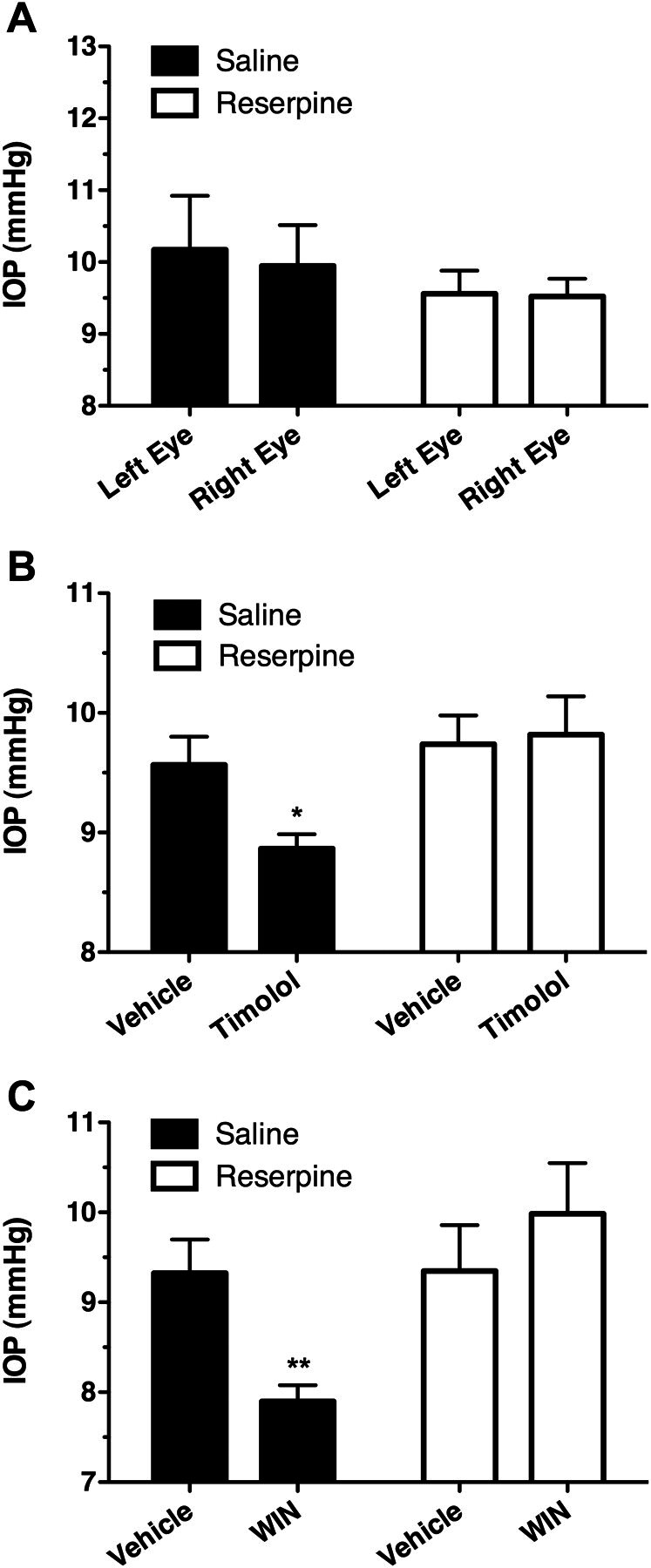
Pretreatment with reserpine to deplete catecholamines eliminates the ability of either timolol and WIN to reduce IOP. A, mean IOP recorded from each eye in C57BL6 mice pretreated with saline vehicle or reserpine to deplete catecholamines. B, mean IOP data for either vehicle or timolol treatment in mice pretreated with either saline (solid bars; n = 3), or reserpine (open bars; n = 5) to deplete catecholamines. *, p < 0.05 compared with the appropriate vehicle control. C, mean IOP data measured after topical application of either vehicle or WIN from mice pretreated with either saline (solid bars; n = 4) or reserpine (open bars; n = 6) to deplete catecholamines. **, p < 0.01 compared with the appropriate vehicle control.

References

    1. Akagi Y, Ibata Y, Sano Y. (1976) The sympathetic innervation of the ciliary body and trabecular meshwork of the cat. Fluorescence histochemistry and electron microscopy. Cell Tissue Res 173:261–269. - PubMed
    1. Akaishi T, Odani-Kawabata N, Ishida N, Nakamura M. (2009) Ocular hypotensive effects of anti-glaucoma agents in mice. J Ocul Pharmacol Ther 25:401–408. - PubMed
    1. Alm A, Nilsson SF. (2009) Uveoscleral outflow–a review. Exp Eye Res 88:760–768. - PubMed
    1. Alvarado JA, Murphy CG, Franse-Carman L, Chen J, Underwood JL. (1998) Effect of β-adrenergic agonists on paracellular width and fluid flow across outflow pathway cells. Invest Ophthalmol Vis Sci 39:1813–1822. - PubMed
    1. Cervino A. (2006) Rebound tonometry: new opportunities and limitations of non-invasive determination of intraocular pressure. Br J Ophthalmol 90:1444–1446. - PMC - PubMed

Publication types

MeSH terms

Substances

LinkOut - more resources