Chemoprevention of colon and small intestinal tumorigenesis in APC(Min/+) mice by licofelone, a novel dual 5-LOX/COX inhibitor: potential implications for human colon cancer prevention
- PMID: 21885812
- PMCID: PMC3232346
- DOI: 10.1158/1940-6207.CAPR-11-0233
Chemoprevention of colon and small intestinal tumorigenesis in APC(Min/+) mice by licofelone, a novel dual 5-LOX/COX inhibitor: potential implications for human colon cancer prevention
Abstract
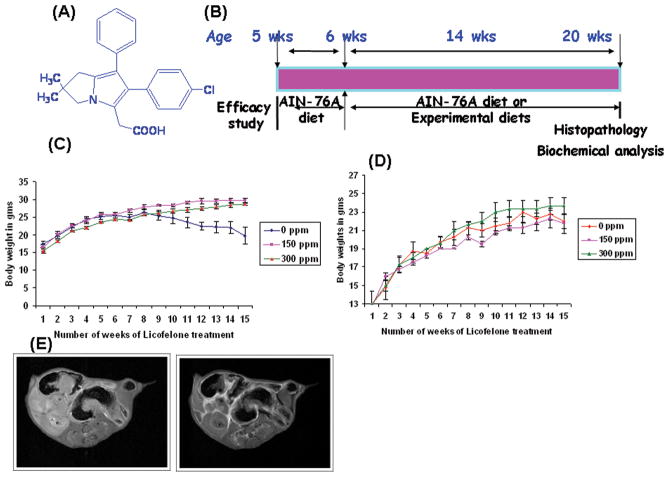
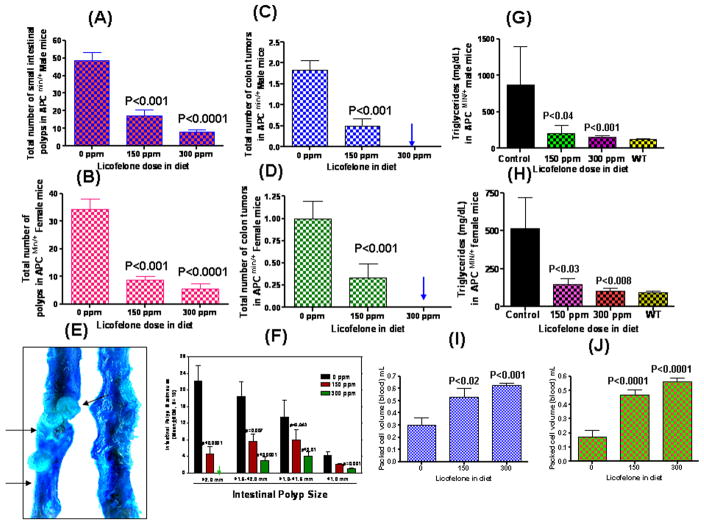
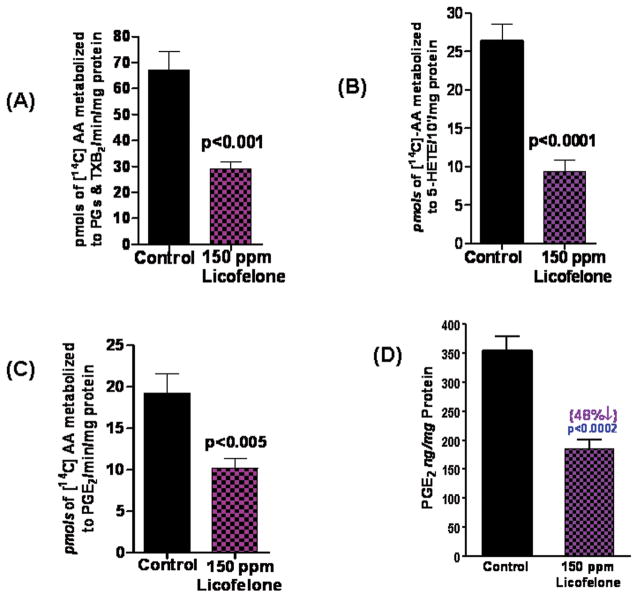
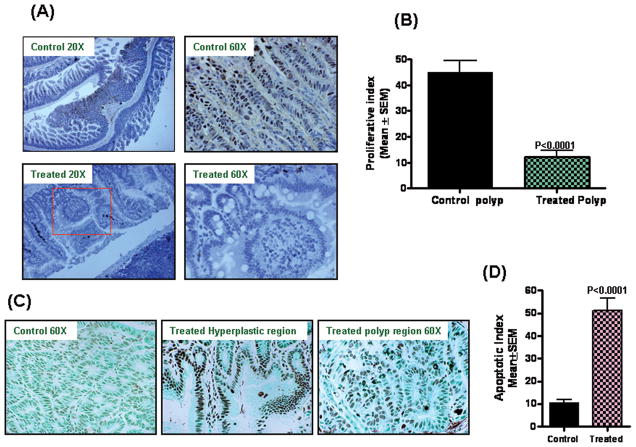
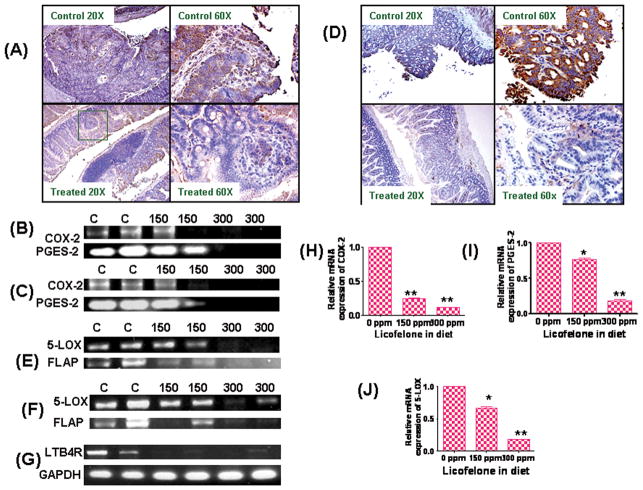
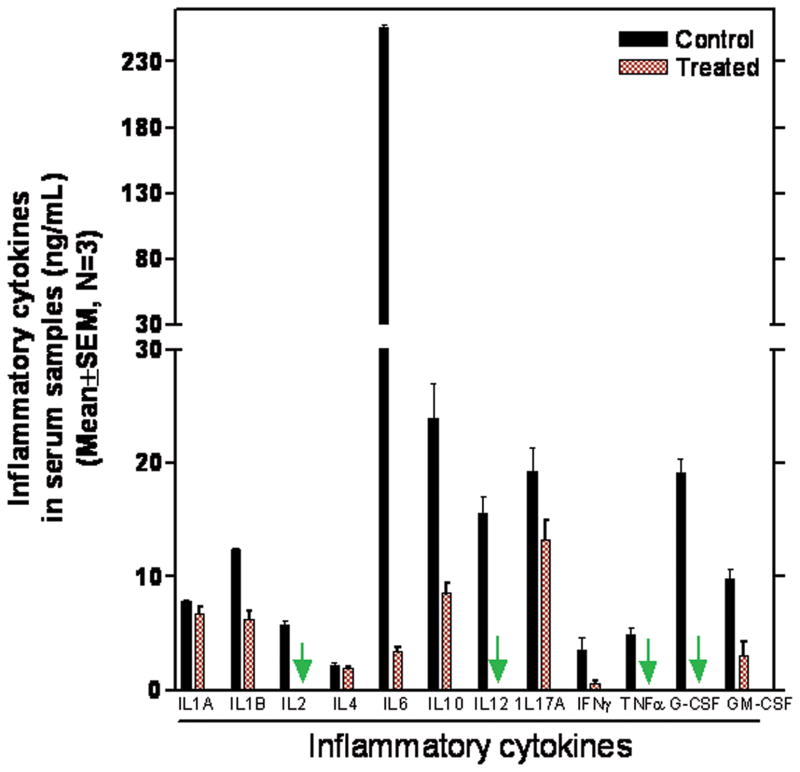
Preclinical and clinical studies suggest that 5-lipoxygenase (5-LOX), such as COX-2, is a potential target for colon cancer inhibition and, in part, contributes to cardiovascular side effects associated with COX-2 inhibitors. Experiments were designed to assess the chemopreventive effects of a novel dual 5-LOX/COX inhibitor, licofelone {[6-(4-chlorophenyl)-2,2-dimethyl-7-phenyl-2,3-dihydro-1H-pyrrolizin-5-yl] acetic acid}, in APC(Min/+) mouse intestinal tumorigenesis. Six-week-old male and female APC(Min/+) mice (n = 10 per group) were fed with control American Institute of Nutrition-76A diet or diets containing 150 or 300 ppm licofelone for 14 weeks (∼100 days), and intestinal tumors were evaluated for tumor multiplicity and size. Licofelone significantly inhibited total intestinal tumor multiplicity and size in a dose-dependent manner (P < 0.0001; mean tumors for 0, 150, and 300 ppm: 48.8, 17, and 8, respectively, in male mice; and 34.3, 8.8, and 5.5, respectively, in female mice). Licofelone at high dose showed more than 83% (P < 0.0001) tumor inhibition in both genders of mice. One hundred and fifty and 300 ppm licofelone resulted in 86% to 97% inhibition of polyps having size greater than 2 mm. One hundred and fifty and 300 ppm licofelone caused more than 72% and 100% inhibition of colonic tumors, respectively. Importantly, in mice fed with licofelone, tumors showed significantly reduced proliferating cell nuclear antigen expression (70%, P < 0.0001), increased terminal deoxynucleotidyl transferase-mediated dUTP nick end labeling-positive cells (75%, P < 0.0001), and there was dose-dependent suppression of serum triglycerides (71%-83%, P < 0.0001), decreased inflammatory cytokines; and decreased COX and 5-LOX activities (57%-64%, P < 0.0001). Also, compared with 300 ppm celecoxib, 300 ppm licofelone provided better efficacy in suppressing tumor growth. These observations show that a novel dual 5-LOX/COX inhibitor dramatically suppresses small intestinal and colonic tumor formation in APC(Min/+) mice.
2011 AACR
Figures
References
-
- American Cancer Society. Cancer Facts and Figures 2011. Atlanta, GA: 2011.
-
- Reddy BS, Rao CV. Novel approaches for colon cancer prevention by cyclooxygenase-2 inhibitors. J Environ Pathol Toxicol Oncol. 2002;21:155–64. - PubMed
-
- Reddy BS, Hirose Y, Lubet R, Steele V, Kellof G, Paulson S, et al. Chemoprevention of colon cancer by specific cyclooxygenase-2 inhibitor, celecoxib, administered during different stages of carcinogenesis. Cancer Res. 2000;60:293–7. - PubMed
-
- Kawamori T, Rao CV, Seibert K, Reddy BS. Chemopreventive activity of celecoxib, a specific cyclooxygenase-2 inhibitor, against colon carcinogenesis. Cancer Res. 1998;58:409–12. - PubMed
-
- Swamy MV, Herzog CR, Rao CV. Celecoxib inhibition of COX-2 in colon cancer cell lines increases the nuclear localization of functionally active p53. Cancer Res. 2000;63:5239–42. - PubMed
Publication types
MeSH terms
Substances
Grants and funding
LinkOut - more resources
Full Text Sources
Research Materials