


Predictive modeling the physician assistant supply: 2010-2025
- PMID: 21886331
- PMCID: PMC3151188
- DOI: 10.1177/003335491112600513
Predictive modeling the physician assistant supply: 2010-2025
Abstract
Objective: A component of health-care reform in 2010 identified physician assistants (PAs) as needed to help mitigate the expected doctor shortage. We modeled their number to predict rational estimates for workforce planners.
Methods: The number of PAs in active clinical practice in 2010 formed the baseline. We used graduation rates and program expansion to project annual growth; attrition estimates offset these amounts. A simulation model incorporated historical trends, current supply, and graduation amounts. Sensitivity analyses were conducted to systematically adjust parameters in the model to determine the effects of such changes.
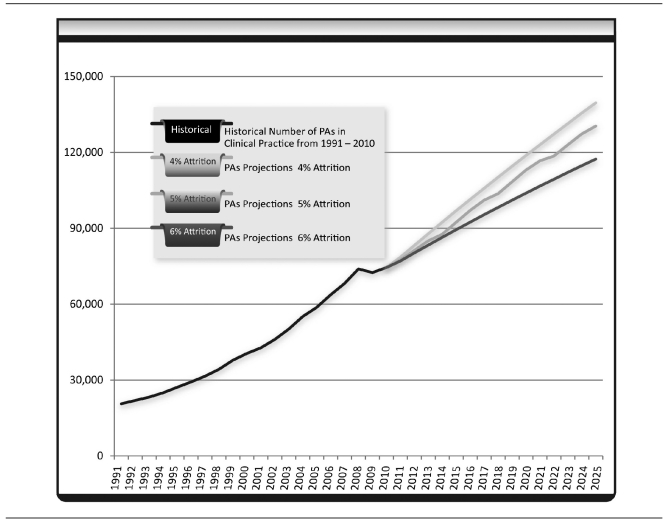
Results: As of 2010, there were 74,476 PAs in the active workforce. The mean age was 42 years and 65% were female. There were 154 accredited educational programs; 99% had a graduating class and produced an average of 44 graduates annually (total n=6,776). With a 7% increase in graduate entry rate and a 5% annual attrition rate, the supply of clinically active PAs will grow to 93,099 in 2015, 111,004 in 2020, and 127,821 in 2025. This model holds clinically active PAs in primary care at 34%.
Conclusions: The number of clinically active PAs is projected to increase by almost 72% in 15 years. Attrition rates, especially retirement patterns, are not well understood for PAs, and variation could affect future supply. While the majority of PAs are in the medical specialties and subspecialties fields, new policy steps funding PA education and promoting primary care may add more PAs in primary care than the model predicts.
Figures
References
-
- Bodenheimer T, Pham HH. Primary care: current problems and proposed solutions. Health Aff (Millwood) 2010;29:799–805. - PubMed
-
- Hooker RS, Cawley JF, Asprey DP. Physician assistants: policy and practice. 3rd ed. Philadelphia: F.A. Davis; 2010.
-
- Dill MJ, Salsberg ES Center for Workforce Studies. The complexities of physician supply and demand: projections through 2025. Washington: Association of American Medical Colleges; 2008.
-
- Colwill JM, Cultice JM, Kruse RL. Will generalist physician supply meet demands of an increasing and aging population? Health Aff (Millwood) 2008;27:w232–41. - PubMed
-
- Sargen M, Hooker RS, Cooper RA. Gaps in the supply of physicians, advance practice nurses, and physician assistants. J Am Coll Surg. 2011:212. epub ahead of print. - PubMed
Publication types
MeSH terms
Grants and funding
LinkOut - more resources
Full Text Sources
