doi: 10.4103/0974-2700.83872.
Pediatric head trauma
Affiliations
- PMID: 21887034
- PMCID: PMC3162713
- DOI: 10.4103/0974-2700.83872
Item in Clipboard
Pediatric head trauma
J Emerg Trauma Shock.
2011 Jul.
Abstract
Head injury in children accounts for a large number of emergency department visits and hospital admissions. Falls are the most common type of injury, followed by motor-vehicle-related accidents. In the present study, we discuss the evaluation, neuroimaging and management of children with head trauma. Furthermore, we present the specific characteristics of each type of pediatric head injury.
Keywords: Children; head; trauma.
Conflict of interest statement
Figures
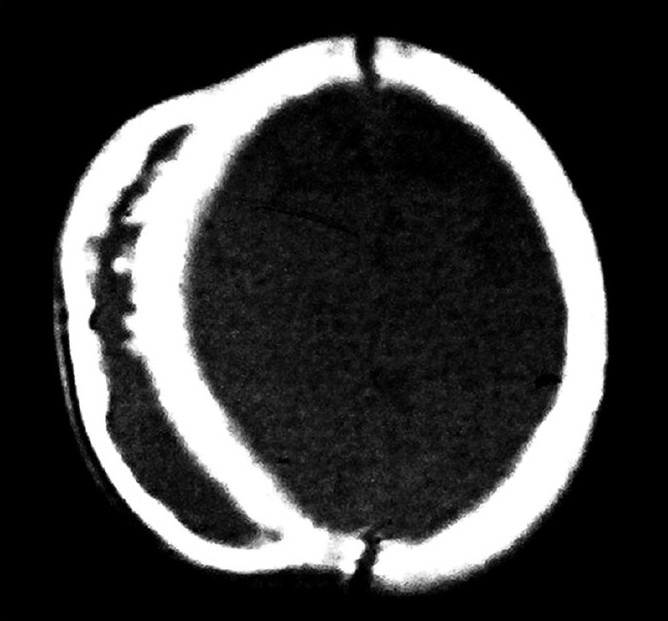
Calcified subgaleal hematoma
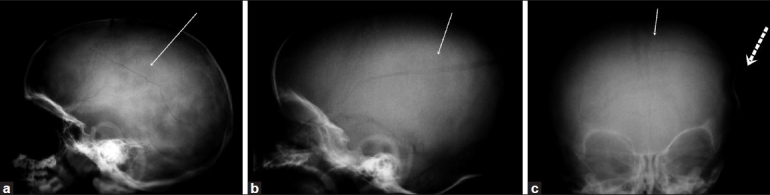
(a) Linear skull fracture (b) Diastatic skull fracture (c) Ping - Pong and linear fracture in an infant
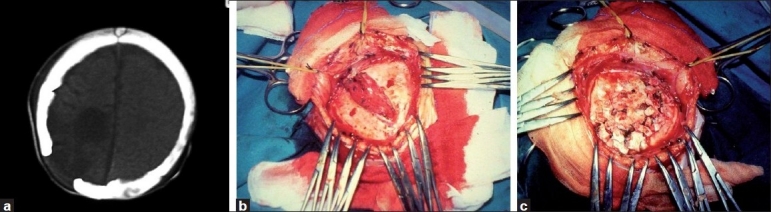
(a) CT scan of a patient with a growing fracture (b) Intraoperative photo revealing the growing fracture (c) Surgical treatment of the fracture
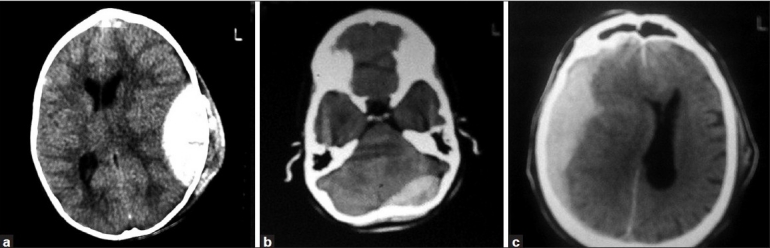
(a) Epidural hematoma (b) Posterior fossa epidural hematoma (c) Subdural hematoma
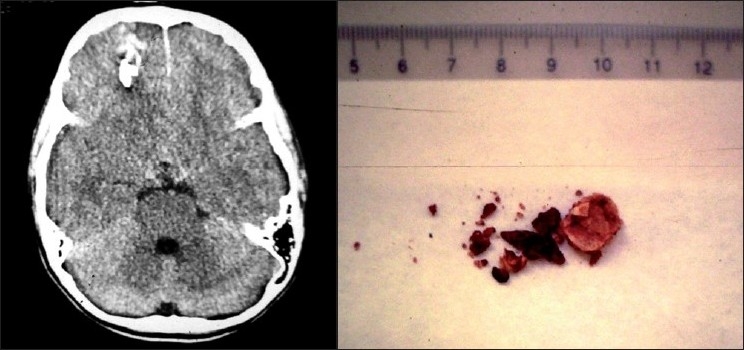
Penetrating head trauma following gunshot in a child
References
-
- Adirim TA, Wright JL, Lee E, Lomax TA, Chamberlain JM. Injury surveillance in a pediatric emergency department. Am J Emerg Med. 1999;17:499–503. - PubMed
-
- Kumar R, Mahapatra AK. The changing “epidemiology” of pediatric head injury and its impact on the daily clinical practice. Childs Nerv Syst. 2009;25:813–23. - PubMed
-
- Halley MK, Silva PD, Foley J, Rodarte A. Loss of consciousness: When to perform computed tomography? Pediatr Crit Care Med. 2004;5:230–3. - PubMed
-
- King MA, Kanal KM, Relyea-Chew A, Bittles M, Vavilala MS, Hollingworth W. Radiation exposure from pediatric head CT: A bi-institutional study. Pediatr Radiol. 2009;39:1059–65. - PubMed
-
- Rice HE, Frush DP, Farmer D, Waldhausen JH. APSA Education Committee. Review of radiation risks from computed tomography: Essentials for the pediatric surgeon. J Pediatr Surg. 2007;42:603–7. - PubMed