Case Reports
doi: 10.4103/1817-1745.57330.
Role of biplane digital subtraction angiography, and 3D rotational angiography in craniopagus twins: A case report, detailed pictorial evaluation, and review of literature
Affiliations
- PMID: 21887192
- PMCID: PMC3162776
- DOI: 10.4103/1817-1745.57330
Item in Clipboard
Case Reports
Role of biplane digital subtraction angiography, and 3D rotational angiography in craniopagus twins: A case report, detailed pictorial evaluation, and review of literature
J Pediatr Neurosci.
2009 Jul.
Abstract
Cranially conjoined twins (craniopagus) are regarded as one of the rarest human malformations. Craniopagus represents 2 to 6% of conjoined twins and is the rarest type of disorder. A conventional angiogram with three dimensions is needed to confirm the exact extent of sharing of the arterial / venous tree. 3D angiography was first proposed by CORNELIUS and advanced into clinical practice by VOIGT in 1975. We present a case of craniopagus vertical type II twins, evaluated for cerebral circulation.
Keywords: 3D rotational angiogram; Craniopagus; digital subtraction angiogram.
Conflict of interest statement
Figures
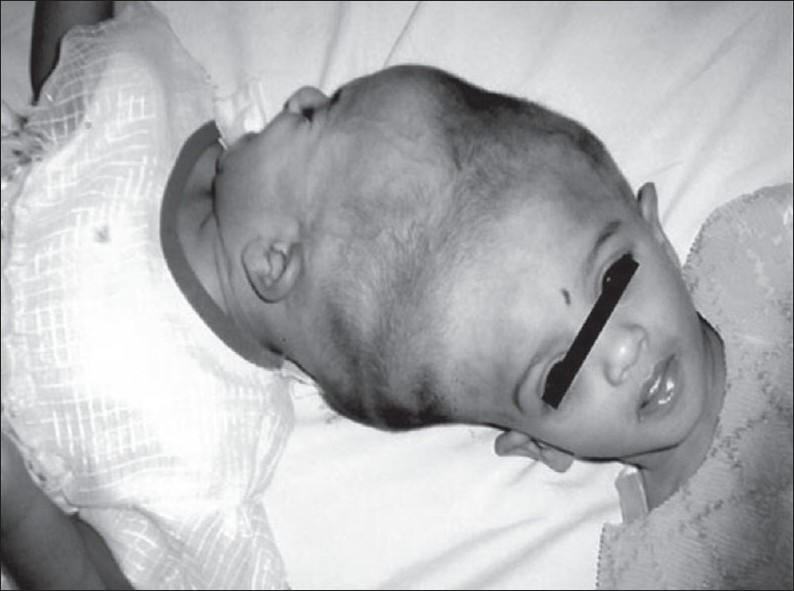
Craniopagus vertical type II twins
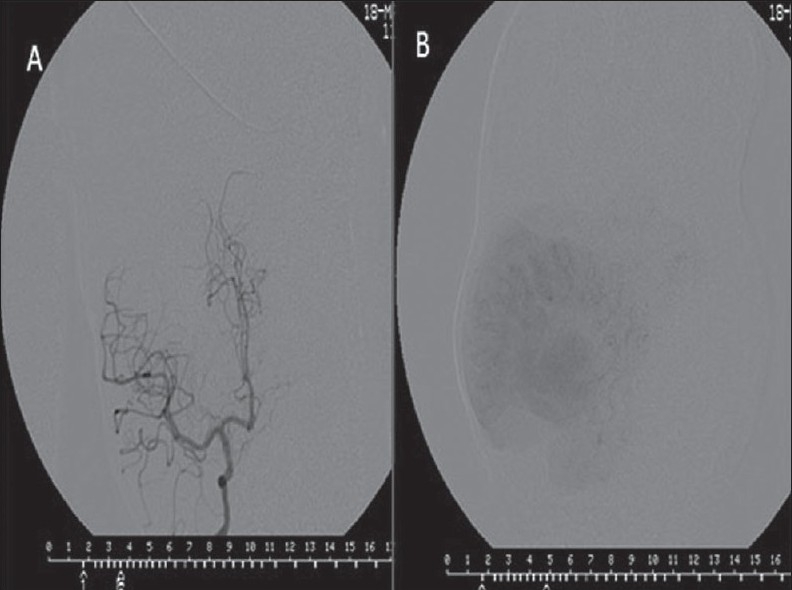
Internal carotid angiogram showing normal arterial phase(A) and capillary phase (B)of the twin I
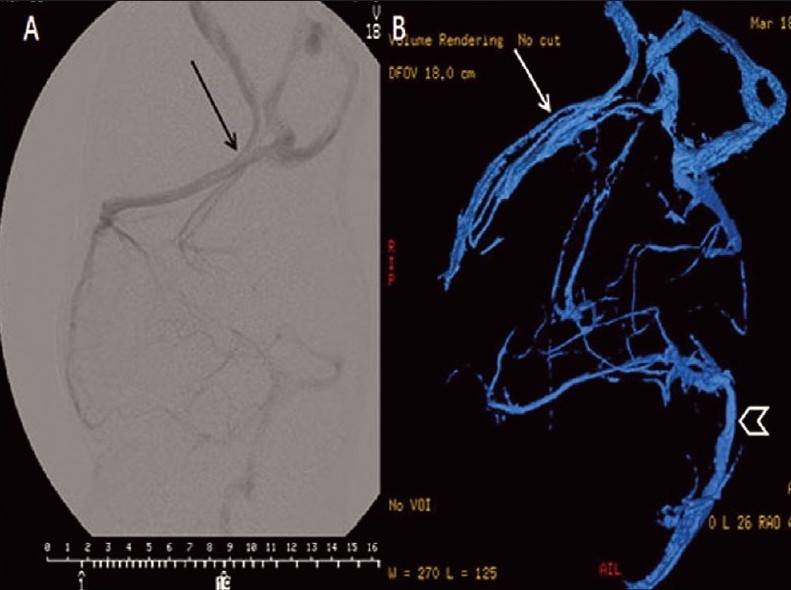
Showing the venous drainage of the twin I through the left transverse sigmoid system(arrow head) and circular sinus(arrow) into the twin II s transverse sigmoid jugular system bilaterally
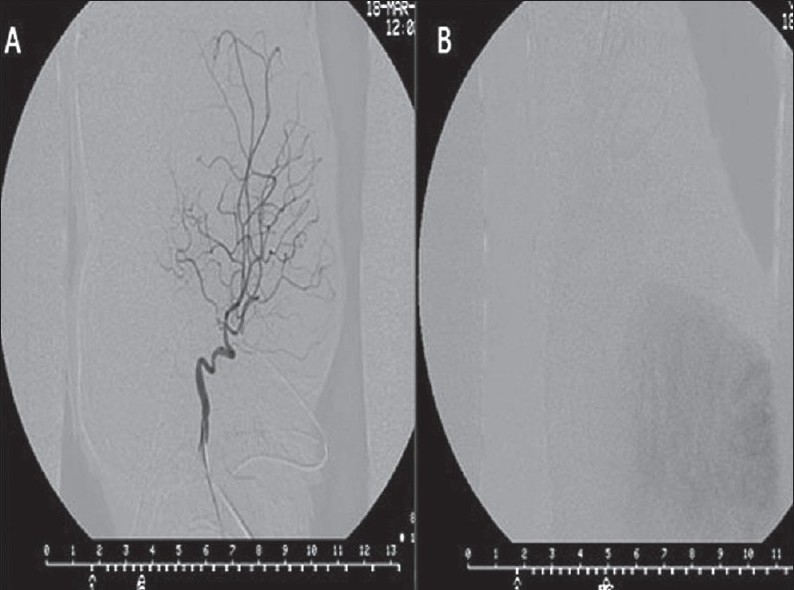
Internal carotid angiogram showing the normal arterial(A) and capillary phases(B) of the twin II
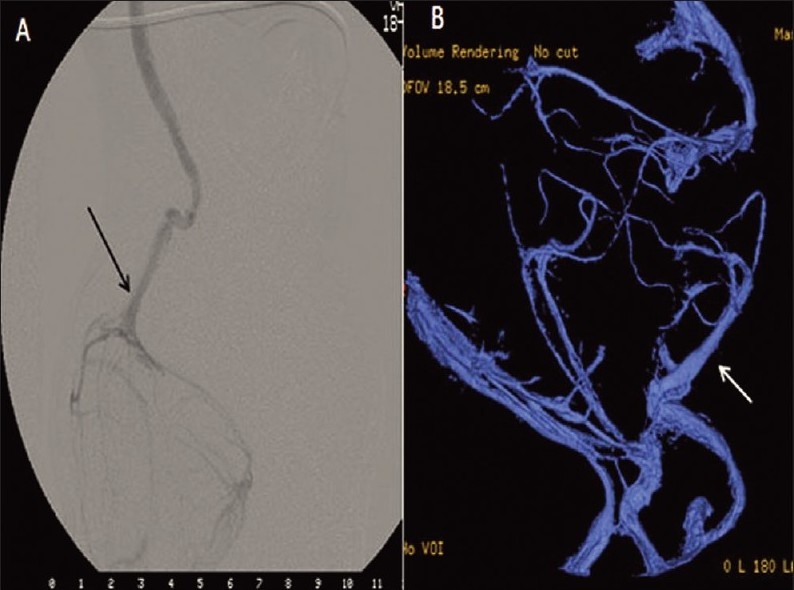
Venous drainage is through the circular sinus(arrow) into Transverse - Sigmoid -Jugular system bilaterally and the occipital sinus. Deep Venous system is not identifi ed clearly
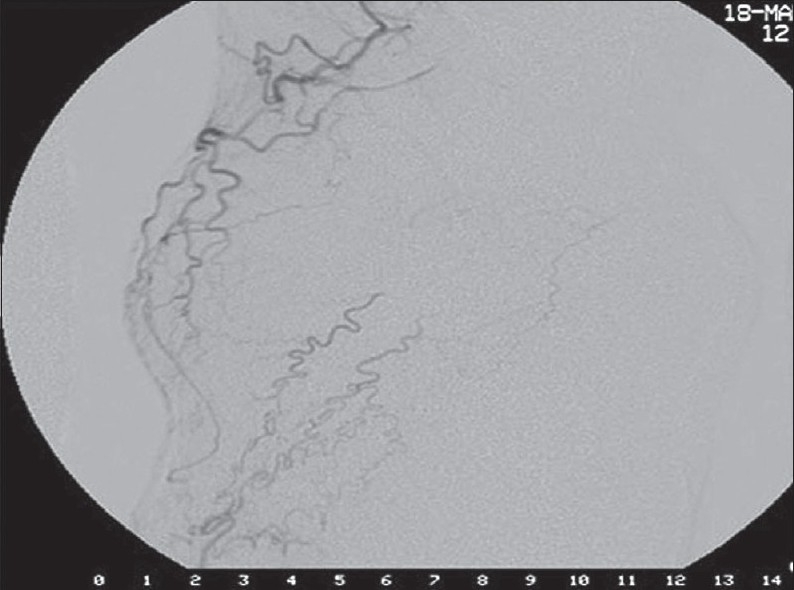
External carotid angiogram of twin II shows signifi cant cross over of ECA territory to supply Twin I scalp
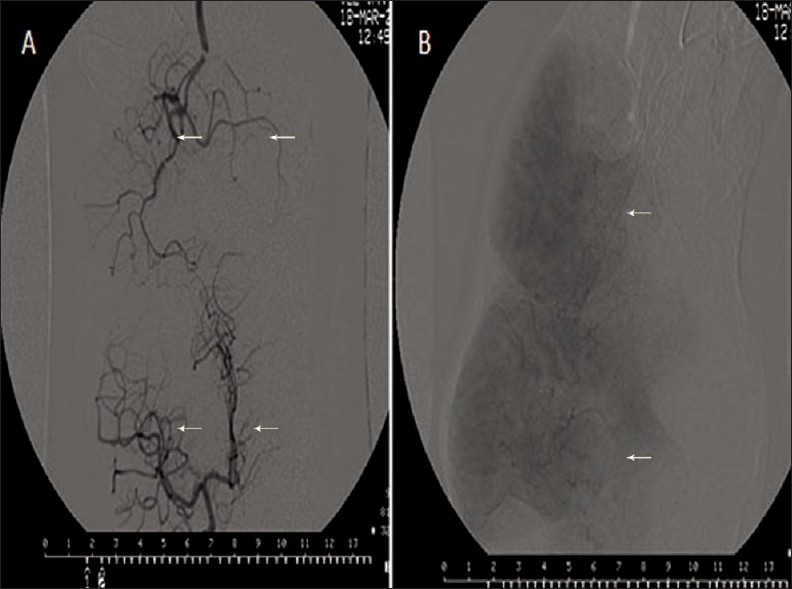
Simulataneous and sequential injections of both the twins showing normal arterial and capillary phases
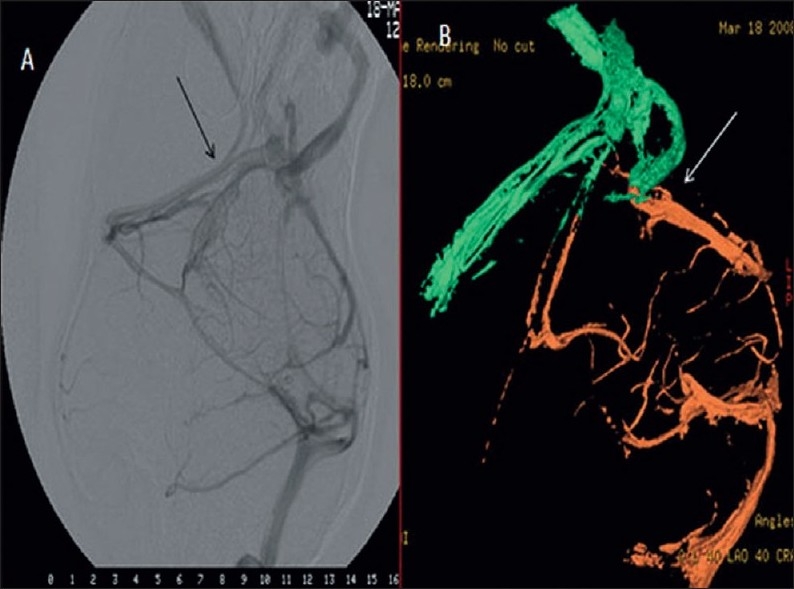
Venous drainage is through the circular sinus into Transverse - Sigmoid -Jugular system bilaterally and the occipital sinus.A signifi cant portion of the venous drainage is shunted into Twin I s left transverse sinus. Deep Venous system is not identifi ed clearly
References
-
- Hanson JW. Incidence of conjoined twinning. Lancet. 1975;2:1257. - PubMed
-
- Klucznik RP. Current technology and clinical applications of three-dimensional angiography. Radiol Clin North Am. 2002;40:711–28. - PubMed
-
- Schindler E, Hajek P. Craniopagus twins: Neuroradiological findings (CT, Angiography, MRI) Neuroradiolgy. 1988;30:11–6. - PubMed
-
- Kingston CA, McHugh K, Kumaradevan J, Kiely EM, Spitz L. Imaging in the preoperative assessment of conjoined twins. Radiographics. 2001;21:1187–208. - PubMed
-
- Barth RA, Filly RA, Goldberg JD, Moore P, Silverman NH. Conjoined twins: Prenatal diagnosis and assessment of associated malformations. Radiology. 1990;177:201–7. - PubMed