


Differential sensitivity to psychostimulants across prefrontal cognitive tasks: differential involvement of noradrenergic α₁ - and α₂-receptors
- PMID: 21890109
- PMCID: PMC3233638
- DOI: 10.1016/j.biopsych.2011.07.022
Differential sensitivity to psychostimulants across prefrontal cognitive tasks: differential involvement of noradrenergic α₁ - and α₂-receptors
Abstract
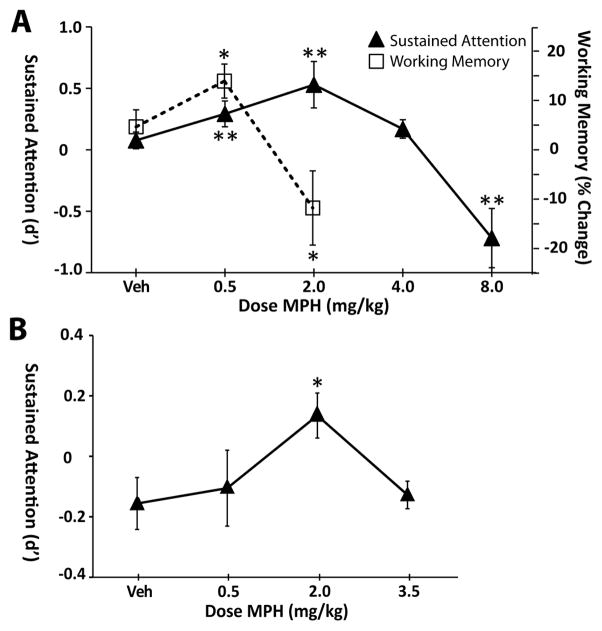
Background: Psychostimulants improve a variety of cognitive and behavioral processes in patients with attention-deficit/hyperactivity disorder (ADHD). Limited observations suggest a potentially different dose-sensitivity of prefrontal cortex (PFC)-dependent function (narrow inverted-U-shaped dose-response curves) versus classroom/overt behavior (broad inverted U) in children with ADHD. Recent work in rodents demonstrates that methylphenidate (MPH; Ritalin) elicits a narrow inverted-U-shaped improvement in performance in PFC-dependent tests of working memory. The current studies first tested the hypothesis that PFC-dependent tasks, in general, display narrow dose sensitivity to the beneficial actions of MPH.
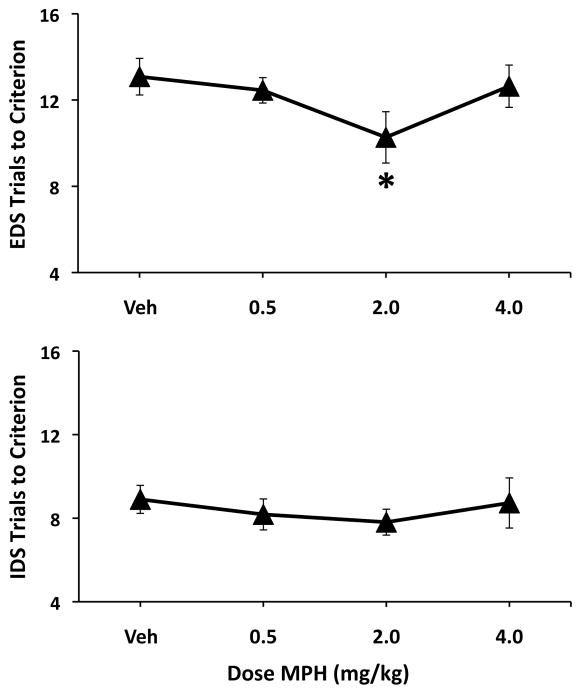
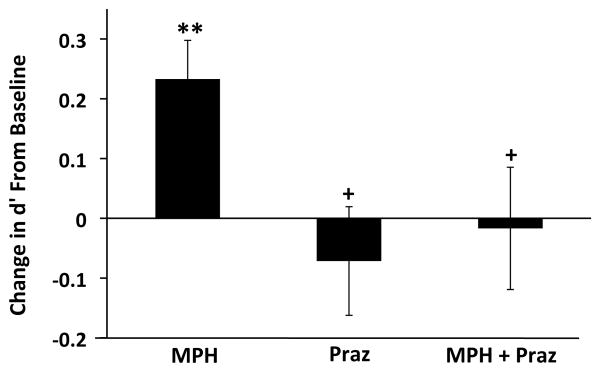
Methods: The effects of varying doses of MPH were examined on performance of rats in two tests of PFC-dependent cognition, sustained attention and attentional set shifting. Additionally, the effect of pretreatment with the α₁-antagonist prazosin (.5 mg/kg) on MPH-induced improvement in sustained attention was examined.
Results: MPH produced a broad inverted-U-shaped facilitation of sustained attention and attentional set shifting. Prior research indicates α₁-receptors impair, whereas α₂-receptors improve, working memory. In contrast, attentional set shifting is improved with α₁-receptor activation, whereas α₂-receptors exert minimal effects in this task. Given the similar dose sensitivity of sustained attention and attentional set-shifting tasks, additional studies examined whether α₁-receptors promote sustained attention, similar to attentional set shifting. In these studies, MPH-induced improvement in sustained attention was abolished by α₁-receptor blockade.
Conclusions: PFC-dependent processes display differential sensitivity to the cognition-enhancing actions of psychostimulants that are linked to the differential involvement of α₁- versus α₂-receptors in these processes. These observations have significant preclinical and clinical implications.
Figures
References
-
- Mehta MA, Sahakian BJ, Robbins TW. Comparative psycholpharmacology of methylphenidate and related drugs in human volunteers, patients with ADHD, and experimental animals. In: Solanto MV, Arnsten AFT, Castellanos FX, editors. Stimulant Drugs and ADHD: Basic and Clinical Neuroscience. New York: Oxford University Press; 2001. pp. 303–331.
-
- Rapoport JL, Buchsbaum MS, Weingartner H, Zahn TP, Ludlow C, Mikkelsen EJ. Dextroamphetamine - Its Cognitive and Behavioral-Effects in Normal and Hyperactive Boys and Normal Men. Archives of General Psychiatry. 1980;37:933–943. - PubMed
-
- Rapoport JL, Inoff-Germain G. Responses to methylphenidate in Attention-Deficit/Hyperactivity Disorder and normal children: update 2002. J Atten Disord. 2002;6:S57–S60. - PubMed
-
- Berridge CW, Devilbiss DM, Andrzejewski ME, Arnsten AF, Kelley AE, Schmeichel B, et al. Methylphenidate preferentially increases catecholamine neurotransmission within the prefrontal cortex at low doses that enhance cognitive function. Biol Psychiatry. 2006;60:1111–1120. - PubMed
Publication types
MeSH terms
Substances
Grants and funding
LinkOut - more resources
Full Text Sources
Miscellaneous
