


Incarceration predicts virologic failure for HIV-infected injection drug users receiving antiretroviral therapy
- PMID: 21890777
- PMCID: PMC3202322
- DOI: 10.1093/cid/cir491
Incarceration predicts virologic failure for HIV-infected injection drug users receiving antiretroviral therapy
Abstract
Background: Incarceration may lead to interruptions in antiretroviral therapy (ART) for persons receiving treatment for human immunodeficiency virus (HIV) infection. We assessed whether incarceration and subsequent release were associated with virologic failure for injection drug users (IDUs) who were previously successfully treated with ART.
Methods: ALIVE is a prospective, community-based cohort study of IDUs in Baltimore, Maryland. IDUs receiving ART during 1998-2009 who successfully achieved an HIV RNA level below the limit of detection (<400 copies/mL) were followed up for development of virologic failure at the subsequent semiannual study visit. Logistic regression with generalized estimating equations was used to assess whether incarceration was independently associated with virologic failure.
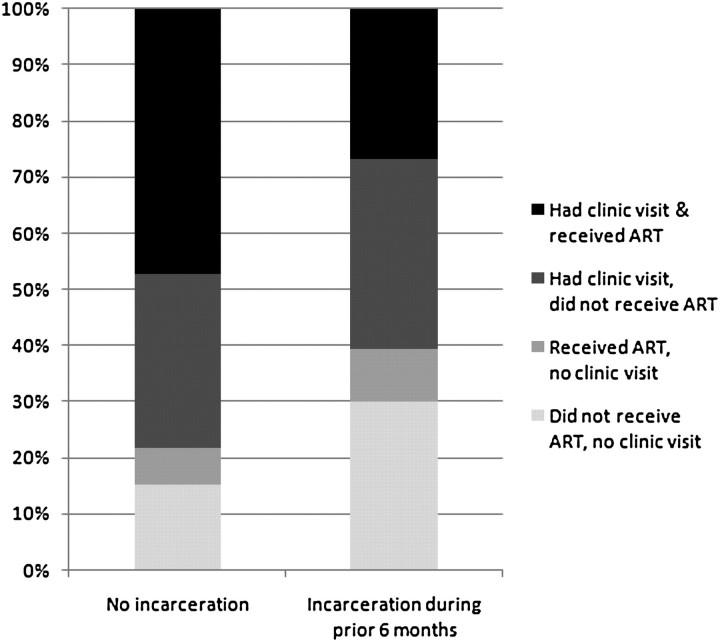
Results: Of 437 HIV-infected IDUs who achieved undetectable HIV RNA for at least one study visit, 69% were male, 95% were African-American, and 40% reported at least one incarceration during follow-up. Virologic failure occurred at 26.3% of visits after a median of 6 months since achieving undetectable HIV RNA. In multivariate analysis accounting for demographic characteristics, drug use, and HIV disease stage, brief incarceration was strongly associated with virologic failure (adjusted odds ratio, 7.7; 95% confidence interval, 3.0-19.7), although incarceration lasting >30 days was not (odds ratio, 1.4; 95% confidence interval, .8-2.6).
Conclusions: Among IDUs achieving viral suppression while receiving ART, virologic failure occurred with high frequency and was strongly associated with brief incarceration. Efforts should be made to ensure continuity of care both during and after incarceration to improve treatment outcomes and prevent viral resistance in this vulnerable population.
Figures
References
-
- Palella FJ, Jr, Delaney KM, Moorman AC, et al. Declining morbidity and mortality among patients with advanced human immunodeficiency virus infection. HIV Outpatient Study Investigators. N Engl J Med. 1998;338:853–60. - PubMed
-
- Walensky RP, Paltiel AD, Losina E, et al. The survival benefits of AIDS treatment in the United States. J Infect Dis. 2006;194:11–9. - PubMed
-
- Quinn TC, Wawer MJ, Sewankambo N, et al. Viral load and heterosexual transmission of human immunodeficiency virus type 1. Rakai Project Study Group. N Engl J Med. 2000;342:921–9. - PubMed
-
- Gulick RM, Lalama CM, Ribaudo HJ, et al. Intensification of a triple-nucleoside regimen with tenofovir or efavirenz in HIV-1-infected patients with virological suppression. AIDS. 2007;21:813–23. - PubMed
Publication types
MeSH terms
Substances
Grants and funding
LinkOut - more resources
Full Text Sources
Medical
