


Parkinsonism and frontotemporal dementia: the clinical overlap
- PMID: 21892619
- PMCID: PMC3324113
- DOI: 10.1007/s12031-011-9632-1
Parkinsonism and frontotemporal dementia: the clinical overlap
Abstract
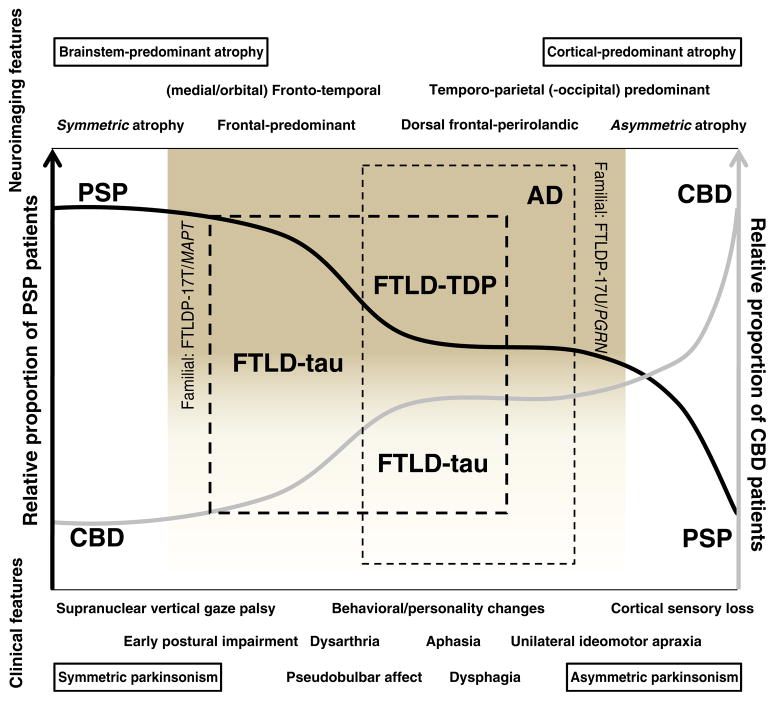
Frontotemporal dementia is commonly associated with parkinsonism in several sporadic (i.e., progressive supranuclear palsy, corticobasal degeneration) and familial neurodegenerative disorders (i.e., frontotemporal dementia associated with parkinsonism and MAPT or progranulin mutations in chromosome 17). The clinical diagnosis of these disorders may be challenging in view of overlapping clinical features, particularly in speech, language, and behavior. The motor and cognitive phenotypes can be viewed within a spectrum of clinical, pathologic, and genetic disorders with no discrete clinicopathologic correlations but rather lying within a dementia-parkinsonism continuum. Neuroimaging and cerebrospinal fluid analysis can be helpful, but the poor specificity of clinical and imaging features has enormously challenged the development of biological markers that could differentiate these disorders premortem. This gap is critical to bridge in order to allow testing of novel biological therapies that may slow the progression of these proteinopathies.
Conflict of interest statement
Figures
References
-
- Baba Y, Baker MC, Le BI, et al. Clinical and genetic features of families with frontotemporal dementia and parkinsonism linked to chromosome 17 with a P301S tau mutation. J Neural Transm. 2007;114(7):947–950. - PubMed
-
- Baker M, Mackenzie IR, Pickering-Brown SM, et al. Mutations in progranulin cause tau-negative frontotemporal dementia linked to chromosome 17. Nature. 2006;442(7105):916–919. - PubMed
-
- Baron JC, Maziere B, Loc’h C. Loss of striatal [76Br] bromospiperone binding sites demonstrated by positron tomography in progressive supranuclear palsy. J Cereb Blood Flow Metab. 1986;6(2):131–136. - PubMed
-
- Boeve BF, Baker M, Dickson DW, et al. Frontotemporal dementia and parkinsonism associated with the IVS1+1G->A mutation in progranulin: a clinicopathologic study. Brain. 2006;129(Pt 11):3103–3114. - PubMed
Publication types
MeSH terms
Substances
Grants and funding
LinkOut - more resources
Full Text Sources
Other Literature Sources
Miscellaneous
