


Evolution of a new bacterial pathway for 4-nitrotoluene degradation
- PMID: 21895789
- PMCID: PMC10373102
- DOI: 10.1111/j.1365-2958.2011.07817.x
Evolution of a new bacterial pathway for 4-nitrotoluene degradation
Abstract
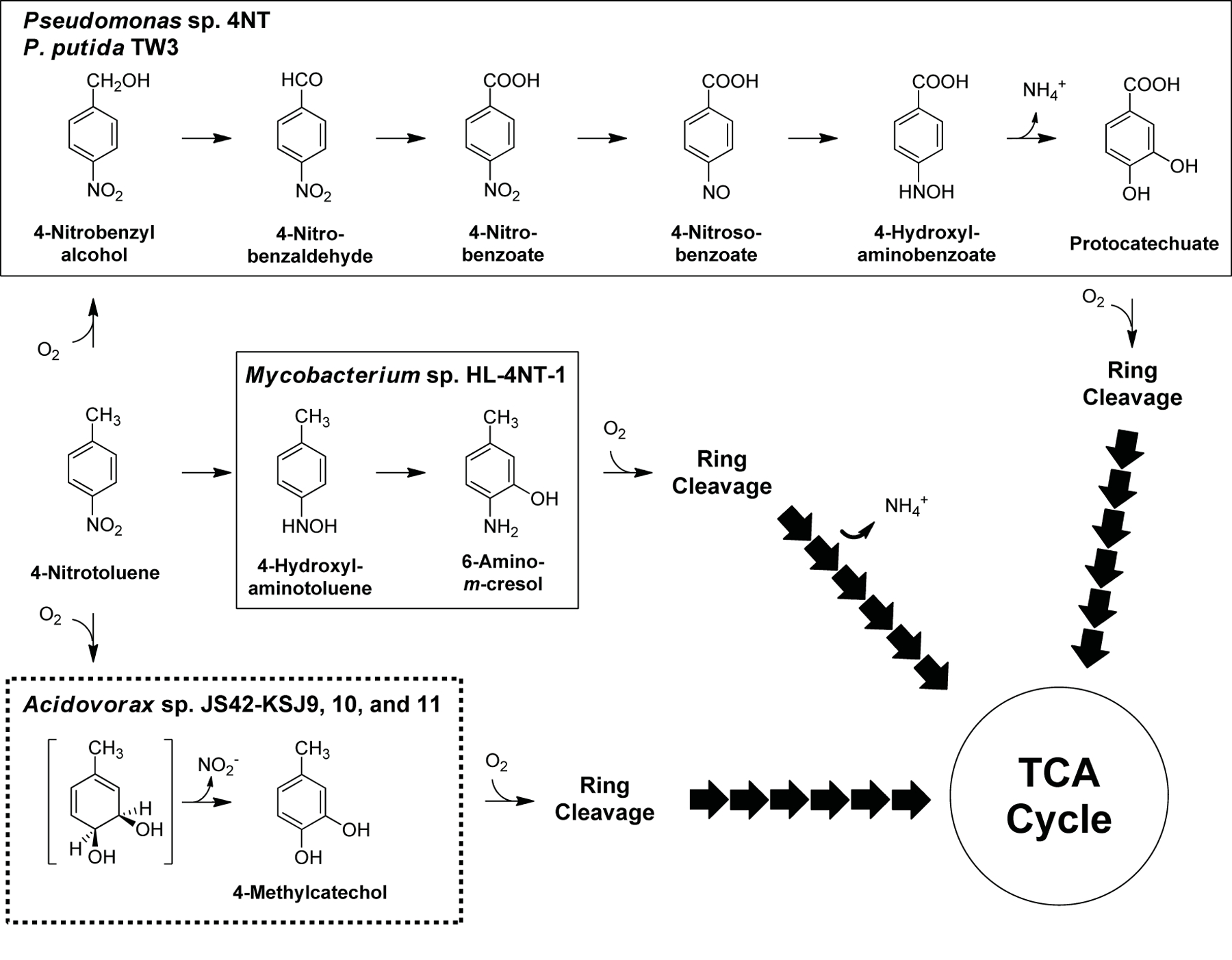
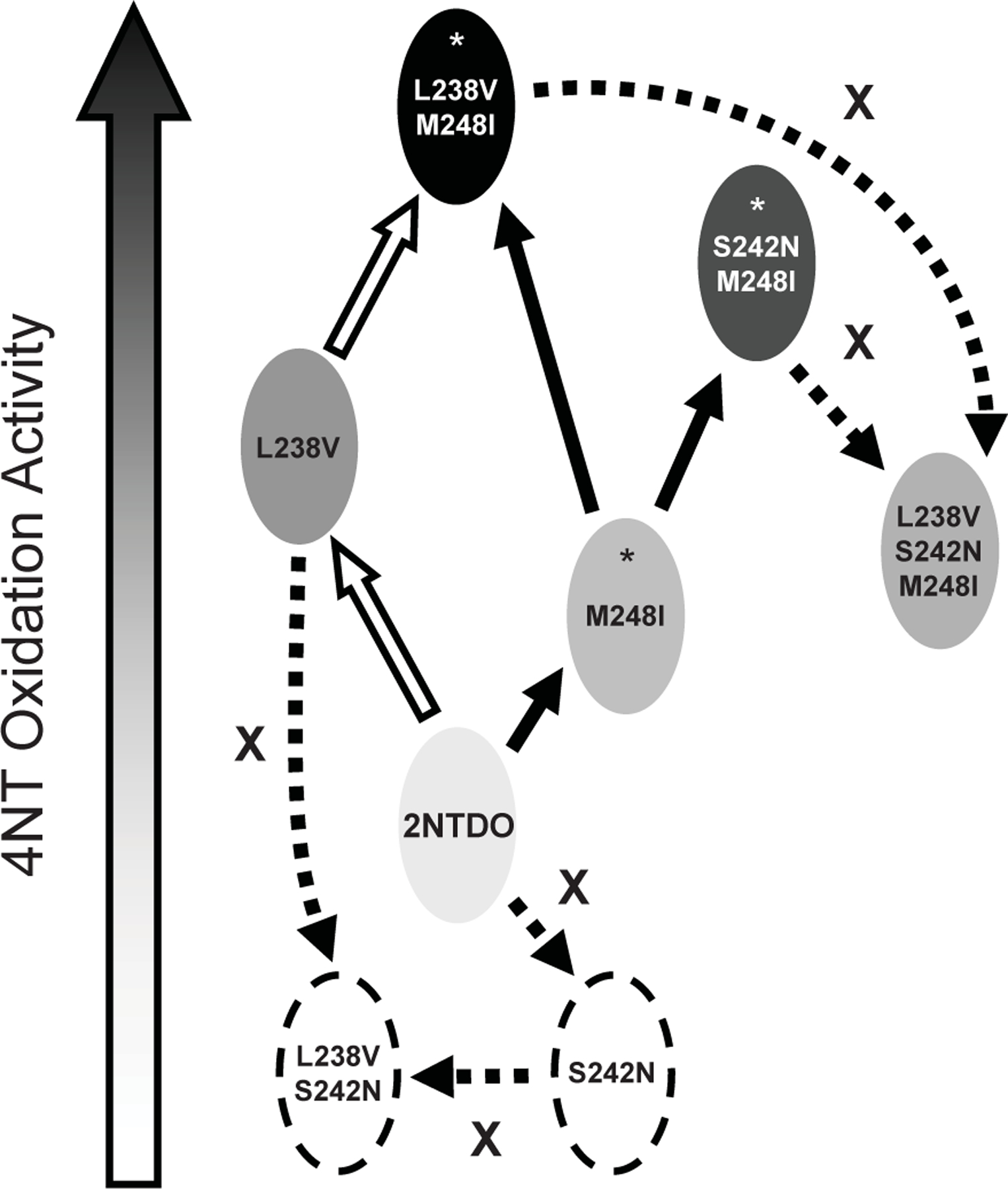
Bacteria that assimilate synthetic nitroarene compounds represent unique evolutionary models, as their metabolic pathways are in the process of adaptation and optimization for the consumption of these toxic chemicals. We used Acidovorax sp. strain JS42, which is capable of growth on nitrobenzene and 2-nitrotoluene, in experiments to examine how a nitroarene degradation pathway evolves when its host strain is challenged with direct selective pressure to assimilate non-native substrates. Although the same enzyme that initiates the degradation of nitrobenzene and 2-nitrotoluene also oxidizes 4-nitrotoluene to 4-methylcatechol, which is a growth substrate for JS42, the strain is incapable of growth on 4-nitrotoluene. Using long-term laboratory evolution experiments, we obtained JS42 mutants that gained the ability to grow on 4-nitrotoluene via a new degradation pathway. The underlying basis for this new activity resulted from the accumulation of specific mutations in the gene encoding the dioxygenase that catalyses the initial oxidation of nitroarene substrates, but at positions distal to the active site and previously unknown to affect activity in this or related enzymes. We constructed additional mutant dioxygenases to identify the order of mutations that led to the improved enzymes. Biochemical analyses revealed a defined, step-wise pathway for the evolution of the improved dioxygenases.
© 2011 Blackwell Publishing Ltd.
Figures
References
-
- Ausubel FM, Brent R, Kingston RE, Moore DD, Seidman JG, Smith JA, and Struhl K (1993) Current protocols in molecular biology New York: John Wiley & Sons, Inc.
-
- Booth G (2007) Nitro Compounds, Aromatic. In Ullmann’s Encyclopedia of Industrial Chemistry New York: John Wiley & Sons.
-
- Bradford MM (1976) A rapid and sensitive method for the quantitation of microgram quantities of protein utilizing the principle of protein-dye binding. Anal. Biochem 72: 248–254. - PubMed
-
- Bull JJ, Badgett MR, and Wichman HA (2000) Big-benefit mutations in a bacteriophage inhibited with heat. Mol Biol Evol 17: 942–950. - PubMed
Publication types
MeSH terms
Substances
Grants and funding
LinkOut - more resources
Full Text Sources
