


Developmental basis of sexually dimorphic digit ratios
- PMID: 21896736
- PMCID: PMC3182741
- DOI: 10.1073/pnas.1108312108
Developmental basis of sexually dimorphic digit ratios
Abstract
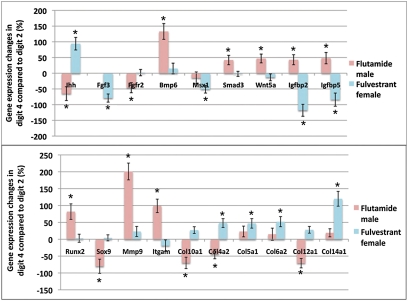
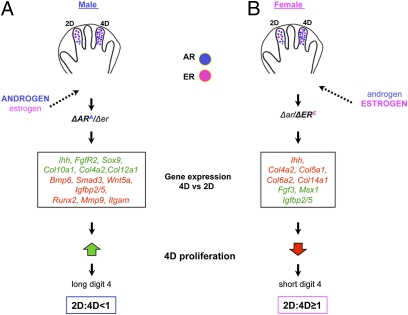
Males and females generally have different finger proportions. In males, digit 2 is shorter than digit 4, but in females digit 2 is the same length or longer than digit 4. The second- to fourth-digit (2D:4D) ratio correlates with numerous sexually dimorphic behavioral and physiological conditions. Although correlational studies suggest that digit ratios reflect prenatal exposure to androgen, the developmental mechanism underlying sexually dimorphic digit development remains unknown. Here we report that the 2D:4D ratio in mice is controlled by the balance of androgen to estrogen signaling during a narrow window of digit development. Androgen receptor (AR) and estrogen receptor α (ER-α) activity is higher in digit 4 than in digit 2. Inactivation of AR decreases growth of digit 4, which causes a higher 2D:4D ratio, whereas inactivation of ER-α increases growth of digit 4, which leads to a lower 2D:4D ratio. We also show that addition of androgen has the same effect as inactivation of ER and that addition of estrogen mimics the reduction of AR. Androgen and estrogen differentially regulate the network of genes that controls chondrocyte proliferation, leading to differential growth of digit 4 in males and females. These studies identify previously undescribed molecular dimorphisms between male and female limb buds and provide experimental evidence that the digit ratio is a lifelong signature of prenatal hormonal exposure. Our results also suggest that the 2D:4D ratio can serve as an indicator of disrupted endocrine signaling during early development, which may aid in the identification of fetal origins of adult diseases.
Conflict of interest statement
The authors declare no conflict of interest.
Figures
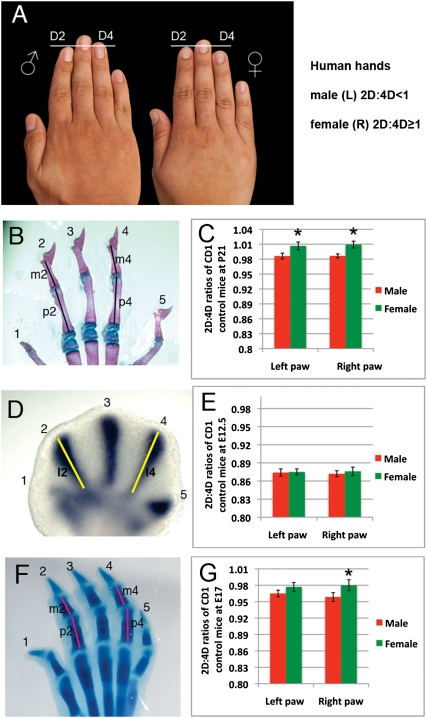
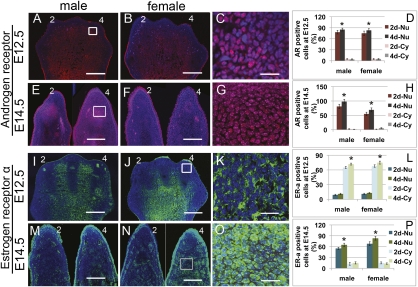
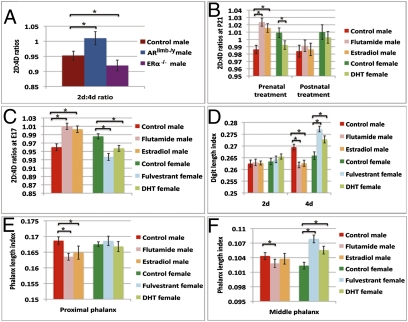
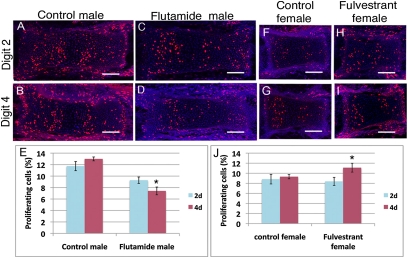
Comment in
-
Resolving the role of prenatal sex steroids in the development of digit ratio.Proc Natl Acad Sci U S A. 2011 Sep 27;108(39):16143-4. doi: 10.1073/pnas.1113312108. Epub 2011 Sep 19. Proc Natl Acad Sci U S A. 2011. PMID: 21930921 Free PMC article. No abstract available.
References
-
- Baker F. Anthropological notes on the human hand. Am Anthropol. 1888;1:51–76.
-
- Manning JT, Scutt D, Wilson J, Lewis-Jones DI. The ratio of 2nd to 4th digit length: A predictor of sperm numbers and concentrations of testosterone, luteinizing hormone and oestrogen. Hum Reprod. 1998;13:3000–3004. - PubMed
-
- Manning JT, et al. The 2nd:4th digit ratio, sexual dimorphism, population differences, and reproductive success. Evidence for sexually antagonistic genes? Evol Hum Behav. 2000;21:163–183. - PubMed
-
- Manning JT, Taylor RP. Second to fourth digit ratio and male ability in sport: Implications for sexual selection in humans. Evol Hum Behav. 2001;22:61–69. - PubMed
Publication types
MeSH terms
Substances
Grants and funding
LinkOut - more resources
Full Text Sources
Other Literature Sources
Molecular Biology Databases
Research Materials
