The clinical phenotype of trachomatous trichiasis in Ethiopia: not all trichiasis is due to entropion
- PMID: 21896855
- PMCID: PMC3219424
- DOI: 10.1167/iovs.11-7880
The clinical phenotype of trachomatous trichiasis in Ethiopia: not all trichiasis is due to entropion
Abstract
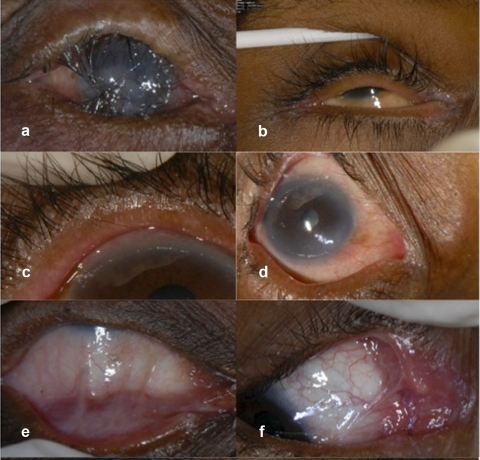
Purpose: Trachomatous trichiasis (TT) is usually described as a cicatricial entropion of the upper lid; however, other forms of trichiasis have been reported. This variation in clinical phenotype is potentially important for treatment guidelines. Therefore, this study was conducted to investigate the range of disease type and severity encompassed by TT.
Methods: Individuals presenting with TT to surgical treatment campaigns were examined by a single ophthalmologist using the Detailed WHO Trachoma Grading System. Additional features were graded, including type of trichiatic lashes (metaplastic, misdirected, and entropic), lower lid trichiasis, entropion severity, and lid margin mucocutaneous junction (MCJ) position.
Results: Recruited were 2556 individuals with previously unoperated TT in at least one eye (4310 eyes). The median number of lashes touching the eye was 2 (range, 0 [epilating]-133). Entropion was absent or mild in 2328 (54.0%) eyes, moderate in 1259 (29.2%) eyes, and severe in 723 (16.8%) eyes. Trichiatic lashes were predominantly metaplastic or misdirected (80.2%), rather than secondary to entropion; 4204 (97.7%) had anteroplacement of the MCJ; and lower lid trichiasis was present in 494 (11.5%). Entropion was more severe among those with a low BMI, those who were female, those aged less than 50 years, and those with moderate to severe conjunctival inflammation, central corneal opacity, and severe conjunctival scarring.
Conclusions: Many patients with TT have minimal or no entropion. The trichiasis is frequently attributable to metaplastic or misdirected eyelashes. The results of tarsal rotation surgery in TT patients without manifest entropion should be investigated and potentially alternative treatment strategies evaluated.
Figures
References
-
- Dawson CR, Jones BR, Tarizzo ML. Guide to Trachoma Control. Geneva: World Health Organization; 1981
-
- Mariotti SP, Pascolini D, Rose-Nussbaumer J. Trachoma: global magnitude of a preventable cause of blindness. Br J Ophthalmol. 2009;93:563–568 - PubMed
-
- Berhane Y. Prevalence and causes of blindness and low vision in Ethiopia. Ethiop J Health Dev. 2007;21:204–210
-
- World Health O Trachoma Control: A Guide for Programme Managers. Geneva: World Health Organization; 2006
Publication types
MeSH terms
Grants and funding
LinkOut - more resources
Full Text Sources