


The effect of Triphala and Chlorhexidine mouthwash on dental plaque, gingival inflammation, and microbial growth
- PMID: 21897640
- PMCID: PMC3157106
- DOI: 10.4103/0974-7788.83188
The effect of Triphala and Chlorhexidine mouthwash on dental plaque, gingival inflammation, and microbial growth
Abstract
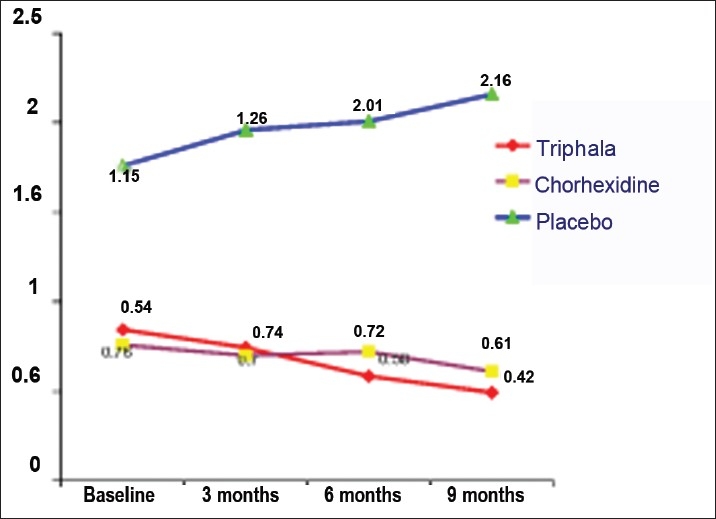
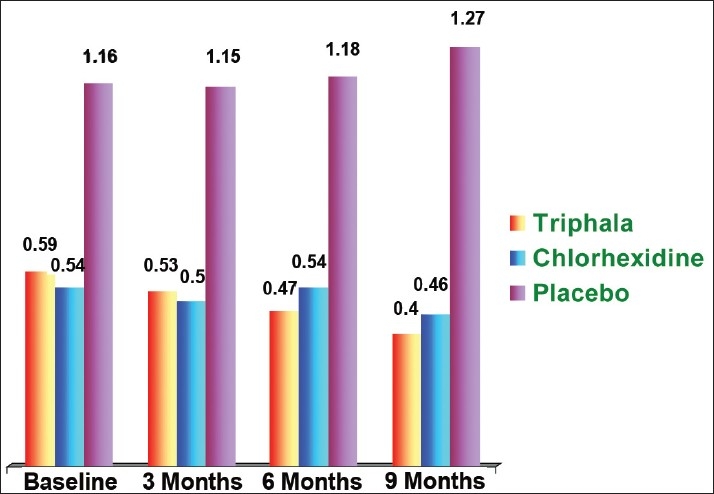
The objective of this study was to ascertain the effects of a mouthwash prepared with Triphala on dental plaque, gingival inflammation, and microbial growth and compare it with commercially available Chlorhexidine mouthwash. This study was conducted after ethics committee approval and written consent from guardians (and assent from the children) were obtained. A total of 1431 students in the age group 8-12 years, belonging to classes fourth to seventh, were the subjects for this study. The Knowledge, Attitude and Practice (KAP) of the subjects was determined using a questionnaire. The students were divided into three groups namely, Group I (n = 457) using Triphala mouthwash (0.6%), Group II (n = 440) using Chlorhexidine mouthwash (0.1%) (positive control), and Group III (n = 412) using distilled water (negative control). The assessment was carried out on the basis of plaque scores, gingival scores, and the microbiological analysis (Streptococcus and lactobacilli counts). Statistical analysis for plaque and gingival scores was conducted using the paired sample t-test (for intragroup) and the Tukey's test (for intergroup conducted along with analysis of variance test). For the Streptococcus mutans and Lactobacillus counts, Wilcoxon and Mann-Whitney test were applied for intragroup and intergroup comparison, respectively. All the tests were carried out using the SPSS software. Both the Group I and Group II showed progressive decrease in plaque scores from baseline to the end of 9 months; however, for Group III increase in plaque scores from the baseline to the end of 9 months was noted. Both Group I and Group II showed similar effect on gingival health. There was inhibitory effect on microbial counts except Lactobacillus where Triphala had shown better results than Chlorhexidine. It was concluded that there was no significant difference between the Triphala and the Chlorhexidine mouthwash.
Keywords: Chlorhexidine; Triphala; dental plaque; gingival inflammation; microbial growth.
Conflict of interest statement
Figures
References
-
- Jagtap AG, Karkera SG. Potential of the aqueous extract of Terminalia chebula as an anticaries agent. J Ethnopharmacol. 1999;68:299–306. - PubMed
-
- Silness J, Loe H. Periodontal disease in children, correlation between oral hygiene and periodontal condition. Acta Odont Scan. 1964;22:121–35. - PubMed
-
- Loe H, Silness J. Periodontal disease in pregnancy I: prevalence and severity. Acta Odont Scan. 1967;21:533–51. - PubMed
LinkOut - more resources
Full Text Sources
Medical