


The combination of BH3-mimetic ABT-737 with the alkylating agent temozolomide induces strong synergistic killing of melanoma cells independent of p53
- PMID: 21897876
- PMCID: PMC3163662
- DOI: 10.1371/journal.pone.0024294
The combination of BH3-mimetic ABT-737 with the alkylating agent temozolomide induces strong synergistic killing of melanoma cells independent of p53
Abstract
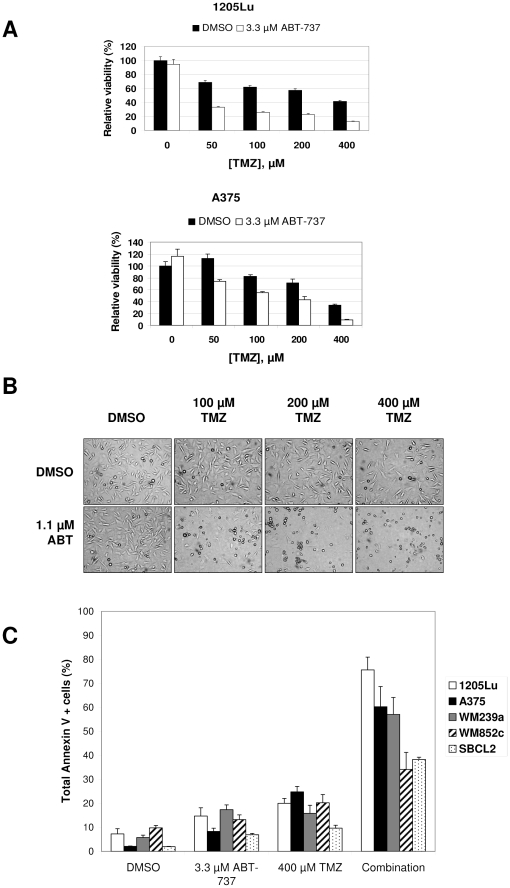
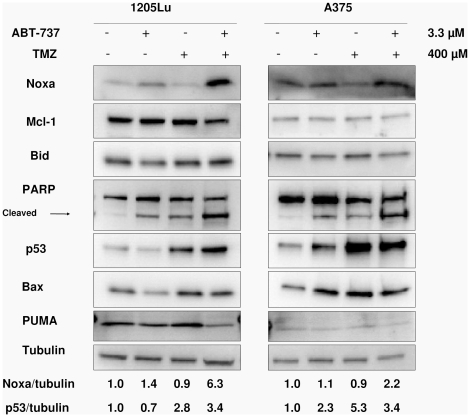
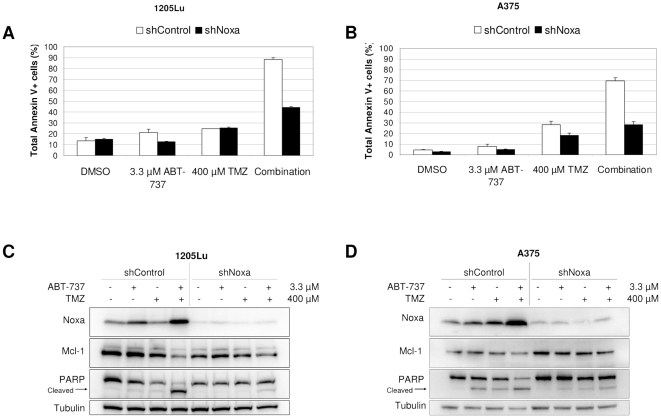
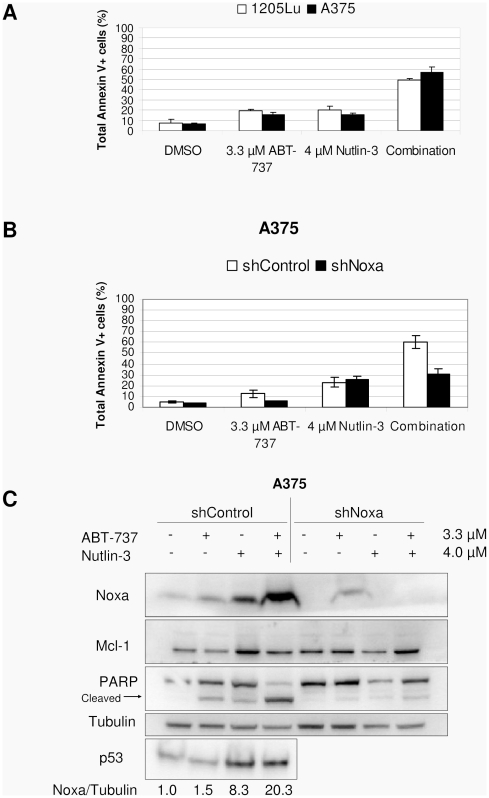
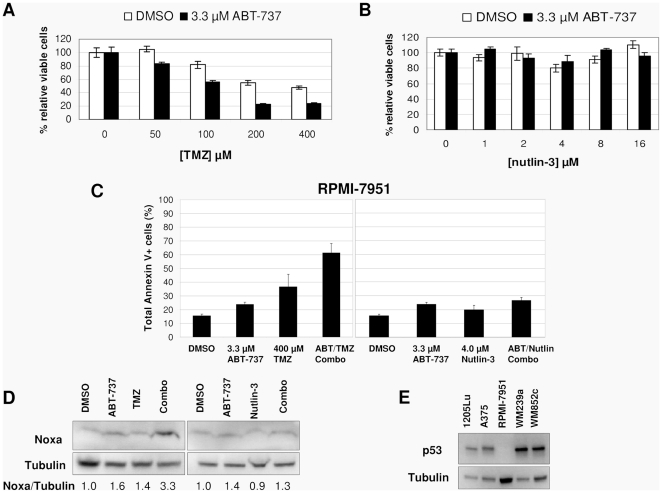
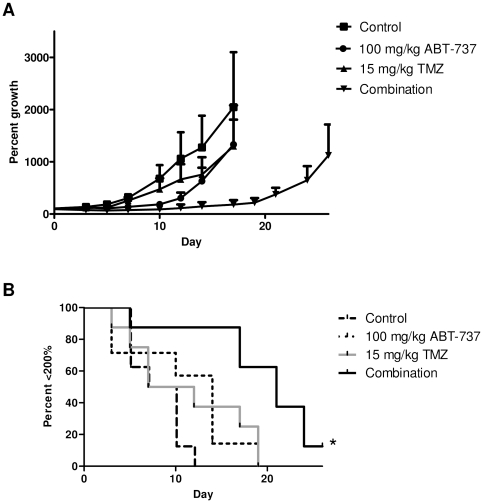
Metastatic melanoma has poor prognosis and is refractory to most conventional chemotherapies. The alkylating agent temozolomide (TMZ) is commonly used in treating melanoma but has a disappointing response rate. Agents that can act cooperatively with TMZ and improve its efficacy are thus highly sought after. The BH3 mimetic ABT-737, which can induce apoptosis by targeting pro-survival Bcl-2 family members, has been found to enhance the efficacy of many conventional chemotherapeutic agents in multiple cancers. We found that combining TMZ and ABT-737 induced strong synergistic apoptosis in multiple human melanoma cell lines. When the drugs were used in combination in a mouse xenograft model, they drastically reduced tumor growth at concentrations where each individual drug had no significant effect. We found that TMZ treatment elevated p53 levels, and that the pro-apoptotic protein Noxa was elevated in TMZ/ABT-737 treated cells. Experiments with shRNA demonstrated that the synergistic effect of TMZ and ABT-737 was largely dependent on Noxa. Experiments with nutlin-3, a p53 inducer, demonstrated that p53 induction was sufficient for synergistic cell death with ABT-737 in a Noxa-dependent fashion. However, p53 was not necessary for TMZ/ABT-737 synergy as demonstrated by a p53-null line, indicating that TMZ and ABT-737 together induce Noxa in a p53-independent fashion. These results demonstrate that targeting anti-apoptotic Bcl-2 members is a promising method for treating metastatic melanoma, and that clinical trials with TMZ and Bcl-2 inhibitors are warranted.
Conflict of interest statement
Figures
References
-
- Atallah E, Flaherty L. Treatment of metastatic malignant melanoma. Curr Treat Options Oncol. 2005;6:185–193. - PubMed
-
- Lui P, Cashin R, Machado M, Hemels M, Corey-Lisle PK, et al. Treatments for metastatic melanoma: synthesis of evidence from randomized trials. Cancer Treat Rev. 2007;33:665–680. - PubMed
-
- Agarwala SS, Kirkwood JM. Temozolomide, a novel alkylating agent with activity in the central nervous system, may improve the treatment of advanced metastatic melanoma. Oncologist. 2000;5:144–151. - PubMed
-
- Bael TE, Peterson BL, Gollob JA. Phase II trial of arsenic trioxide and ascorbic acid with temozolomide in patients with metastatic melanoma with or without central nervous system metastases. Melanoma Res. 2008;18:147–151. - PubMed
-
- Wierzbicka-Hainaut E, Sassolas B, Mourey L, Guillot B, Bedane C, et al. Temozolomide and cisplatin combination in naive patients with metastatic cutaneous melanoma: results of a phase II multicenter trial. Melanoma Res. 2010;20:141–146. - PubMed
Publication types
MeSH terms
Substances
Grants and funding
LinkOut - more resources
Full Text Sources
Other Literature Sources
Medical
Research Materials
Miscellaneous
