Diagnosis of gestational diabetes mellitus in Asian-Indian women
- PMID: 21897895
- PMCID: PMC3156538
- DOI: 10.4103/2230-8210.83403
Diagnosis of gestational diabetes mellitus in Asian-Indian women
Abstract
Objective: To assess the validity of Diabetes in Pregnancy Study Group India (DIPSI) guidelines, a modified version of the WHO criterion to diagnose gestational diabetes mellitus (GDM).
Materials and methods: A total of 1 463 consecutive pregnant women in the second and third trimester of pregnancy underwent 75 g oral glucose tolerance test (OGTT) and 2-h plasma glucose (PG) was measured by the glucose oxidase-peroxidase (GOD-POD) method. GDM was diagnosed with 2-h PG ≥ 7.8 mmol/L (WHO criteria) and the rest were classified as normal glucose tolerant (NGT) women. GDM women were advised medical nutrition therapy (MNT) for two weeks. Those who failed to reach the target glycemic level of FPG < 5.0 mmol/L and 2-h PG < 6.67 mmol/L with MNT were advised insulin. All of them were followed throughout pregnancy until delivery. Birth weight of 90th percentile (> 3.45 kg) in the neonates was considered as macrosomia (primary outcome).
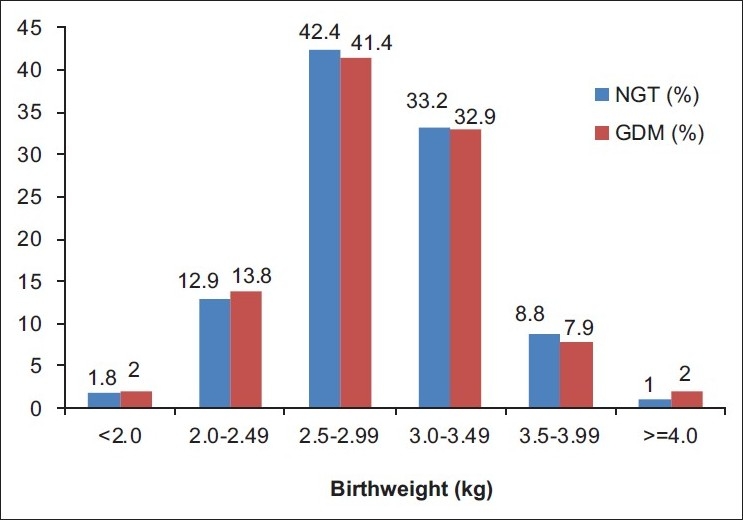
Results: The mean maternal age and body mass index were 23.60±3.32 years and 21.5±4.06 kg/m(2) respectively. The mean gestational age was 27.9±5.56 weeks. DIPSI criterion identified 196 women (13.4%) as GDM and the rest as NGT. Insulin was required in 19 (9.7%) women with GDM. Macrosomia was observed in 9.9% GDM women with intervention and 9.8% in NGT (P = 1.000).
Conclusion: DIPSI criterion is a one step-cost effective and evidence-based procedure to diagnose GDM in any socio-economic setting.
Keywords: Diabetes in pregnancy study group India; World Health Organization; gestational diabetes mellitus.
Conflict of interest statement
Figures
References
-
- Metzger BE, Coustan DR. Summary and recommendations of the Fourth International Workshop Conference on Gestational Diabetes Mellitus: The Organizing Committee. Diabetes Care. 1998;21(Suppl 2):B161–7. - PubMed
-
- Dornhost A, Rossi M. Risk and prevention of Type 2 Diabetes in women with gestational diabetes. Diabetes Care. 1998;21(Suppl 2):B43–9. - PubMed
-
- Ferrara A. Increasing prevalence of Gestational Diabetes Mellitus - A Public Health Perspective. Diabetes Care. 2007;30(Suppl 2):S141–6. - PubMed
-
- Shamsuddin K, Mahdy ZA, Siti Rafiaah I, Jamil MA, Rahimah MD. Risk factor screening for abnormal glucose tolerance in pregnancy. Int J Gynaecol Obstet. 2001;75:27–32. - PubMed
-
- Simmons D, Devers MC, Wolmarans L, Johnson E. Difficulties in the use of risk factors to screen for GDM. Diabetes Care. 2009;32:e8. - PubMed