doi: 10.1007/978-1-61779-295-3_19.
Preparation of a heat-shock protein 70-based vaccine from DC-tumor fusion cells
Affiliations
- PMID: 21898241
- PMCID: PMC4088345
- DOI: 10.1007/978-1-61779-295-3_19
Item in Clipboard
Preparation of a heat-shock protein 70-based vaccine from DC-tumor fusion cells
Methods Mol Biol.
2011.
Abstract
We have developed an enhanced molecular chaperone-based vaccine through rapid isolation of heat-shock protein 70 peptide complexes (Hsp70.PC) after the fusion of tumor and dendritic cells (DCs) (Hsp70.PC-F). In this approach, the tumor antigens are introduced into the antigen-processing machinery of dendritic cells through the cell fusion process and, thus, we can obtain antigenic tumor peptides or their intermediates that have been processed by dendritic cells. Our results show that Hsp70.PC-F has increased immunogenicity compared to preparations from tumor cells alone and, therefore, constitutes an improved formulation of chaperone protein-based tumor vaccine.
Figures
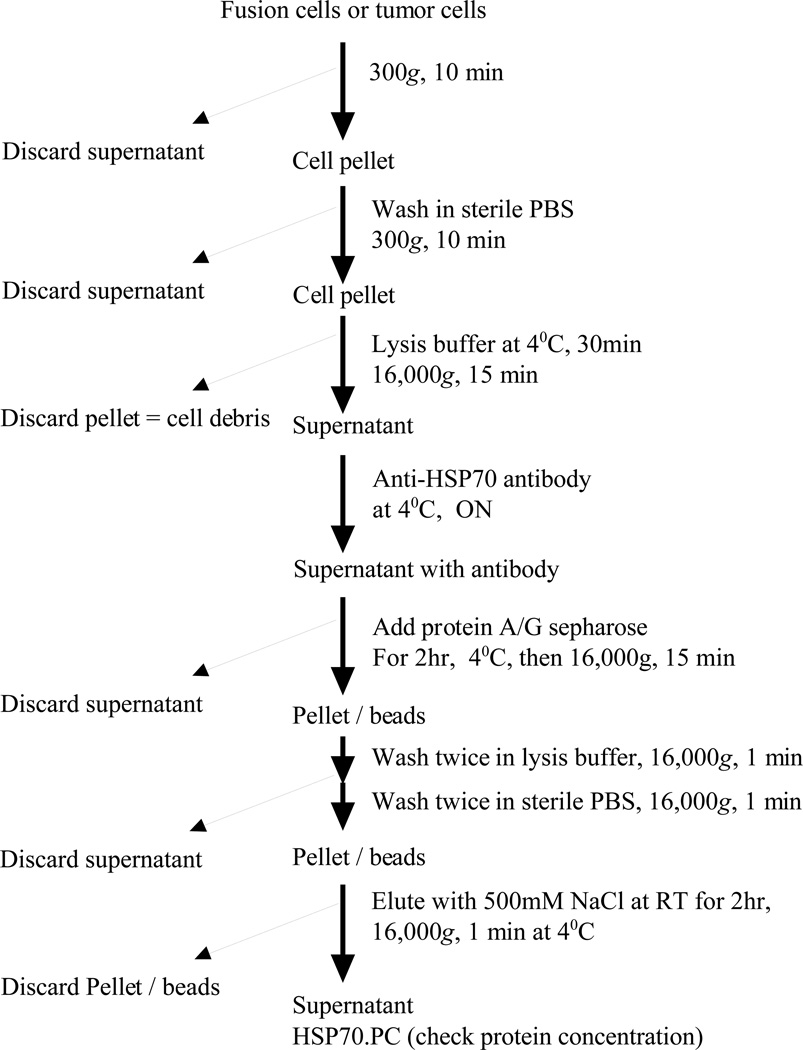
Flow chart for HSP70.PC purification
References
-
- Lindquist S, Craig EA. The heat shock proteins. Ann. Rev. Genet. 1988;22:631–637. - PubMed
-
- Georgopolis C, Welch WJ. Role of the major heat shock proteins as molecular chaperones. Ann. Rev. Cell Biol. 1993;9:601–634. - PubMed
-
- Bukau B, Horwich AL. The Hsp70 and Hsp60 chaperone machines. Cell. 1998;92:351–366. - PubMed
-
- Noessner E, Gastpar R, Milani V, Brandl A, Hutzler PJ, Kuppner MC, Roos M, et al. Tumor-derived heat shock protein 70 peptide complexes are cross-presented by human dendritic cells. J Immunol. 2002;169:5424–5432. - PubMed
MeSH terms
Substances
Grants and funding
LinkOut - more resources
Full Text Sources