


Acute stress to excised vocal fold epithelium from reactive oxygen species
- PMID: 21898441
- PMCID: PMC3183277
- DOI: 10.1002/lary.22157
Acute stress to excised vocal fold epithelium from reactive oxygen species
Abstract
Objectives/hypothesis: Vocal fold epithelium is exposed to reactive oxygen species from the inhaled environment and from tissue inflammation. The objective of this study was to explore the functional and structural consequences of reactive oxygen species exposure on vocal fold epithelium.
Study design: In vitro, prospective study design.
Methods: Hydrogen peroxide (H(2)O(2)), a common reactive oxygen species, was utilized in this study. Freshly excised, viable porcine vocal fold epithelia (N = 32) were exposed to H(2) O(2) or sham challenge for 2 hours. Electrophysiology, western blotting, and light microscopy were used to quantify the functional and structural effects of reactive oxygen species on vocal fold epithelia.
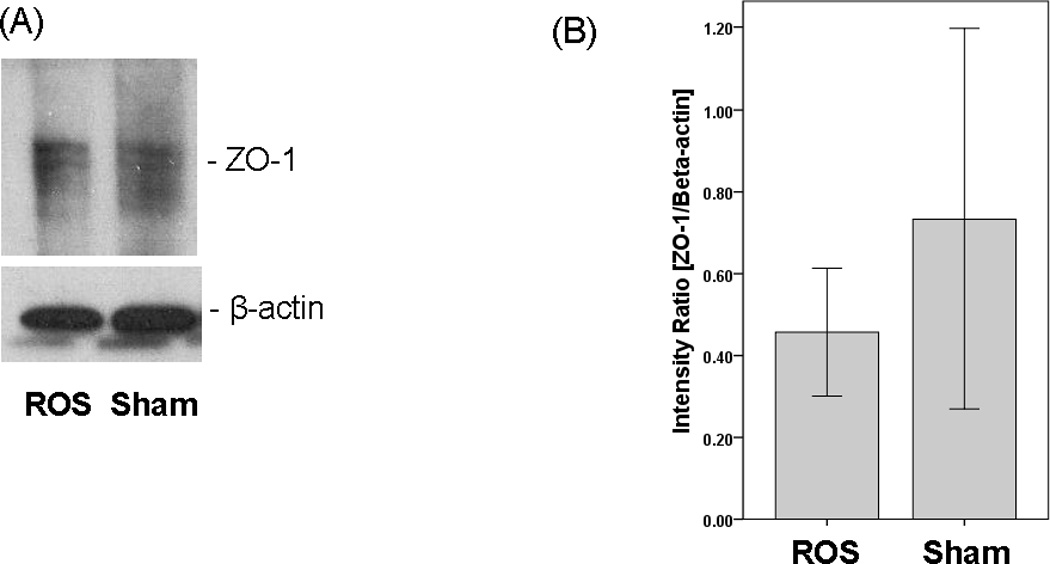
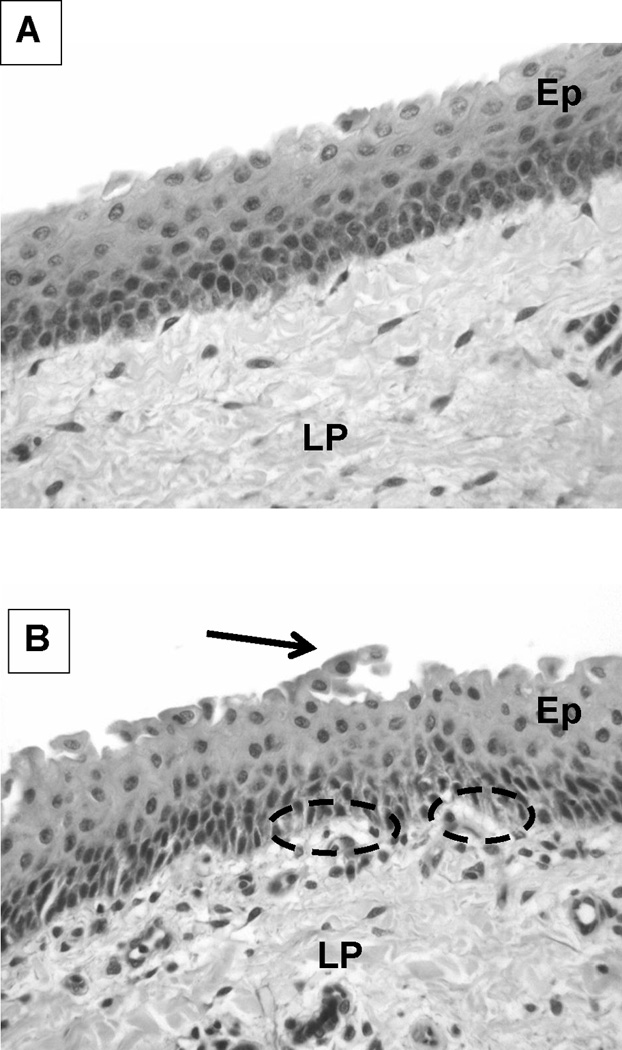
Results: Exposure to reactive oxygen species did not significantly alter transepithelial resistance. There was a small, nonsignificant trend for decreased concentration of epithelial junctional complex protein with reactive oxygen species challenge. Minimal changes to the gross structural appearance of vocal fold epithelia were also noted.
Conclusions: The stratified squamous epithelia of the vocal folds effectively defend against an acute reactive oxygen species challenge. The current study lays the groundwork for future investigations on the effects of reactive oxygen species on vocal fold epithelia that are compromised from phonotrauma.
Copyright © 2011 The American Laryngological, Rhinological, and Otological Society, Inc.
Figures

References
-
- Sataloff R. Pollution and its effect on the voice. In: Sataloff R, editor. Professional Voice: The Science and Art of Clinical Care. 2nd ed. San Diego, CA: Singular; 1997. pp. 387–391.
-
- Huang M, Lin W, Ma Y. A study of reactive oxygen species in mainstream of cigarette. Indoor Air. 2005;15:135–140. - PubMed
-
- Leonard R, Charpied G, Faddis B. Effects of chronic ozone (O3) exposure on vocal-fold mucosa in bonnet monkeys. J Voice. 1995;9:443–448. - PubMed
-
- Tsai T, Chang S, Ho C, Kou Y. Neural and hydroxyl radical mechanisms underlying laryngeal airway hyperreactivity induced by laryngeal acid-pepsin insult in anesthetized rats. J Appl Physiol. 2006;101:328–338. - PubMed
-
- Tsai T, Chang S, Hi C, Kou Y. Role of ATP in the ROS-mediated laryngeal airway hyperreactivity induced by laryngeal acid-pepsin insult in anesthetized rats. J Appl Physiol. 2009;106:1584–1592. - PubMed
Publication types
MeSH terms
Substances
Grants and funding
LinkOut - more resources
Full Text Sources
