


Rewards can be used effectively with repeated exposure to increase liking of vegetables in 4-6-year-old children
- PMID: 21899792
- PMCID: PMC10271312
- DOI: 10.1017/S1368980011002035
Rewards can be used effectively with repeated exposure to increase liking of vegetables in 4-6-year-old children
Abstract
Objective: To examine whether parents offering a sticker reward to their child to taste a vegetable the child does not currently consume is associated with improvements in children's liking and consumption of the vegetable.
Design: A randomized controlled trial evaluated the effectiveness of exposure only (EO) and exposure plus reward (E + R), relative to a control group, on children's liking and consumption of a target vegetable. Assessments were conducted at baseline and 2 weeks from baseline (post-intervention). Follow-up assessments were conducted at 4 weeks and 3 months from baseline.
Setting: The study took place in Adelaide, South Australia. Participants were self-selected in response to local media advertisements seeking to recruit parents finding it difficult to get their children to eat vegetables.
Subjects: Participants were 185 children (110 boys, seventy-five girls) aged 4-6 years and their primary caregiver/parent (172 mothers, thirteen fathers).
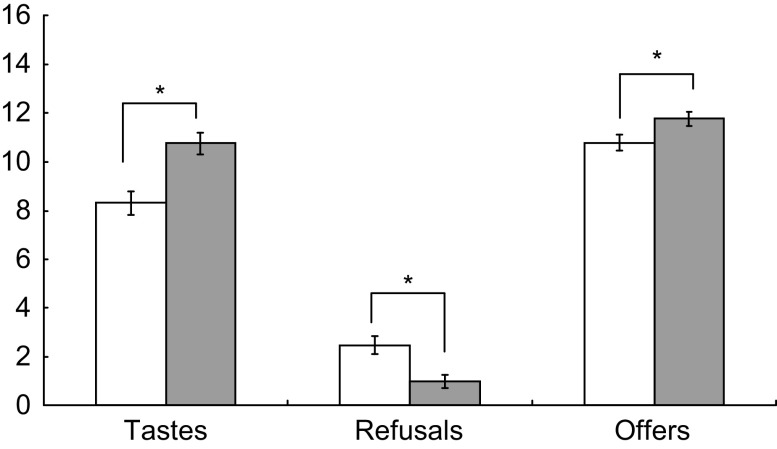
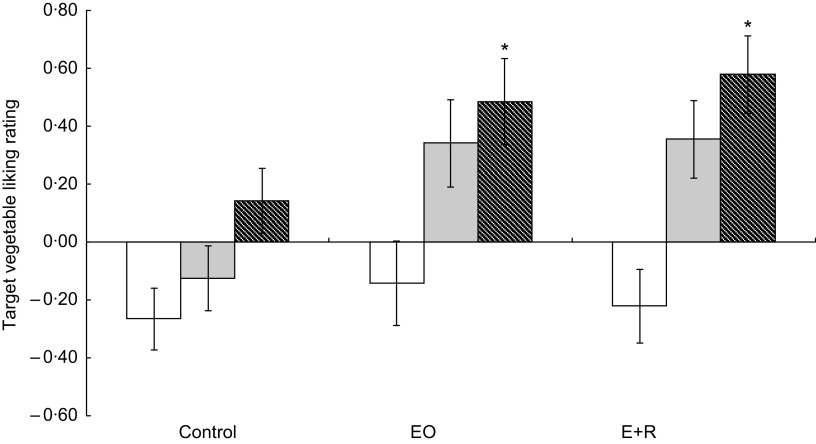
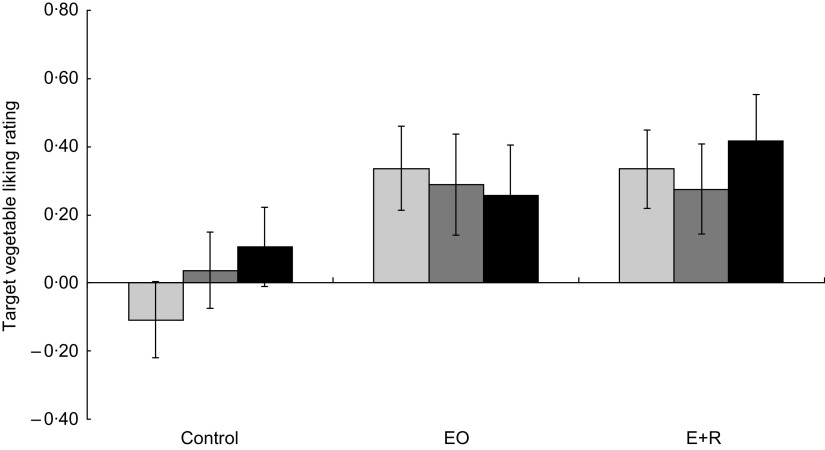
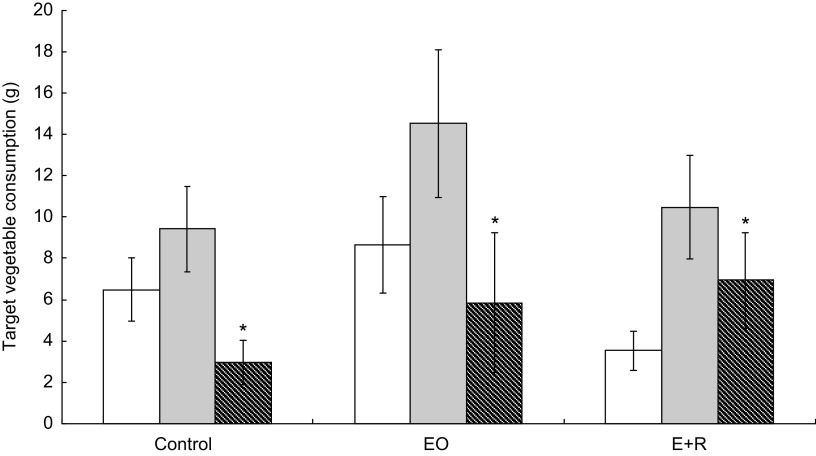
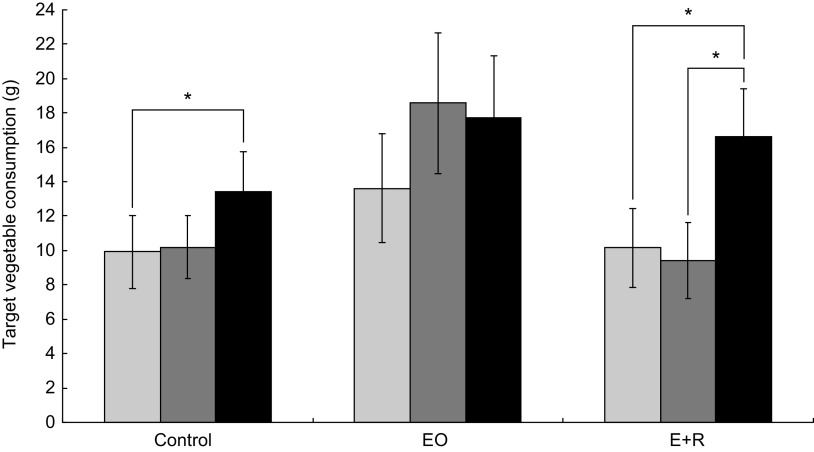
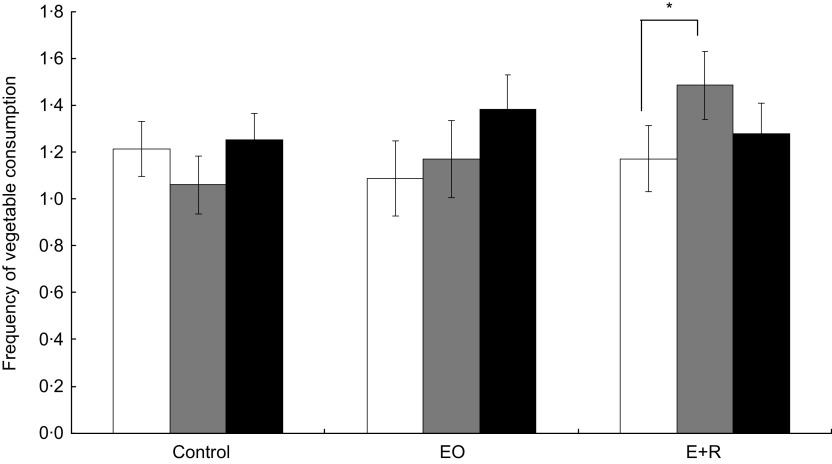
Results: The E + R group was able to achieve more days of taste exposure. Both EO and E + R increased liking at post-intervention compared with control and no further change occurred over the follow-up period. All groups increased their intake of the target vegetable at post-intervention. Target vegetable consumption continued to increase significantly over the follow-up period for E + R and control but not for EO.
Conclusions: The findings provide support for the effectiveness of using a sticker reward with a repeated exposure strategy. In particular, such rewards can facilitate the actual tastings necessary to change liking.
Figures












References
-
- Van Duyn MA & Pivonka E (2000) Overview of the health benefits of fruit and vegetable consumption for the dietetics professional: selected literature. J Am Diet Assoc 100, 1511–1521. - PubMed
-
- Magarey A, McKean S & Daniels L (2006) Evaluation of fruit and vegetable intakes of Australian adults: the National Nutrition Survey 1995. Aust N Z J Public Health 30, 32–37. - PubMed
-
- Yngve A, Wolf A, Poortvliet E et al. (2005) Fruit and vegetable intake in a sample of 11-year-old children in 9 European countries: The Pro Children Cross-sectional Survey. Ann Nutr Metab 49, 236–245. - PubMed
-
- Wardle J, Cooke L, Gibson EL et al. (2003) Increasing children's acceptance of vegetables; a randomized trial of parent-led exposure. Appetite 40, 155–162. - PubMed
-
- Wardle J, Herrera ML, Cooke L et al. (2003) Modifying children's food preferences: the effects of exposure and reward on acceptance of an unfamiliar vegetable. Eur J Clin Nutr 57, 341–348. - PubMed
Publication types
MeSH terms
LinkOut - more resources
Full Text Sources
