Review
. 2011 Nov;127(3-5):204-15.
doi: 10.1016/j.jsbmb.2011.08.007. Epub 2011 Aug 27.

Endocrine disrupting chemicals and disease susceptibility

Affiliations
Review

Endocrine disrupting chemicals and disease susceptibility

Thaddeus T Schug et al. J Steroid Biochem Mol Biol. 2011 Nov.

Abstract

Environmental chemicals have significant impacts on biological systems. Chemical exposures during early stages of development can disrupt normal patterns of development and thus dramatically alter disease susceptibility later in life. Endocrine disrupting chemicals (EDCs) interfere with the body's endocrine system and produce adverse developmental, reproductive, neurological, cardiovascular, metabolic and immune effects in humans. A wide range of substances, both natural and man-made, are thought to cause endocrine disruption, including pharmaceuticals, dioxin and dioxin-like compounds, polychlorinated biphenyls, DDT and other pesticides, and components of plastics such as bisphenol A (BPA) and phthalates. EDCs are found in many everyday products--including plastic bottles, metal food cans, detergents, flame retardants, food additives, toys, cosmetics, and pesticides. EDCs interfere with the synthesis, secretion, transport, activity, or elimination of natural hormones. This interference can block or mimic hormone action, causing a wide range of effects. This review focuses on the mechanisms and modes of action by which EDCs alter hormone signaling. It also includes brief overviews of select disease endpoints associated with endocrine disruption.


Figures

Figure 1
Figure 1
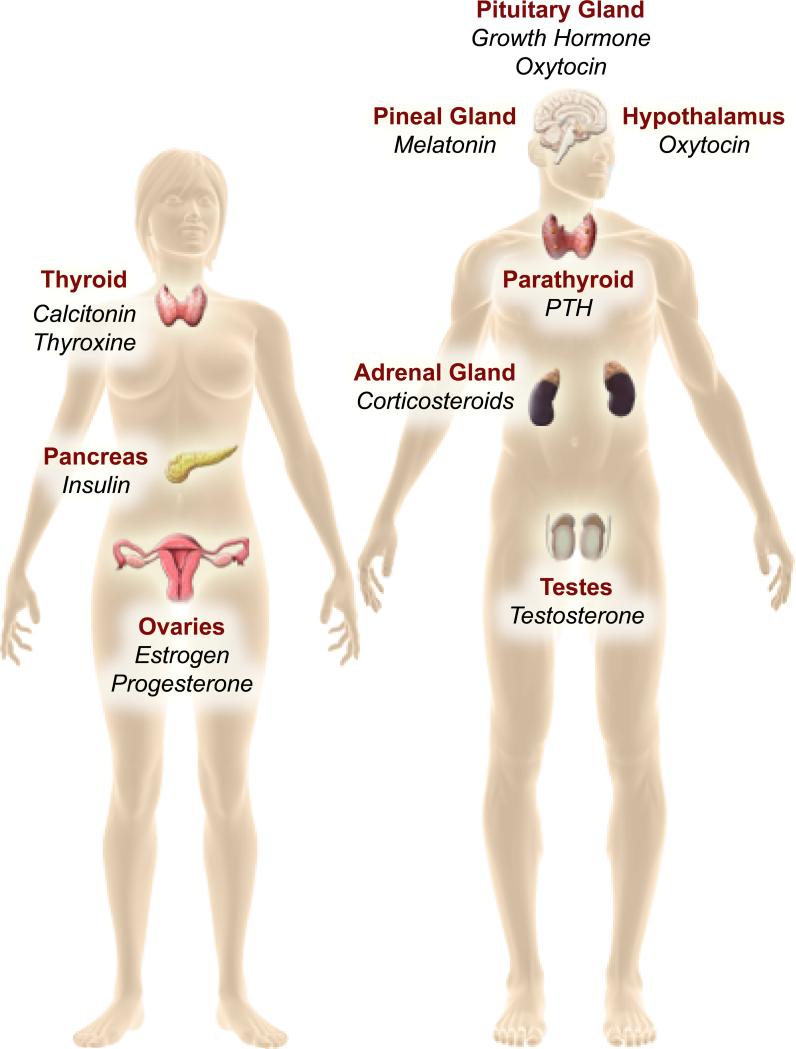
Model of the endocrine systems targeted by EDCs. This figure illustrates that all major endocrine organs are vulnerable to endocrine disruption, including the HPA axis, reproductive organs, the pancreas, and the thyroid gland. EDCs are also known to impact hormone-dependent metabolic systems and brain function.
Figure 2
Figure 2
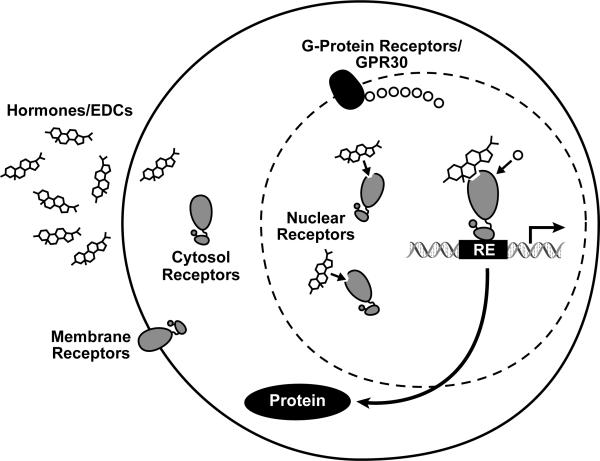
Illustration of steroid hormone receptor signaling pathway. Hormones, or hormone mimics, bind to membrane or cytosol receptors, which in turn shuttle to the nucleus and attach themselves to response elements (REs), where they work to regulate gene transcription and ultimately protein production. Some receptors reside solely in the nucleus atop REs in inactive forms and become activated upon hormone binding. EDCs can alter this signaling process by binding to steroid receptors and either activating or inhibiting transcriptional response.
Figure 3
Figure 3
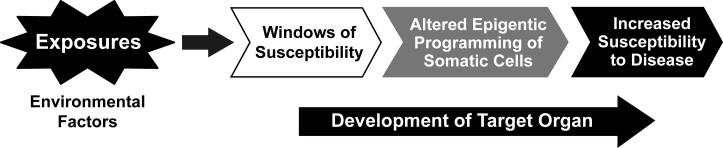
Model illustrating early life exposures may cause functional changes at cellular levels that lead to changes in physiological status, and ultimately adult disease.
Figure 4
Figure 4
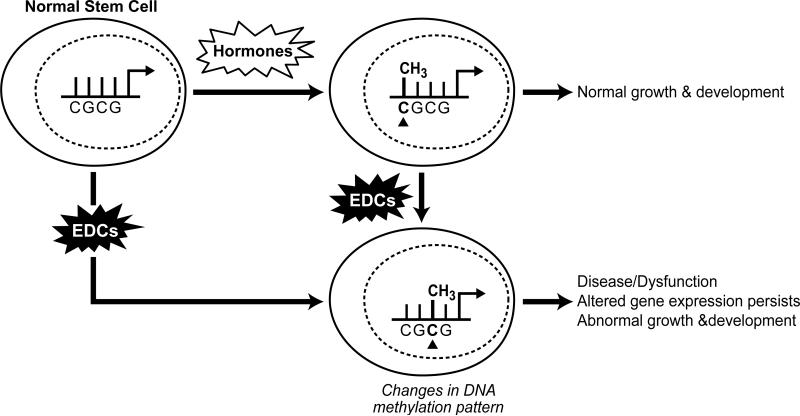
Model depicting how EDCs can alter methylation patterns and normal epigenetic programming in cells. Alterations in the epigenetic status of somatic cells can lead to disease in developing tissues, whereas changes in the epigenetic programming in stem cells can lead to multi- and transgeneration effects in the offspring.
Figure 5
Figure 5
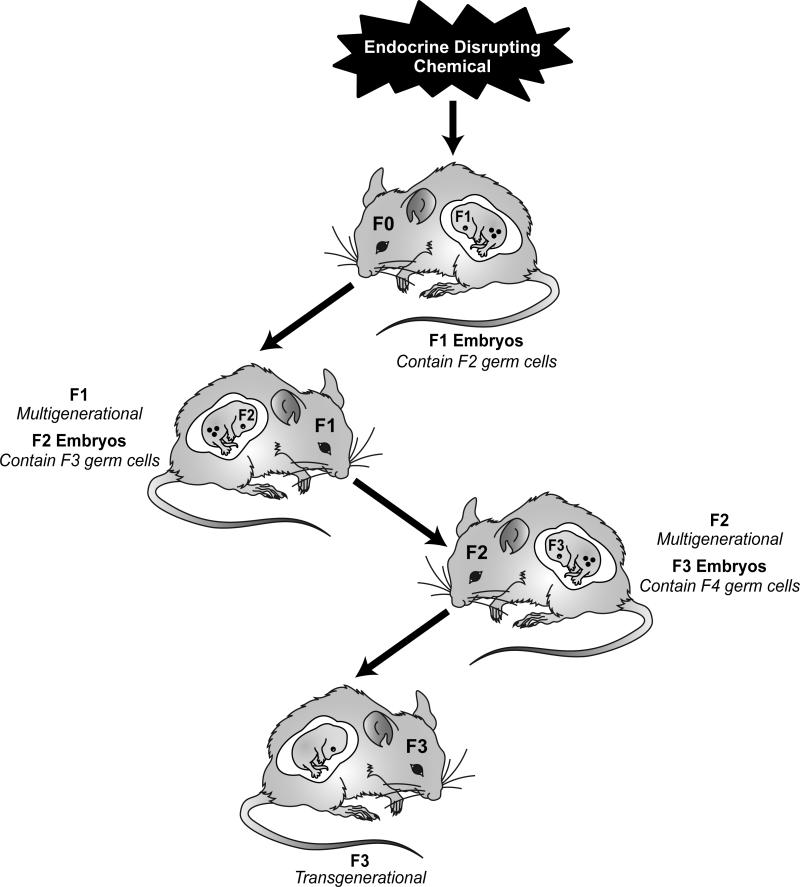
EDCs many promote epigenetic alterations that influence somatic cells and so the disease status of the individual exposed (F0 generation). In pregnant females, EDC exposure could also cause epigenetic modifications in the next two generations (F1 and F2) through the fetus and its germ line. The effect of such multigenerational exposure in subsequent generations (F3 and beyond) would be considered a transgenerational phenotype.
Figure 6
Figure 6
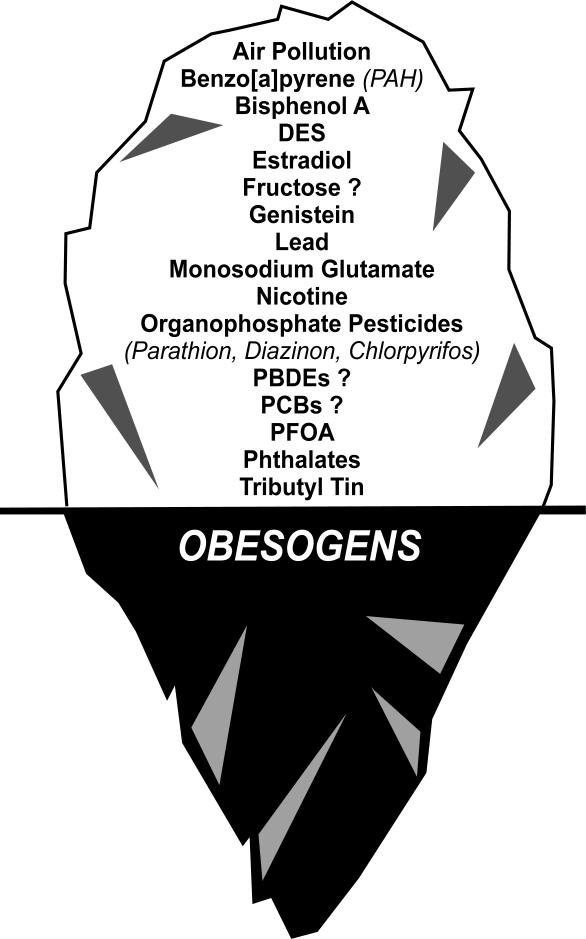
The iceberg illustration indicates that there is evidence that exposure to certain EDCs during results in obesity in animal models. Only a few chemicals have been thoroughly studied in humans, thus possible that many more chemicals will be found below “the tip of the iceberg” that impact obesity.

References

    1. Diamanti-Kandarakis E, Bourguignon JP, Giudice LC, Hauser R, Prins GS, Soto AM, Zoeller RT, Gore AC. Endocrine-disrupting chemicals: an Endocrine Society scientific statement. Endocr Rev. 2009;30(4):293–342. - PMC - PubMed
    1. Diamanti-Kandarakis E, Palioura E, Kandarakis SA, Koutsilieris M. The impact of endocrine disruptors on endocrine targets. Horm Metab Res. 2010;42(8):543–552. Epub 2010 Apr 2023. - PubMed
    1. Moral R, Wang R, Russo IH, Lamartiniere CA, Pereira J, Russo J. Effect of prenatal exposure to the endocrine disruptor bisphenol A on mammary gland morphology and gene expression signature. J Endocrinol. 2008;196(1):101–112. - PubMed
    1. Anway MD, Skinner MK. Epigenetic programming of the germ line: effects of endocrine disruptors on the development of transgenerational disease. Reprod Biomed Online. 2008;16(1):23–25. - PMC - PubMed
    1. Skinner MK. Role of epigenetics in developmental biology and transgenerational inheritance. Birth Defects Res C Embryo Today. 2011;93(1):51–55. doi: 10.1002/bdrc.20199. - PMC - PubMed

Substances