. 2011 Sep 23;35(3):426-40.
doi: 10.1016/j.immuni.2011.06.014. Epub 2011 Sep 8.

Mapping a dynamic innate immunity protein interaction network regulating type I interferon production

Affiliations

Mapping a dynamic innate immunity protein interaction network regulating type I interferon production

Shitao Li et al. Immunity. .

Erratum in

  • Immunity. 2011 Oct 28;35(4):647-8

Abstract

To systematically investigate innate immune signaling networks regulating production of type I interferon, we analyzed protein complexes formed after microbial recognition. Fifty-eight baits were associated with 260 interacting proteins forming a human innate immunity interactome for type I interferon (HI5) of 401 unique interactions; 21% of interactions were modulated by RNA, DNA, or LPS. Overexpression and depletion analyses identified 22 unique genes that regulated NF-κB and ISRE reporter activity, viral replication, or virus-induced interferon production. Detailed mechanistic analysis defined a role for mind bomb (MIB) E3 ligases in K63-linked ubiquitination of TBK1, a kinase that phosphorylates IRF transcription factors controlling interferon production. Mib genes selectively controlled responses to cytosolic RNA. MIB deficiency reduced antiviral activity, establishing the role of MIB proteins as positive regulators of antiviral responses. The HI5 provides a dynamic physical and regulatory network that serves as a resource for mechanistic analysis of innate immune signaling.


Figures

Figure 1
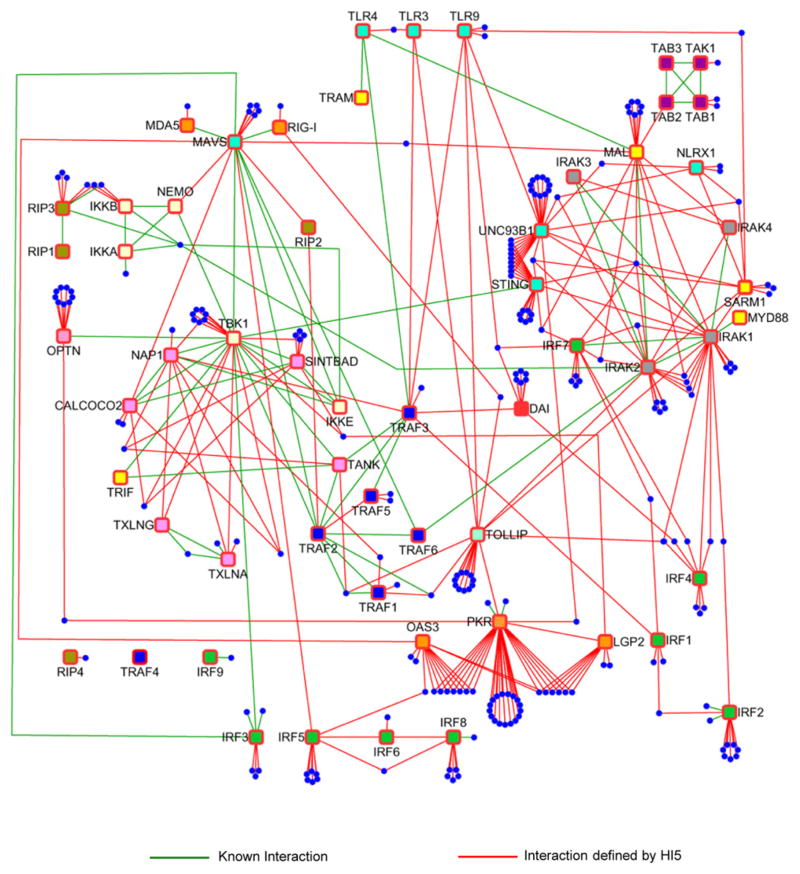
Figure 1. Overview of Human Innate Immunity Interactome for Type I Interferon
Baits and HCIP are shown as squares and circles, respectively. Green lines represent known interactions and red lines reflect interactions defined by HI5.
Figure 2
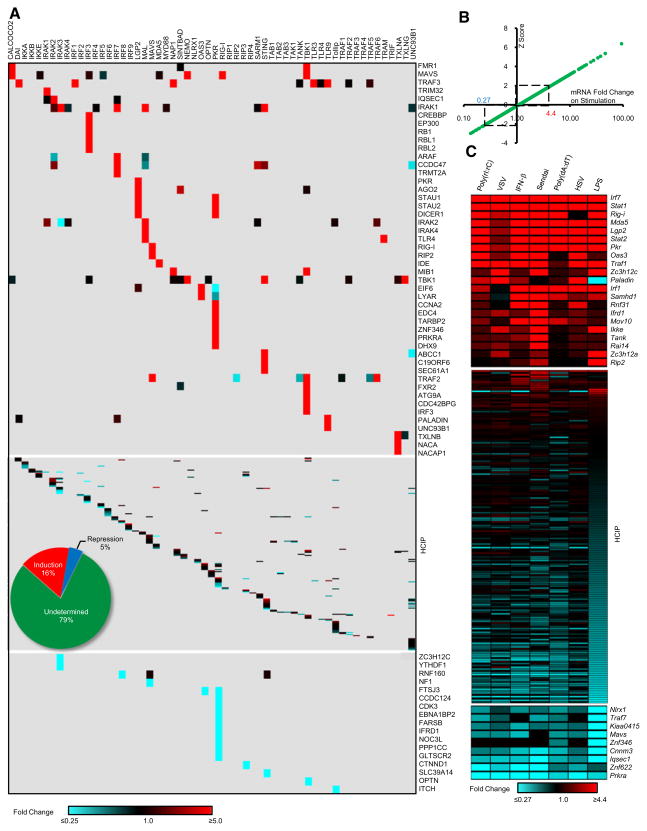
Figure 2. Dynamics of the HI5
(A) Heat map profile showing spectral peptide fold change for each HCIP upon stimulation. The ratio of bait normalized TSC (BNT) was used to calculate the fold change. For bait k BNT (k) ratio: [(BNT)ks1+(BNT)ks2]/[(BNT)ku1+(BNT)ku2], s stands for stimulation, u for unstimulated, 1 and 2 for replicate experiments. Inserted pie chart summarizes data. (B) Z score analysis of HCIP mRNA fold change upon viral infection and ligand stimulation. (C) HCIP gene expression profile. Mouse macrophage RAW264.7 cells were treated with poly(rI:rC), poly(dA:dT), LPS, IFN-β, VSV, Sendai virus, or HSV.
Figure 3
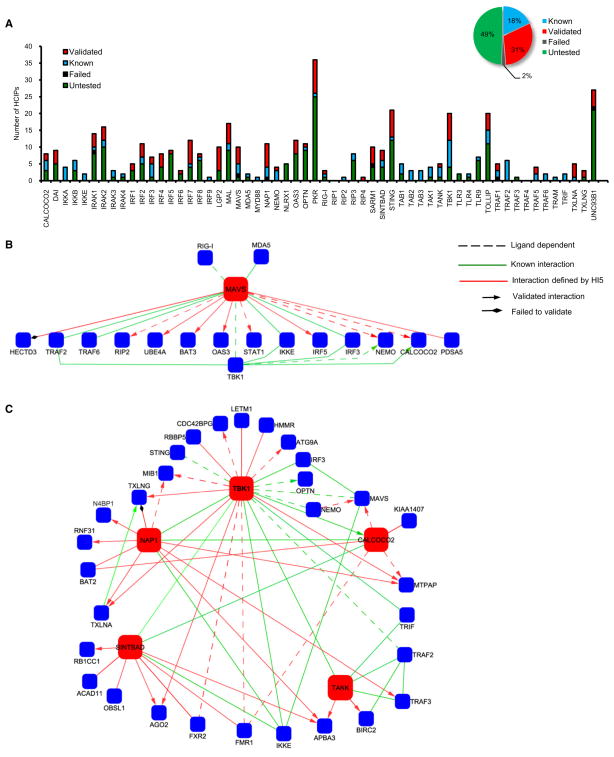
Figure 3. In Vitro Validation of Protein Interactions in the HI5
(A) Validation of physical associations for bait-prey interactions. Summary of total interactions is shown in the inset. (B and C) Validation of MAVS (B) and TBK1 (C) modules. Dashed line indicates ligand-dependent interaction; green line indicates known interaction; red line indicates interactions defined by HI5; diamond head indicates failed to confirm; arrowhead indicates interaction confirmed by in vitro coimmunoprecipitation.
Figure 4
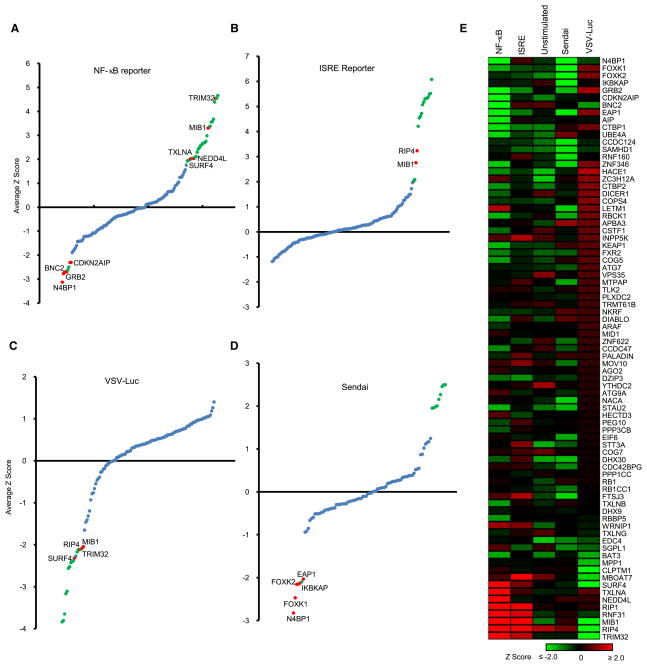
Figure 4. Gain-of-Function Analysis
(A and B) NF-κB (A) and ISRE (B) reporter assay in HEK293 cells. Reporter constructs and 132 HCIP and baits were transfected into HEK293 cells. Each assay was repeated three times. Z scores were calculated based on average normalized reporter activity. (C) VSV replication assay in HEK293 cells. 48 hr after transfection with HCIP, cells were infected with 0.1 M.O.I. VSV-Luc. VSV replication was determined by luciferase activity. The average value of triplicates was used for calculation of Z scores. (D) ELISA assay for Sendai virus-induced IFN-β production. 48 hr after transfection with HCIP, HEK293 cells were infected with 5 HA Sendai virus. Blue dots indicate −2 < Z < 2; red dots indicate regulator defined by HI5; green dots indicate known function. (E) Heat map summary comparing effects of ectopic expression of interactors defined by HI5 on transcription factors, VSV replication, and Sendai virus-induced IFN production. Genes with established functions in innate immunity are not shown.
Figure 5
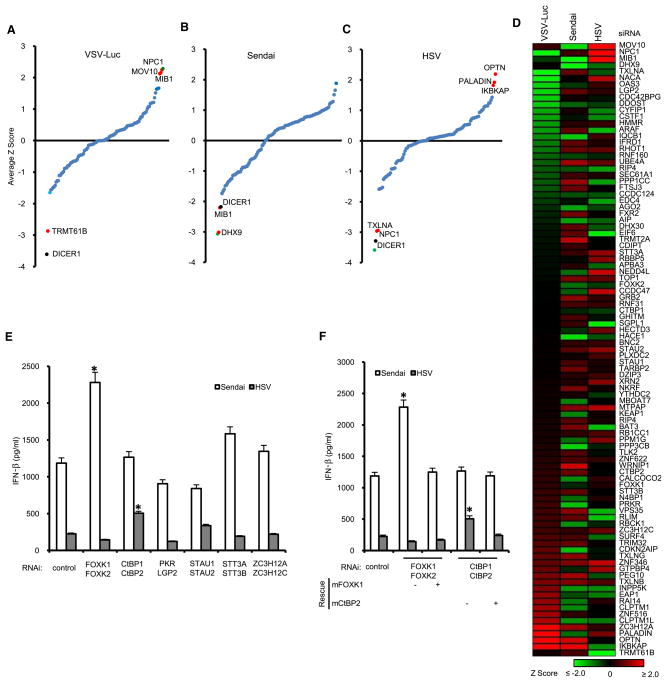
Figure 5. RNAi Analysis
(A–C) HEK293 cells were transfected with 98 HCIP including TBK1 siRNA SMARTpools. After 48 hr, cells were infected with 0.1 M.O.I. VSV-Luc (A), 5 HA Sendai virus (B), and 1 M.O.I. HSV (C). VSV luciferase assays were repeated three times. Sendai virus- and HSV-induced IFN production was assayed in duplicate by ELISA. The average values were used for calculation of Z scores. Blue dots indicate −2 < Z < 2; red dots indicate regulator defined by HI5; green dot indicates positive control, TBK1; black dot indicates failed MTT assay. (D) Heat map summary of the effect of siRNAs on VSV replication and Sendai virus- or HSV-induced IFN production. (E) HEK293 cells were treated with a combination of two pools of RNAi. ELISA assays for IFN were performed after Sendai virus and HSV infection. An asterisk indicates p < 0.05. Data depict the mean ± SD of triplicate samples. (F) RNAi rescue for FOXK1, FOXK2 and CtBP1, CtPB2. Mouse FOXK1 and CtBP2 were transfected with siRNA against human FOXK1, FOXK2 and CtBP1, CtBP2 into HEK293 cells. ELISA assay was performed with 24 hr supernatants from Sendai virus- or HSV-infected cells. *p < 0.05, data depict mean ± SD of triplicate samples.
Figure 6
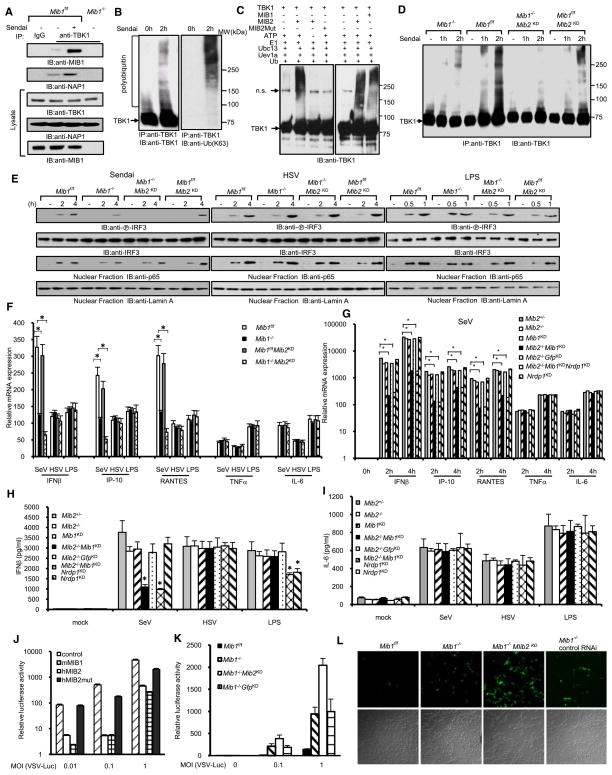
Figure 6. Mind Bomb E3 Ligases Regulate Innate Antiviral Immunity through TBK1 Ubiquitination
(A) Lysates from Mib1f/f and Mib1−/− cells (Mib1f/f MEFs infected with Adeno-Cre for removal of the floxed allele) were infected with Sendai virus, and after 2 hr, cell lysates were immunoprecipitated with control IgG or TBK1 antibody and immunoblotted with MIB1 or NAP1 antibody to examine endogenous interactions induced by Sendai virus infection. (B) Sendai virus induces TBK1 ubiquitination. HEK293 cells were treated with 50 HA Sendai virus for the designated times. The immune complexes were immunoblotted with TBK1 or antibody specific for K63-linked ubiquitin. (C) In vitro ubiquitination reaction of TBK1 in the presence of MIB1, MIB2, or MIB2 mutant. (D) Mib1f/f and Mib1−/− cells were transfected with MIB2 siRNA (Mib2KD). 48 hr later, cells were treated with 50 HA Sendai virus for the designated times. Cell lysates were immunoprecipitated and immunoblotted with TBK1 antibody. (E) Mouse embryonic fibroblasts (MEFs) from Mib1f/f and Mib1−/− mice were transfected with control or MIB2 siRNA. After 48 hr, cells were treated with indicated stimulus for the designated times. Cell lysates or nuclear extracts were collected for immunoblotting with the indicated antibodies. (F) MEFs from Mib1f/f and Mib1−/− mice were transfected with control or MIB2 siRNA. After 48 hr, cells were treated with indicated stimulus. Cytokine mRNA levels were determined by real-time PCR. Data represent the mean ± SD of triplicate samples. *p < 0.05. (G) Bone marrow-derived macrophages (BMDM) from Mib2+/− and Mib2−/− mice were transfected with IKKε siRNA together with the indicated siRNA. After 48 hr, cells were infected with Sendai virus for the designated times. Cytokine mRNA expression was determined by real-time PCR. *p < 0.05. Data depict the mean ± SD of triplicate samples. (H and I) BMDM from Mib2+/− and Mib2−/− mice were transfected with IKKε siRNA together with the indicated siRNA. After 48 hr, cells were treated with Sendai virus, HSV, and LPS. IFN-β and IL-6 protein levels were determined by ELISA. Data represent the mean ± SD of triplicate samples. *p < 0.05. (J) VSV-Luc replication in HEK293 cells expressing control (cross-hatched), MIB1 (open), MIB2 (checkered), or MIB2 mutant (solid) constructs. Cells were infected with the indicated amount of virus for 24 hr. Data represent the mean ± SD of triplicate samples. (K) VSV-Luc replication in Mib1f/f (solid), Mib1−/− (cross-hatched), and Mib1−/− MEFs transfected with MIB2 siRNA (open) or control (checkered). Cells were infected with the indicated dose of VSV. Data represent the mean ± SD of triplicate samples. (L) VSV-eGFP replication in Mib1f/f, Mib1−/−, or Mib1−/− MEFs treated with control or MIB2 siRNA. Upper panel, green fluorescence; lower panel, bright field.
Figure 7
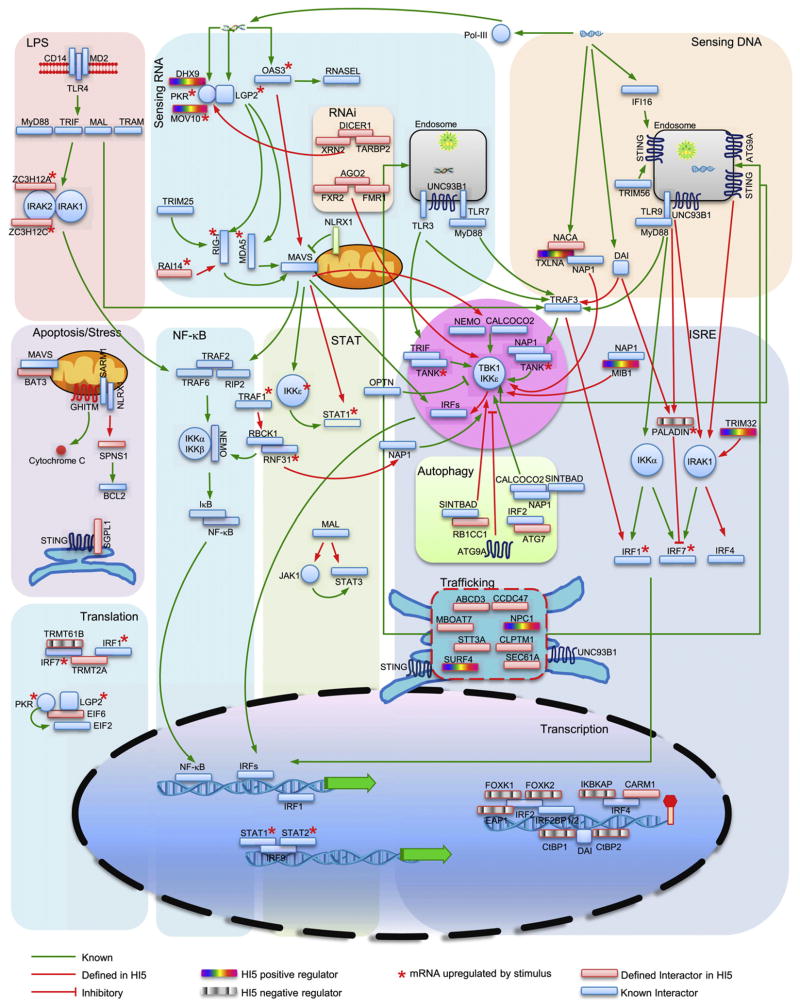
Figure 7. Functional Integration of Selected Components of the HI5
Baits and HCIP are shown within selected pathways, suggesting functional roles and modes of regulation. Line style and color fill are indicated.

Comment in

References

    1. Abdullah JM, Li X, Nachtman RG, Jurecic R. FLRF, a novel evolutionarily conserved RING finger gene, is differentially expressed in mouse fetal and adult hematopoietic stem cells and progenitors. Blood Cells Mol Dis. 2001;27:320–333. - PubMed
    1. Ablasser A, Bauernfeind F, Hartmann G, Latz E, Fitzgerald KA, Hornung V. RIG-I-dependent sensing of poly(dA:dT) through the induction of an RNA polymerase III-transcribed RNA intermediate. Nat Immunol. 2009;10:1065–1072. - PMC - PubMed
    1. Akhouayri O, Quélo I, St-Arnaud R. Sequence-specific DNA binding by the alphaNAC coactivator is required for potentiation of c-Jun-dependent transcription of the osteocalcin gene. Mol Cell Biol. 2005;25:3452–3460. - PMC - PubMed
    1. Bhoj VG, Chen ZJ. Ubiquitylation in innate and adaptive immunity. Nature. 2009;458:430–437. - PubMed
    1. Carty M, Goodbody R, Schröder M, Stack J, Moynagh PN, Bowie AG. The human adaptor SARM negatively regulates adaptor protein TRIF-dependent Toll-like receptor signaling. Nat Immunol. 2006;7:1074–1081. - PubMed

Publication types

Substances