Exome sequencing reveals cubilin mutation as a single-gene cause of proteinuria
- PMID: 21903995
- PMCID: PMC3187182
- DOI: 10.1681/ASN.2011040337
Exome sequencing reveals cubilin mutation as a single-gene cause of proteinuria
Abstract
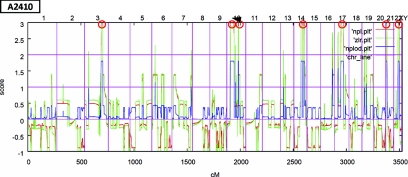
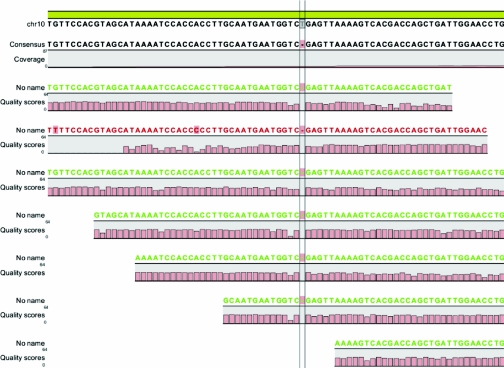
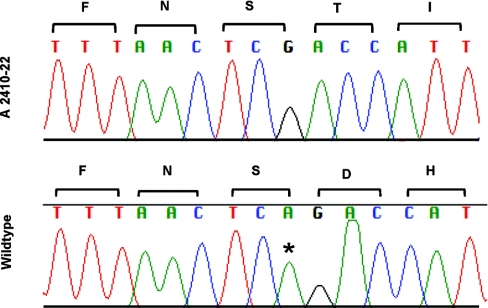
In two siblings of consanguineous parents with intermittent nephrotic-range proteinuria, we identified a homozygous deleterious frameshift mutation in the gene CUBN, which encodes cubulin, using exome capture and massively parallel re-sequencing. The mutation segregated with affected members of this family and was absent from 92 healthy individuals, thereby identifying a recessive mutation in CUBN as the single-gene cause of proteinuria in this sibship. Cubulin mutations cause a hereditary form of megaloblastic anemia secondary to vitamin B(12) deficiency, and proteinuria occurs in 50% of cases since cubilin is coreceptor for both the intestinal vitamin B(12)-intrinsic factor complex and the tubular reabsorption of protein in the proximal tubule. In summary, we report successful use of exome capture and massively parallel re-sequencing to identify a rare, single-gene cause of nephropathy.
Figures
References
-
- Cooper DN, Krawczak M, Antonorakis SE: The nature and mechanisms of human gene mutation. In: The Metabolic and Molecular Bases of Inherited Disease, 7th ed., edited by Scriver C, Beaudet al., Sly WS, Valle D. New York, McGraw-Hill, 1995, pp 259–291
-
- Ng SB, Bigham AW, Buckingham KJ, Hannibal MC, McMillin MJ, Gildersleeve HI, Beck AE, Tabor HK, Cooper GM, Mefford HC, Lee C, Turner EH, Smith JD, Rieder MJ, Yoshiura K, Matsumoto N, Ohta T, Niikawa N, Nickerson DA, Bamshad MJ, Shendure J: Exome sequencing identifies MLL2 mutations as a cause of Kabuki syndrome. Nat Genet 42: 790–793, 2010 - PMC - PubMed
-
- Hoischen A, van Bon BW, Gilissen C, Arts P, van Lier B, Steehouwer M, de Vries P, de Reuver R, Wieskamp N, Mortier G, Devriendt K, Amorim MZ, Revencu N, Kidd A, Barbosa M, Turner A, Smith J, Oley C, Henderson A, Hayes IM, Thompson EM, Brunner HG, de Vries BB, Veltman JA: De novo mutations of SETBP1 cause Schinzel-Giedion syndrome. Nat Genet 42: 483–485, 2010 - PubMed
Publication types
MeSH terms
Substances
Grants and funding
LinkOut - more resources
Full Text Sources
Other Literature Sources