


Redirected lysis of human melanoma cells by a MCSP/CD3-bispecific BiTE antibody that engages patient-derived T cells
- PMID: 21904216
- PMCID: PMC3195335
- DOI: 10.1097/CJI.0b013e3182307fd8
Redirected lysis of human melanoma cells by a MCSP/CD3-bispecific BiTE antibody that engages patient-derived T cells
Abstract
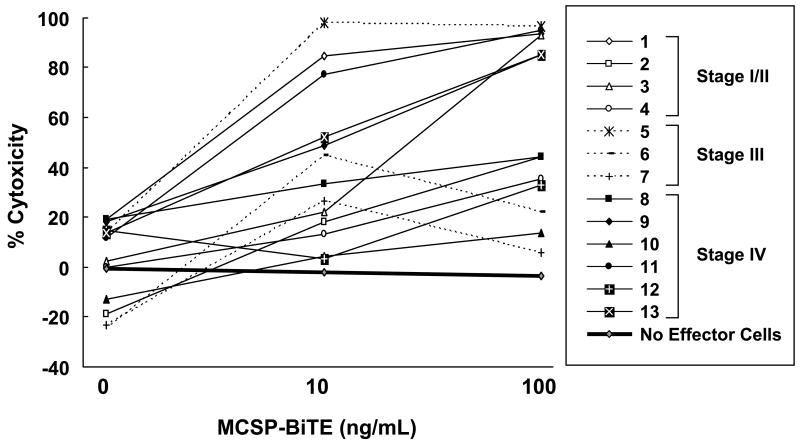
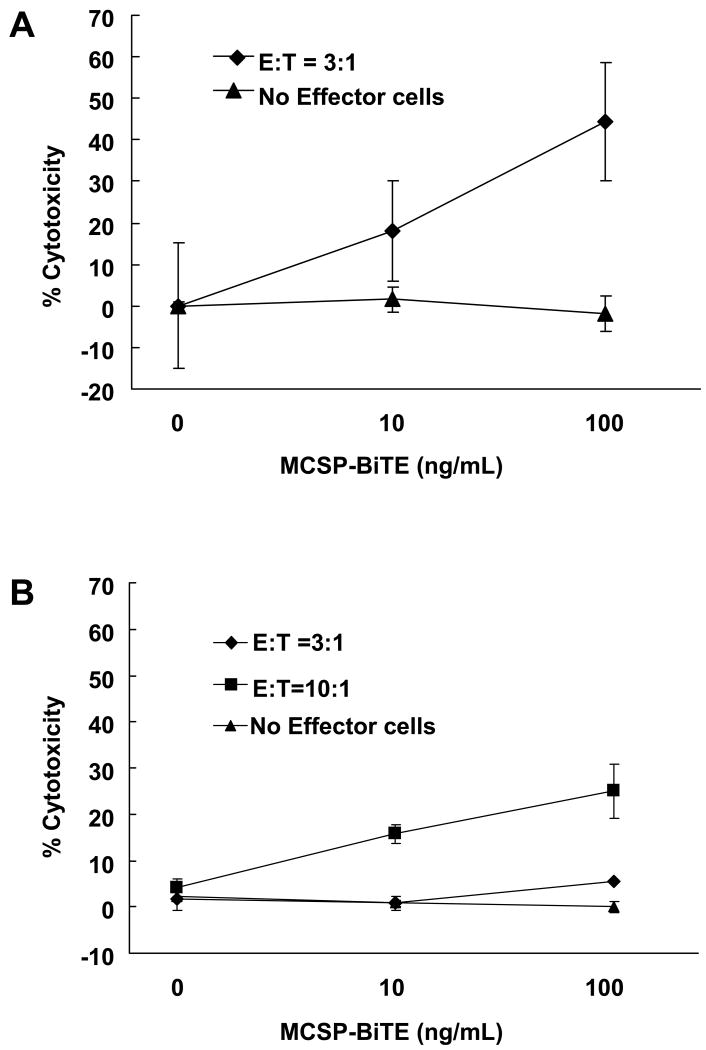
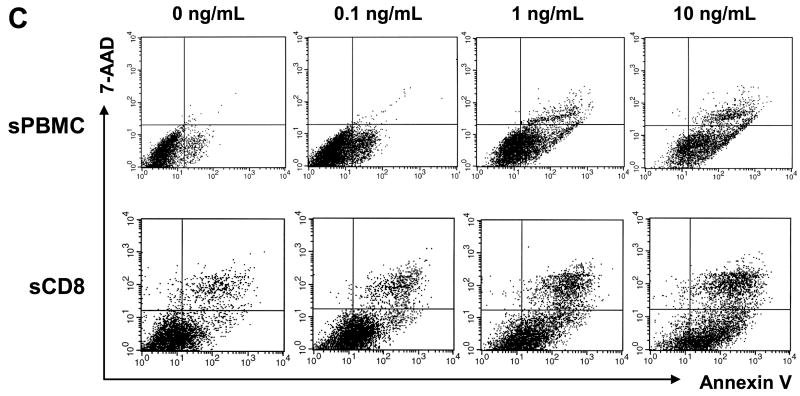
Melanoma-associated chondroitin sulfate proteoglycan (MCSP; also called HMW-MAA, CSPG4, NG2, MSK16, MCSPG, MEL-CSPG, or gp240) is a well characterized melanoma cell-surface antigen. In this study, a new bispecific T-cell engaging (BiTE) antibody that binds to MCSP and human CD3 (MCSP-BiTE) was tested for its cytotoxic activity against human melanoma cell lines. When unstimulated peripheral mononuclear blood cells (PBMCs) derived from healthy donors were cocultured with melanoma cells at effector:target ratios of 1:1, 1:5, or 1:10, and treated with MCSP-BiTE antibody at doses of 10, 100, or 1000 ng/mL, all MCSP-expressing melanoma cell lines (n=23) were lysed in a dose-dependent and effector:target ratio-dependent manner, whereas there was no cytotoxic activity against MCSP-negative melanoma cell lines (n=2). To investigate whether T cells from melanoma patients could act as effector cells, we cocultured unstimulated PBMCs with allogeneic melanoma cells from 13 patients (4 stage I/II, 3 stage III, and 6 stage IV) or with autologous melanoma cells from 2 patients (stage IV). Although cytotoxic activity varied, all 15 PBMC samples mediated significant redirected lysis by the BiTE antibody. When PBMC or CD8 T cells were prestimulated by anti-CD3 antibody OKT-3 and interleukin-2, the MCSP-BiTE concentrations needed for melanoma cell lysis decreased up to 1000-fold. As MCSP is expressed on most human melanomas, immunotherapy with MCSP/CD3-bispecific antibodies merits clinical investigation.
Figures



References
-
- Baeuerle PA, Kufer P, Bargou R. BiTE: Teaching antibodies to engage T-cells for cancer therapy. Curr Opin Mol Ther. 2009;11:22–30. - PubMed
-
- Baeuerle PA, Reinhardt C. Bispecific T-cell engaging antibodies for cancer therapy. Cancer Res. 2009;69:4941–4944. - PubMed
-
- Bargou R, Leo E, Zugmaier G, et al. Tumor regression in cancer patients by very low doses of a T cell-engaging antibody. Science. 2008;321:974–977. - PubMed
-
- Brischwein K, Parr L, Pflanz S, et al. Strictly target cell-dependent activation of T cells by bispecific single-chain antibody constructs of the BiTE class. J Immunother. 2007;30:798–807. - PubMed
-
- Haas C, Krinner E, Brischwein K, et al. Mode of cytotoxic action of T cell-engaging BiTE antibody MT110. Immunobiology. 2009;214:441–453. - PubMed
Publication types
MeSH terms
Substances
Grants and funding
LinkOut - more resources
Full Text Sources
Other Literature Sources
Medical
Research Materials
