


Prevalence and factors associated with off-label antidepressant prescriptions for insomnia
- PMID: 21904465
- PMCID: PMC3163935
- DOI: 10.2147/DHPS.S21079
Prevalence and factors associated with off-label antidepressant prescriptions for insomnia
Abstract
Background: The primary objective of our study was to investigate the prevalence of off-label antidepressant drug use in insomnia. The secondary objective was to compare prescribing patterns between off-label antidepressants vs hypnotics approved by the US Food and Drug Administration for insomnia, with particular emphasis on socioeconomic characteristics of patients and physicians.
Methods: We undertook a secondary data analysis using the national longitudinal database from the 2006 National Ambulatory Medical Care Survey. Subjects were identified from outpatient visits in which at least one insomnia drug was prescribed. A series of weighted Chi-squared statistics was used to compare drug use for insomnia across various patient and physician characteristics. Multivariate logistic regression was conducted to identify factors associated with off-label antidepressant drug use.
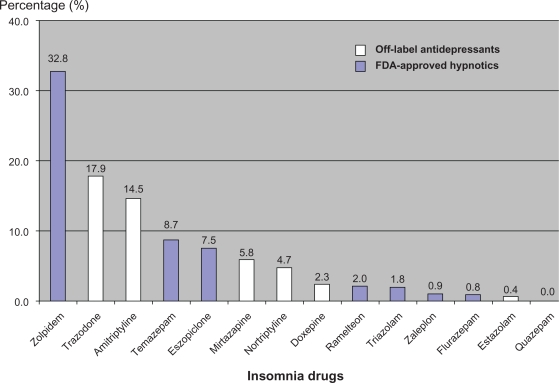
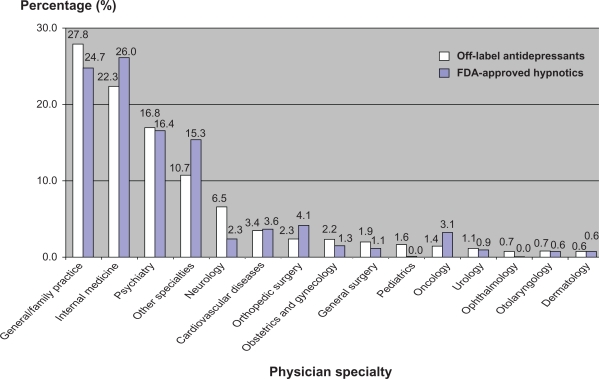
Results: Among 901.95 million outpatient visits that took place in the US in 2006, an estimated 30.43 million visits included at least one drug prescription for insomnia. Off-label antidepressants were prescribed significantly more frequently (45.1%) than nonbenzodiazepine z-hypnotics (43.2%) and benzodiazepines (11.7%). Insomnia prescribing patterns were significantly influenced by physician specialty and physician office settings. Pediatricians (odds ratio [OR]: 65.892; 95% confidence interval [CI]: 5.536-810.564) and neurologists (OR: 4.784; 95% CI: 2.044-11.201) were more likely to prescribe off-label antidepressants than psychiatrists. Self-paying patients were more likely to receive off-label antidepressants as treatment for insomnia than patients with private insurance (OR 2.594; 95% CI: 1.128-5.967).
Conclusion: Our findings indicate significant socioeconomic disparities in the use of off-label antidepressants. Future studies might explore interventional and educational strategies to ensure well informed clinical decisions that can withstand pharmaceutical marketing strategies and diagnostic uncertainties regarding the treatment of insomnia.
Keywords: National Ambulatory Medical Care Survey; antidepressants; insomnia; off-label drug use.
Figures
References
-
- Smith MT, Neubauer DN. Cognitive behavior therapy for chronic insomnia. Clin Cornerstone. 2003;5(3):28–40. - PubMed
-
- National Sleep Foundation Sleep in America. 2008. Available at: http://www.sleepfoundation.org/sites/default/files/2008%20POLL%20SOF.pdf. Accessed November 20, 2010.
-
- Stoller MK. Economic effects of insomnia. Clin Ther. 1994;16(5):873–897. - PubMed
-
- National Institute of Health State-of-the-science conference statement on manifestations and management of chronic insomnia in adults. NIH Consens State Sci Statements. 2005;22(2):1–30. - PubMed
-
- Rozerem® [Prescribing information] Deerfield, IL: Takeda Pharmaceuticals America, Inc; 2010.
LinkOut - more resources
Full Text Sources
